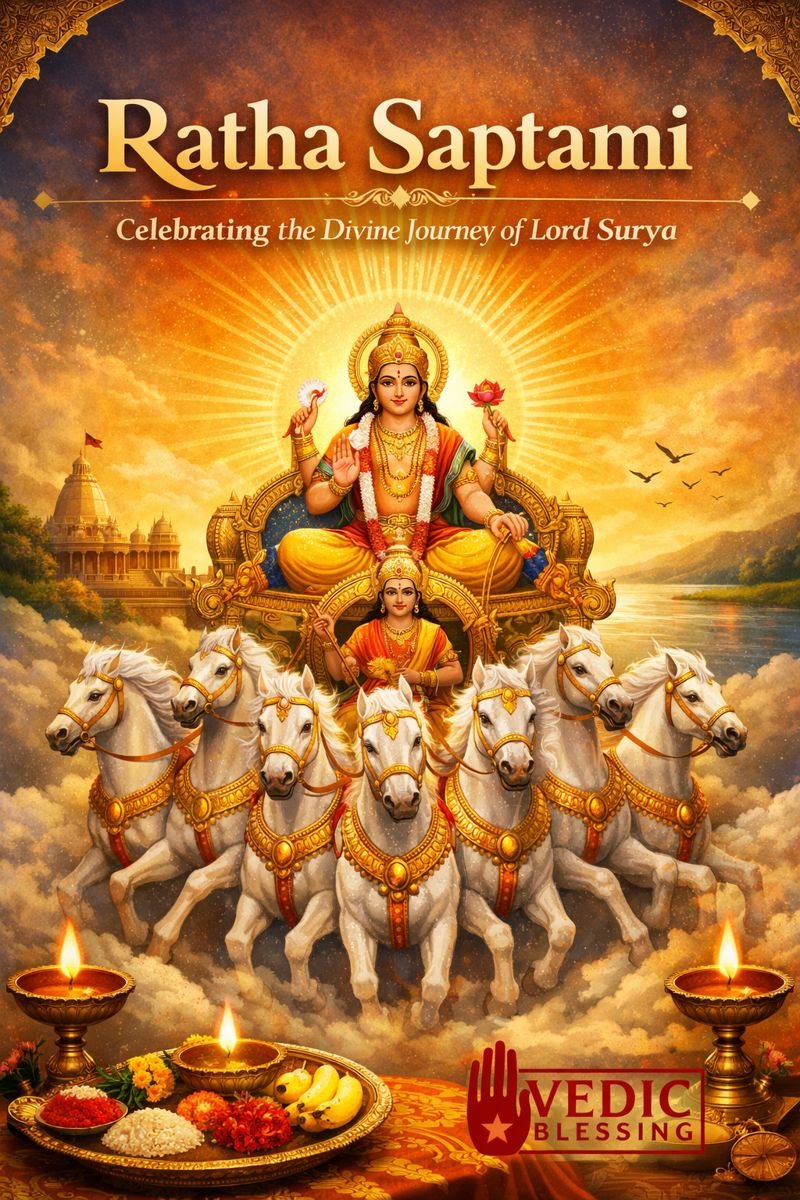
Ratha Saptami: Significance, Rituals, and Spiritual Importance
Ratha Saptami, also known as Surya Jayanti or Magha Saptami, is a sacred Hindu festival dedicated to Lord Surya (the Sun God). Celebrated on the seventh day (Saptami) of the bright half of the Magha month, this auspicious day marks the symbolic turning of the Sun God’s chariot towards the northern hemisphere, signifying light, health, and new beginnings.
What is Ratha Saptami?
Ratha Saptami commemorates the day when Lord Surya began his northward journey (Uttarayana), riding his divine chariot (Ratha) driven by seven horses, representing the seven days of the week and the seven colors of sunlight.
Spiritually, this day symbolizes:
- Removal of darkness and ignorance
- Awakening of inner energy
- Renewal of life, health, and vitality
Ratha Saptami is considered as auspicious as Makara Sankranti and is especially powerful for prayers related to health, longevity, and prosperity.
Why is Ratha Saptami Important?
The Sun is regarded as the source of all life and energy. Worshipping Lord Surya on Ratha Saptami is believed to:
- Cleanse past karmas
- Cure chronic health issues
- Improve physical and mental strength
- Bring clarity, success, and positivity
Many scriptures state that offering prayers to the Sun on this day is equivalent to performing several yagnas and sacred rituals.
Who Should Observe Ratha Saptami?
Ratha Saptami can be observed by:
- Families seeking good health and longevity
- Students praying for clarity and focus
- Individuals facing health or planetary issues
- Devotees of Lord Surya
- Anyone seeking spiritual purification and fresh beginnings
- It is especially beneficial for those affected by Sun-related planetary doshas in astrology.
When is Ratha Saptami Celebrated?
Ratha Saptami is celebrated on:
Magha Shukla Saptami (7th lunar day of the bright fortnight of Magha month) usually falls in January or February. The rituals are ideally performed early morning, at sunrise.
Where is Ratha Saptami Celebrated?
Ratha Saptami is observed across India, with special significance in:
- Andhra Pradesh & Telangana
- Karnataka
- Tamil Nadu
- Maharashtra
Devotees also celebrate it at home by performing Surya puja, especially those living abroad who may not have access to temples.
How is Ratha Saptami celebrated? (Rituals & Practices)
1. Early Morning Holy Bath - Devotees take a ritual bath before sunrise. Traditionally, Calotropis (Arka) leaves are placed on the head and shoulders while bathing, symbolizing purification.
2. Surya Arghya - Offering water to the rising sun while chanting Surya mantras is the most important ritual of the day.
3. Surya Puja - Devotees perform Surya puja with flowers, red cloth, incense, and lamps, praying for health and inner strength.
4. Recitation of Mantras - Commonly chanted mantras include Surya Gayatri and Aditya Hridayam.
5. Charity and Fasting - Donating food and clothes and helping the needy on Ratha Saptami is believed to bring immense merit.
Traditional Ratha Saptami Celebrations & Rituals
Ratha Saptami is celebrated with deep devotion and beautiful traditional practices that symbolize the journey of Lord Surya’s chariot (Ratha) across the sky.
Preparation of Pongal as Prasad - On Ratha Saptami, devotees prepare sweet Pongal as sacred prasad and offer it to Lord Surya after the puja. Pongal symbolizes abundance, gratitude, and the life-giving energy of the Sun. The prasad is later shared with family members as a blessing for health and prosperity.
Ratham Rangoli (Chariot Kolam) - One of the most visually significant traditions is drawing a Ratham (chariot) rangoli in front of the house using rice flour or chalk powder.
This rangoli represents:
- Lord Surya’s divine chariot
- His northward journey
- The arrival of positive energy and light into the home
Many families draw the seven horses of the chariot, symbolizing the seven days of the week and the rhythm of time.
Chariot Made with Chikudu (Hyacinth Bean) Seeds
A unique and meaningful ritual involves creating a miniature chariot using chikudu seeds (hyacinth beans) arranged carefully on the rangoli.
These seeds represent:
- Growth and fertility
- Agricultural abundance
- Nature’s gratitude to the Sun
- The seed chariot is worshipped during the puja, emphasizing the Sun’s role in sustaining life and food.
Spiritual Significance of Ratha Saptami
Ratha Saptami signifies the cosmic awakening of solar energy. Just as the Sun illuminates the world, this day encourages individuals to awaken their inner light, discipline, and dharma.
Spiritually, it is a reminder that:
- Light always overcomes darkness
- Discipline leads to growth
- Energy flows where devotion resides
Conclusion
Ratha Saptami is not just a festival—it is a powerful reminder of renewal, vitality, and the life-giving energy of Lord Surya. Observing this sacred day with devotion helps align the body, mind, and soul with positive cosmic energy, bringing blessings of health, clarity, and prosperity.
In today’s fast-paced world, staying connected to authentic traditions can be challenging—especially for families living away from temples or in different parts of the world. Platforms like VedicBlessing.com make it easier to observe Ratha Saptami meaningfully by offering authentic Surya Puja with live, step-by-step priest guidance, right from the comfort of your home.
Whether you perform the rituals at a temple or through guided online services, celebrating Ratha Saptami with sincerity and faith ensures that the divine blessings of the Sun illuminate your life throughout the year.