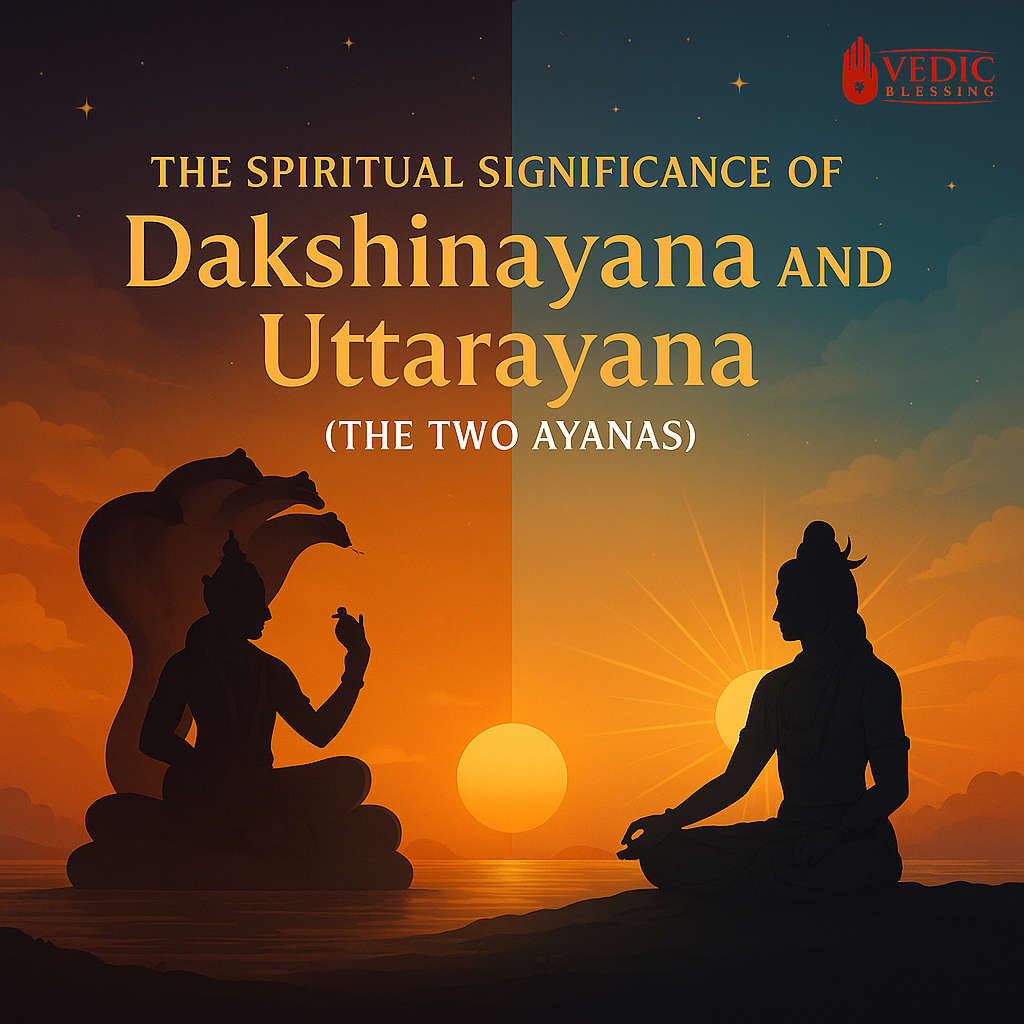
The Spiritual Significance of Dakshinayana and Uttarayana (The Two Ayanas)
The Spiritual Significance of Dakshinayana and Uttarayana (The Two Ayanas)
Introduction: Understanding the Cosmic Clock
In Vedic tradition, time is not just a linear measure but a cycle deeply intertwined with celestial movements, influencing all aspects of life, spirituality, and ritual. The year is divided into two primary halves, known as the Ayanas: Dakshinayana and Uttarayana
These two periods mark the journey of the Sun (Surya) and hold immense spiritual significance, affecting the nature, intention, and efficacy of prayers, fasting, and ceremonies. Understanding the Ayanas is key to aligning our spiritual practices with the natural rhythm of the universe.
What are Dakshinayana and Uttarayana?
The Ayanas are based on the apparent movement of the Sun between the northern and southern hemispheres, as observed from Earth.
1. Dakshinayana (The Southern Solstice)
Meaning: Literally, "The Sun's Southward Journey."
Duration: It begins with the Summer Solstice (around June 21st) and lasts until the Winter Solstice (about December 21st).
Vedic View: This period is considered the Night of the Gods (Devatas).
Significance:
Inward Reflection: Because it is the "Night" phase, Dakshinayana favors introspection, austerities (tapasya), and penance. It's the ideal time for connecting with ancestors (Pitri).
Rituals: Focus is often placed on rituals related to ancestral worship (Tarpanam), and prayers for salvation (moksha). It’s also the time for the four holy months of Chaturmasya, where devotees observe strict Vratas (vows).
Energy: The overall cosmic energy is believed to be more conducive to receiving divine grace and spiritual knowledge rather than actively manifesting material desires.
2. Uttarayana (The Northern Solstice)
Meaning: Literally, "The Sun's Northward Journey."
Duration: It begins with the Winter Solstice (around December 21st) and lasts until the Summer Solstice (about June 21st).
Vedic View: This period is considered the Day of the Gods (Devatas).
Significance:
Outward Action: As the "Day" phase, Uttarayana is considered highly auspicious for new beginnings, growth, and outward-focused activities.
Rituals: This is the most favored time for all major auspicious ceremonies (Shubh Muhurthams), including weddings, housewarmings (Griha Pravesh), starting new businesses, and initiation rites.
Energy: The cosmic energy supports manifestation, dynamism, and expansion.
Importance in Vedic Blessings
The division of the year into Ayanas is not merely academic; it determines the timing of many of the most important festivals and the efficacy of spiritual efforts:
The Muhurtha (Auspicious Timing): When a Puja or Vratam is performed during Uttarayana, its results (Phala) are believed to be manifold and guaranteed for growth. Conversely, rituals for liberation or ancestral peace are most potent during Dakshinayana.
Bhishma's Choice: The significance of Uttarayana is powerfully illustrated by the epic of the Mahabharata. The revered warrior Bhishma Pitamaha lay on a bed of arrows, waiting for the arrival of Uttarayana before willingly leaving his body, emphasizing its role as the auspicious gateway to liberation (moksha).
Festivals: Key festivals marking the transition are Makar Sankranti (which begins Uttarayana) and Karka Sankranti (which begins Dakshinayana). These transitions are considered powerful spiritual gateways.
Conclusion:
Aligning Your Life with Cosmic Rhythm.
Whether you are performing a simple daily mantra, seeking a new beginning, or honoring your ancestors, recognizing the Ayanas is key to leveraging the optimal cosmic energy. By observing the "Day of the Gods" (Uttarayana) for material growth and the "Night of the Gods" (Dakshinayana) for inner transformation, you ensure your Vedic blessings are in perfect harmony with the divine flow of the universe.
Ready to ensure your sacred ceremony is performed during the most auspicious time? Consult with our expert priests at www.vedicblessing.com for accurate Muhurtham recommendations for your next Puja or Vratam!