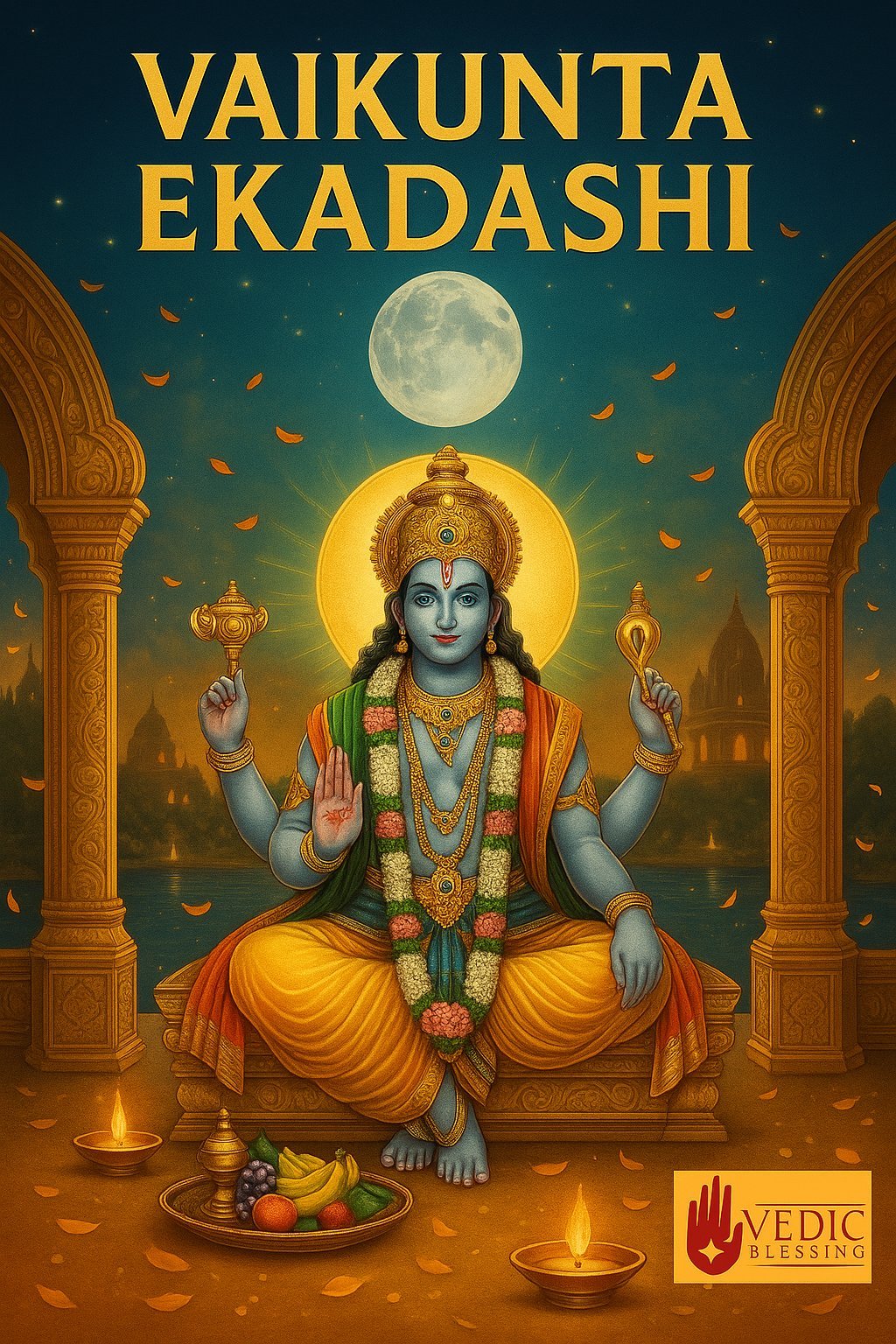
Vaikunta Ekadashi – Significance, Fasting Rules, Story
What is Vaikunta Ekadashi?
Vaikunta Ekadashi is one of the most sacred days dedicated to Lord Vishnu, observed on the 11th day (Ekadashi) of the Shukla Paksha during the Tamil month of Margazhi (Dec–Jan). It is believed that on this day, the special spiritual doorway called Vaikunta Dwaram (Sorga Vasal) opens, symbolizing the path to liberation, divine consciousness, and spiritual upliftment.
Background Story of Vaikunta Ekadashi
According to ancient scriptures, during a great cosmic battle between good and evil, Mukkoti Devatas (33 crore deities) sought refuge in Lord Vishnu. To bless and protect them, Vishnu assumed the fierce form of Mukkoti Perumal, defeated the negative forces, and opened the gates of Vaikunta to grant them peace.
Another Purana mentions a demon named Muran, who troubled sages and gods. Lord Vishnu manifested the powerful form of Ekadashi Devi, who destroyed Muran and saved the universe.
Pleased with her devotion and purity, Lord Vishnu declared:
“Those who observe the Ekadashi fast with sincerity shall attain liberation and my eternal grace.”
Thus, Vaikunta Ekadashi became a day of victory, purity, and divine blessings.
Why is Vaikunta Ekadashi Important?
The Vaikunta Dwaram opens only on this day, symbolizing entrance into divine consciousness.
Fasting and chanting remove negative karma and purify the mind.
It is believed that observing Vaikunta Ekadashi grants:
✔️ Protection from misfortunes
✔️ Peace and prosperity
✔️ Spiritual growth
✔️ Blessings equal to visiting Vishnu’s divine abode
Chanting Vishnu Sahasranamam and Govinda Nama brings powerful vibrations into the home.
When is Vaikunta Ekadashi Observed?
- Vaikunta Ekadashi falls every year around December–January, on the bright 11th day (Shukla Paksha) of Dhanurmasa/Margazhi.
- Temples like Tirupati and Srirangam open their Vaikunta Dwaram early in the morning (around 4 AM) to allow devotees to enter.
- Fasting begins at sunrise on Ekadashi and ends on Dwadashi morning after offering prayers.
Where is it celebrated?
Vaikunta Ekadashi is celebrated worldwide, especially in:
- Tirupati Sri Venkateswara Temple
- Srirangam Ranganathaswamy Temple
- Vishnu temples across Tamil Nadu, Karnataka, Andhra Pradesh, Telangana, Kerala
Homes of millions of devotees, including NRIs who perform puja online or at home with simple rituals
What Food to Eat on Vaikunta Ekadashi? (Ekadashi Diet Guide)
Foods Allowed (Satvik + Easy to Digest)
- Fruits (banana, apple, grapes, pomegranate)
- Dry fruits (dates, almonds, raisins)
- Milk, curd, buttermilk, paneer
Vegetables like
- Potato
- Sweet potato
- Bottle gourd
- Pumpkin
- Cucumber
Others
- Sama rice (Barnyard millet)
- Rajgira (Amaranth flour)
- Sabudana (sago)
- Ghee
- Honey
- Coconut water
These foods help keep the body light and mind calm.
Foods NOT Allowed
Avoid: Rice and rice products
- Wheat, maida, or grains
- Onions and garlic
- Lentils (dal)
- Non-vegetarian food
- Caffeine-heavy drinks
- Processed snacks
These foods create heaviness and tamasic (dull) energy, which is avoided during spiritual fasting.
Importance of Fasting on Vaikunta Ekadashi
Fasting on Ekadashi is not just a diet — it is a spiritual discipline.
Why fast?
- It detoxifies the body and mind
- It increases mental clarity and focus
- It reduces negative karma
- It cleanses emotional and spiritual blockages
- It aligns the body with lunar energy
- It increases sattva (purity) and devotion
It is believed that "fasting with devotion on Vaikunta Ekadashi grants the blessings equal to visiting Vaikunta itself.”
People may observe:
- Full fast (only water)
- Partial fast (milk & fruits)
- Upavaasa (one-time meal, Ekadashi-friendly foods)
The goal is purity, prayer, and presence, not physical struggle.
You can now book your Vaikunta Ekadashi Puja online at www.VedicBlessing.com and receive authentic, step-by-step priest guidance from the comfort of your home. Experience a spiritually fulfilling Vaikunta Ekadashi with trusted priests, easy digital participation, and complete devotion—all delivered the Vedic way.