🔱 Jyotirlingas
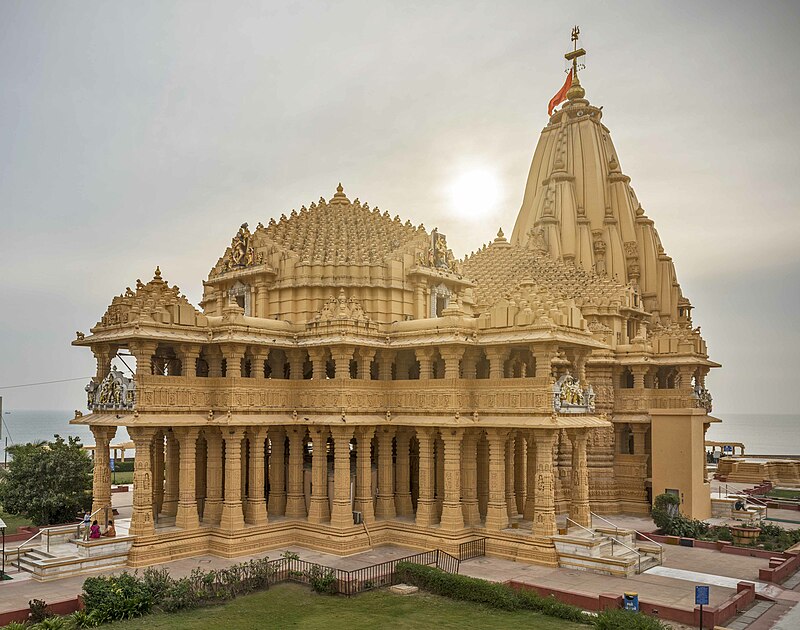
Somnath Temple
સોમનાથ મંદિર
About the Deity
The Somnath Linga is believed to embody the cosmic manifestation of Lord Shiva in his aspect as the presiding deity of the moon, Soma. Unlike other Jyotirlingas, Somnath represents the divine redemptive power of Shiva who rescues even those deeply entangled in karmic debt and worldly illusions. The linga at Somnath is uniquely revered as Chandramauleshwar, the moon-crested lord, symbolizing the luminous consciousness that guides all beings through darkness. The idol is crafted from black stone and is believed to emit a subtle radiance during particular times of the day. The sanctum sanctorum houses the linga in a specially designed chamber where the presiding deity is invoked with hymns that celebrate Shiva's benevolence toward those suffering from material distress and spiritual ignorance. The sacred linga manifests Shiva's transcendent form that responds to the sincere prayers of devotees seeking relief from planetary afflictions, particularly those troubled by lunar influences in their astrological charts. The architectural magnificence of the temple reflects the divine splendor of the deity enshrined within. The ritual worship involves specific mantras and offerings that invoke the protective and restorative aspects of Soma Shankara. Devotees who stand before this linga often experience a profound sense of peace and spiritual elevation, as if the cosmic consciousness itself is welcoming them into an embrace of grace and redemption.
Mythology & Legend
According to the sacred narratives of the Skanda Purana and Matsya Purana, the Somnath Linga originated from a remarkable incident involving the moon deity Soma and the curse of Daksha Prajapati. In the celestial realms, Soma, the ruler of the lunar sphere, became enamored with the beauty of the wives of the lunar mansion deities and took special affection for Rohini, the favorite wife of Prajapati Daksha. This favoritism incited Daksha's wrath, and he cursed Soma to suffer from consumption and gradual decline, causing the moon itself to wane and perish. As Soma's celestial light dimmed and his cosmic functions deteriorated, the entire universe fell into disarray. The seasons became chaotic, the tides moved erratically, and all lunar-dependent cycles on earth suffered disruption. Desperate and despairing, Soma approached Lord Shiva with profound devotion and performed severe penances on the sacred shores of Prabhasa Patan in Gujarat. Moved by Soma's unwavering faith and sincere penance, Shiva appeared before the moon deity and granted him a boon. The Lord revealed that though Daksha's curse could not be entirely negated, he would mitigate its effects by manifesting himself at this sacred coastal location as the Somnath Linga. Through this divine manifestation, Soma would be partially relieved of his affliction, waxing and waning in a cyclical pattern rather than experiencing complete destruction. This cycle of waxing and waning became the lunar month and the foundation of Hindu calendrical systems. Shiva declared that any being invoking his name at this sacred pilgrimage site would receive redemption and relief from the consequences of their misdeeds. Thus, Somnath became established as the first and foremost Jyotirlinga, symbolizing Shiva's boundless compassion and his supreme power to transform suffering into spiritual elevation.
Kshetra Mahatmya — Significance
Somnath holds the distinction of being the first and most revered among the twelve Jyotirlingas, a status affirmed in the Skanda Purana, Matsya Purana, and the Linga Purana. The temple is situated at Prabhasa Patan, an ancient pilgrimage site on the Gujarat coast, where three sacred rivers—the Hirchal, Kapila, and Saraswati—are believed to converge before meeting the Arabian Sea. The sanctity of Prabhasa as a tirtha is mentioned extensively in the Puranas as one of the greatest pilgrimage destinations in India, where merely residing brings the fruits of rituals and tapasya. Somnath became a symbol of Hindu cultural and spiritual resilience due to its repeated destruction and reconstruction throughout history. The temple has been demolished and rebuilt seventeen times, most notably by invaders such as Muhammad of Ghori, yet it stands today as a testament to the indomitable faith of its devotees and the eternal power of the divine principle it represents. Legends speak of multiple ancient reconstructions by various Hindu dynasties, including the Chalukyas, Rastrakutas, and Chandelas, each contributing to the temple's grandeur. During the medieval period, despite repeated iconoclastic invasions, pilgrims continued to visit the sacred site, and the temple underwent continuous restoration efforts. The current structure was rebuilt in 1951 with meticulous attention to traditional Shikara architecture. The temple complex includes multiple subsidiary shrines, tanks, and sacred spaces that serve as testimony to centuries of religious reverence. Saints and mystics including Adi Shankaracharya are believed to have visited Somnath and received divine revelations. The annual Maha Shivaratri festival witnesses millions of pilgrims congregating at the temple to celebrate the union of the cosmic consciousness with manifested creation. The temple's spiritual atmosphere is further enhanced by the evening Aarti ceremony, performed on the temple's beachfront, where the prayers of countless devotees rise toward the eternal sky.
Blessings & Benefits
- Grants relief from Chandra Dosha and Moon-related afflictions in one's horoscope.
- Blesses devotees with radiant health, emotional balance, and mental clarity.
- Fulfills sincere prayers for prosperity, marital harmony, and family well-being.
- Showers spiritual merit equal to all 12 Jyotirlinga pilgrimages on those who do Abhishek here.
- Opens the path to moksha and lasting inner peace for earnest seekers.
Temple Location
20.888, 70.4015
Visitor Information
🕐 Timings
6:00 AM - 9:30 PM (Aarti at 7 AM, 12 PM, 7 PM)
👗 Dress Code
Traditional Indian attire recommended. Non-Hindus not permitted inside sanctum.
🪔 Prasad
Charnamrit, Vibhuti
🎟 Entry
Free entry. Sound & Light Show: Rs. 100
🅿️ Parking
Available near temple complex
♿ Access
Wheelchair accessible ramps available
Best Time to Visit
📅 Best Day
Monday, Pradosham, Maha Shivaratri
🗓 Months
Shravan (July-August), Kartik (October-November), Maha Shivaratri
🌤 Season
Winter (October to March)
How to Reach
🚂 Railway
Veraval Railway Station (7 km)
✈️ Airport
Diu Airport (65 km) / Rajkot Airport (190 km)
📮 Address
Prabhas Patan, Veraval, Gujarat 362268
Major Festivals
🎉 Maha Shivaratri
🎉 Kartik Purnima
🎉 Somnath Mahotsav