🔱 Jyotirlingas
Grishneshwar Temple
घृष्णेश्वर मंदिर
About the Deity
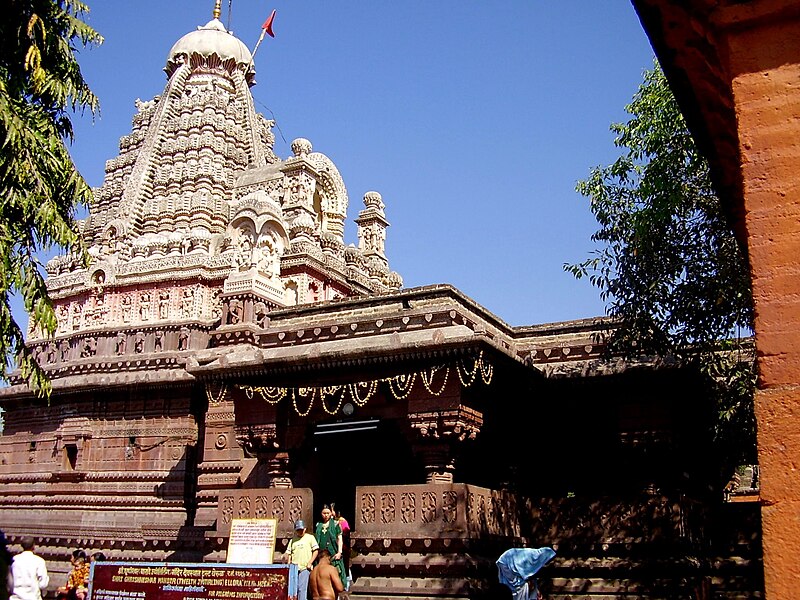
The Grishneshwar Linga at Ellora in Maharashtra represents the final and culminating manifestation of Shiva as a Jyotirlinga, embodying the principle of completion and the integration of all spiritual lessons and experiences into a unified consciousness. The presiding deity is uniquely worshipped as Grishneshwar (also spelled Ghushmeshwar), literally "Lord of the Hidden or Revealed," reflecting Shiva's capacity to reveal hidden truth and to manifest transcendent consciousness within the ordinary experience of embodied life. The linga is believed to be naturally formed and to contain within its manifestation the concentrated spiritual essence and accumulated blessings of all the preceding Jyotirlingas. The sacred shrine is positioned at Ellora, a location of extraordinary spiritual and historical significance, surrounded by magnificent cave temples carved into the mountainside that represent over a thousand years of Hindu, Buddhist, and Jain spiritual artistry and devotion. The presiding deity is invoked with specific rituals that emphasize completion, integration, and the fulfillment of spiritual aspirations that devotees have accumulated throughout their pilgrimage journeys. The sanctum sanctorum maintains a spiritually elevated atmosphere that facilitates the experience of wholeness and integration, allowing practitioners to recognize the unified consciousness underlying all apparent multiplicity and separateness. The linga is distinguished by its distinctive appearance and by its position as the culminating shrine of the Jyotirlinga pilgrimage cycle.
Mythology & Legend
The Grishneshwar Linga originates from a profound narrative concerning a devoted woman named Ghushma and her unwavering faith in Shiva despite facing seemingly impossible circumstances. According to the Skanda Purana, Shiva Purana, and regional mythology, in ancient times there lived a righteous and deeply faithful woman named Ghushma who was confronted with the most severe test of her devotion and her faith in divine justice. Through a series of tragic circumstances and seemingly malevolent circumstances, Ghushma lost all her children one by one, experiencing unbearable grief and spiritual despair as each beloved offspring was taken from her through causes beyond her control. As her heart was shattered and her faith in divine goodness wavered, Ghushma undertook an extraordinary pilgrimage across the land, visiting every major Shiva shrine seeking an explanation for her suffering and some evidence of divine compassion and justice. She visited multiple Jyotirlingas, and at each location her tears of anguish mingled with the sacred earth of the temples, and her sincere devotion began to transform her consciousness from victimhood toward surrender and ultimate trust. After visiting eleven Jyotirlingas and experiencing profound spiritual transformation through each visitation, Ghushma arrived at Ellora with a consciousness entirely transformed by pilgrimage and devotion. She performed extraordinary penance at Ellora, and Shiva, moved by her unwavering faith despite her overwhelming losses, manifested himself as the Grishneshwar Linga to grant her complete redemption and to establish this location as a shrine of ultimate completion and integration. The linga appeared at the location where Ghushma's spiritual transformation had reached its culmination, representing the integration of all suffering and all joy into a unified consciousness that transcends the pairs of opposites. Thus Grishneshwar became the final Jyotirlinga, representing the ultimate integration of the spiritual journey and the establishment of unshakeable faith that persists even when faced with the most severe circumstances.
Kshetra Mahatmya — Significance
Grishneshwar holds extraordinary significance as the twelfth and final Jyotirlinga, located at Ellora in Maharashtra, a location of exceptional spiritual importance and artistic achievement in Hindu civilization. The Skanda Purana, Shiva Purana, and regional texts celebrate Grishneshwar as the culminating shrine of the Jyotirlinga pilgrimage, the location where all spiritual journeys achieve completion and integration. Ellora itself is famous for its magnificent complex of cave temples carved into the mountainside, representing Hindu, Buddhist, and Jain religious traditions and representing over a thousand years of artistic and spiritual achievement. The thirty-four major caves at Ellora, with thousands of sculptural details and intricate carvings, constitute one of the greatest artistic achievements of ancient India and create an extraordinarily powerful spiritual and cultural resonance that amplifies the blessings of the Grishneshwar Linga. The temple is specifically designed as a center for completion and integration, incorporating architectural elements that emphasize the culmination of spiritual journeys and the integration of all spiritual experiences into unified consciousness. The kshetra is surrounded by sacred spaces, meditation chambers, and ritual areas designed to facilitate the deepest levels of spiritual practice and the experience of ultimate wholeness. The temple has maintained continuous worship traditions spanning over one thousand years, with evidence of patronage from various Hindu kingdoms and dynasties, including the Rashtrakuta dynasty which commissioned many of the magnificent cave temples at Ellora. The sanctuary incorporates traditional Marathi Shikara architectural elements combined with elements incorporating influences from the broader Ellora artistic tradition. The presence of the extraordinary cave temples at Ellora creates a unique geographical and spiritual environment where one encounters not only the Grishneshwar Linga but also the accumulated spiritual achievement of multiple religious traditions represented in stone and carved with extraordinary artistry. The completion of the Jyotirlinga pilgrimage at Grishneshwar is considered one of the most spiritually significant accomplishments possible, with devotees reporting profound transformation and spiritual integration upon completing the sacred Char Dham and Jyotirlinga circuits.
Blessings & Benefits
- Completes the sacred 12 Jyotirlinga pilgrimage circuit, granting liberation from all karmic debts.
- Blesses grieving parents and families with healing, hope, and renewed joy.
- Heals broken relationships, deep betrayal, and long-standing family disputes.
- Those who cannot complete all 12 Jyotirlingas are advised to visit Somnath and Grishneshwar for equal merit.
- Blesses devoted pilgrims with compassion, forgiveness, and the supreme grace of moksha.
Temple Location
20.0258, 75.178
Visitor Information
🕐 Timings
5:30 AM - 9:30 PM
👗 Dress Code
Dhoti for men mandatory inside sanctum. Traditional attire for women.
🪔 Prasad
Prasad with bel leaves
🎟 Entry
Free entry
🅿️ Parking
Available
♿ Access
Accessible
Best Time to Visit
📅 Best Day
Monday, Maha Shivaratri, Pradosham
🗓 Months
Shravan, Maha Shivaratri
🌤 Season
Winter (October to February)
How to Reach
🚂 Railway
Aurangabad Station (30 km)
✈️ Airport
Chikkalthana Airport, Aurangabad (35 km)
📮 Address
Verul, near Ellora Caves, Chhatrapati Sambhajinagar District, Maharashtra 431102
Major Festivals
🎉 Maha Shivaratri
🎉 Shravan Somvar
🎉 Kartik Purnima