🌸 Shakti Peethas
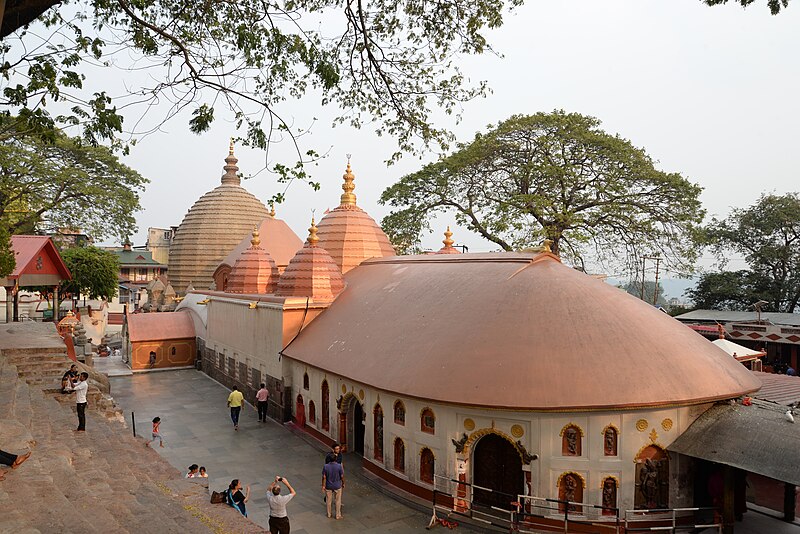
Kamakhya Temple
কামাখ্যা মন্দির
About the Deity
Kamakhya, the primordial goddess enshrined at Nilachal Hill in Guwahati, represents one of the most ancient and spiritually significant manifestations of Shakti in Hindu cosmology. The temple is dedicated to the goddess in her form as Sati, specifically honoring the spot where the womb and genitals of the divine feminine fell during the catastrophic dissolution event. Kamakhya embodies the principle of creative fertility, regeneration, and the cosmic feminine power that sustains all creation. The deity is traditionally depicted in iconography as a powerful yet graceful form, often shown in meditation or in dynamic cosmic dance poses. The goddess at Kamakhya is worshipped as the ultimate source of procreative energy, the Yoni Shakti that grants abundance, fertility, and the blessing of offspring to devotees. The temple sanctuary itself is designed in the shape of a vulva, a sacred geometric representation that emphasizes the goddess's role as the supreme creatrix. The sanctum sanctorum contains no stone idol; instead, the goddess is represented through the natural spring and the yoni symbol formed by the confluence of waters, making Kamakhya unique among Shakti Peethas. This aniconic worship reflects the most primordial understanding of divinity—the goddess as formless yet omnipresent, manifest in nature's most vital forces. The annual Ambubachi festival celebrates the goddess's menstrual cycle, a sacred observance that honors the rhythms of fertility and cosmic renewal that Kamakhya represents. Pilgrims who journey to Kamakhya encounter the raw, untamed power of Shakti in her most primal and creative aspect. The goddess accepts offerings of red hibiscus flowers and honey, symbolizing fertility and sweetness. Her worship emphasizes the sanctity of creation, the honoring of feminine power, and the understanding that all existence emerges from the divine womb represented at this sacred site.
Mythology & Legend
The Kamakhya temple commemorates the profound cosmic drama of the Daksha Yagna, where Sati's devotion to her beloved Shiva transcended all worldly conventions. When the revered but arrogant Daksha prajapati performed his grand yagna sacrifice, he deliberately excluded Shiva from the ritual, an unforgivable insult in the celestial hierarchy. Sati, the devoted daughter of Daksha and beloved wife of Shiva, was deeply wounded by her father's disrespect toward her divine husband. Unable to tolerate this transgression against Shiva's honor, and overcome with grief and wounded pride, Sati renounced her mortal body by immolating herself in the sacrificial fire of her father's yagna. The god Shiva, sensing his beloved's suffering and death, descended into an uncontrollable frenzy of cosmic grief, performing the tandava, the violent dance of destruction that threatened to annihilate the three worlds. To prevent universal annihilation, the other devas and Vishnu himself intervened, eventually removing Sati's lifeless form from the yagna fire and carrying it away. As Shiva wandered the cosmos in his grief-stricken state, the body of Sati was scattered across the Indian subcontinent. At the site of Nilachal Hill in Assam, the womb and yoni of the goddess fell, creating the sacred space of Kamakhya. Local legends describe how divine light burst forth from the earth at this location, how the natural springs that flow there are blessed by the goddess's presence, and how the land itself became fertile and abundant following this cosmic event. The region around Guwahati flourished with agriculture and prosperity, establishing Kamakhya as the source of fertility and creative abundance. Over centuries, tantric traditions developed elaborate ritual practices at Kamakhya, recognizing the site as the supreme center of Shakti worship. The goddess is believed to rejuvenate herself annually, a concept reflected in the Ambubachi festival when the temple is closed for three days to honor the goddess's natural cycle. Pilgrims have journeyed to Kamakhya for millennia seeking blessings of fertility, prosperity, and the divine grace of the universal mother.
Kshetra Mahatmya — Significance
Kamakhya temple holds an unparalleled position in Hindu sacred geography as one of the most ancient and mystically potent Shakti Peethas, with references appearing in the Kalika Purana, Devi Bhagavata, and various tantric texts that emphasize its supreme significance. The Kalika Purana specifically describes Kamakhya as the primordial seat of Shakti, the location where the cosmic feminine power was first invoked after Sati's sacrifice. The temple's existence can be traced back to antiquity, though its current architectural form dates to the 16th-17th centuries during the reign of the Ahom dynasty. The site sits atop Nilachal Hill, a geographical location of immense sacred power where multiple ley lines of cosmic energy are believed to converge. This convergence of spiritual energies is said to amplify the efficacy of rituals and prayers performed at the temple, making it particularly powerful for tantric and Shakti worship practices. The temple complex is strategically positioned overlooking the Brahmaputra River, one of the most sacred waterways in Hinduism, further enhancing its spiritual resonance. The annual Ambubachi Mela, held during the monsoon months of May-June, attracts hundreds of thousands of pilgrims and stands as one of the world's largest religious gatherings dedicated exclusively to feminine divinity. This festival commemorates the goddess's renewal and has been celebrated for centuries with elaborate rituals and ceremonies that honor the cycles of nature and femininity. The sanctum at Kamakhya is unique among Shakti Peethas in that it contains no carved idol, preserving the most ancient and pure form of Shakti worship where the goddess is honored through natural elements—the yoni formation created by natural springs. Tantric scholars recognize Kamakhya as a supreme chakra point in the cosmic geography of the goddess, essential for the spiritual development of advanced practitioners. The temple's presiding priests have maintained unbroken lineages of ritual knowledge spanning centuries, preserving esoteric practices and mantras that are specific to Kamakhya worship. This makes the temple not merely a pilgrimage site but an active center of living Hindu spirituality where ancient wisdom practices continue uninterrupted.
Blessings & Benefits
- Fulfills all sincere desires — material, spiritual, and emotional — for devoted pilgrims.
- Granted as the most powerful site for blessings related to fertility and new beginnings.
- Removes Tantra-related issues, black magic, and negative energies from one's life.
- Blesses women with strength, grace, and the boundless power of the divine feminine.
- Bestows the ultimate spiritual liberation to all who approach the Goddess with a pure heart.
Temple Location
26.1664, 91.7051
Visitor Information
🕐 Timings
5:30 AM - 10:00 PM (Summer), 5:30 AM - 9:30 PM (Winter)
👗 Dress Code
Traditional attire. Sarees for women preferred.
🪔 Prasad
Panchamrit, Sindoor prasadam
🎟 Entry
Free. Special Puja tickets available.
🅿️ Parking
Available at base of hill
♿ Access
Accessible by car up to a point, steep steps inside
Best Time to Visit
📅 Best Day
Tuesday, Friday, Ashtami, Navami, Amavasya
🗓 Months
Ambubachi (June-July), Durga Puja, Manasha Puja
🌤 Season
All seasons
How to Reach
🚂 Railway
Guwahati Station (7 km)
✈️ Airport
Lokpriya Gopinath Bordoloi International Airport, Guwahati (23 km)
📮 Address
Nilachal Hill, Guwahati, Assam 781010
Major Festivals
🎉 Ambubachi Mela
🎉 Durga Puja
🎉 Pohan Biya (annual Devi marriage festival)