🌸 Shakti Peethas
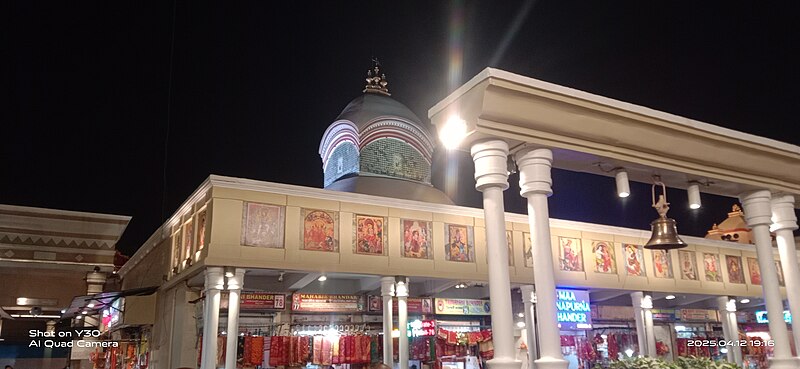
Kalighat Temple
কালীঘাট মন্দির
About the Deity
Kali at Kalighat represents the fierce, dynamic, and ultimately compassionate manifestation of the Divine Mother in her most powerful form, embodying the goddess's role as the destroyer of ignorance and ego. Kalighat means "the steps of Kali," referring to the sacred location where the right toe of Sati fell, establishing this site as a center of Kali's intense and transformative power. Unlike other Shakti Peethas where the fallen body parts are physically housed in sanctuaries, at Kalighat the goddess manifests through a small foot relic and the sacred waters of the Hooghly River, which is considered a stream of her divine energy. Kali in the Kalighat tradition is depicted in her most recognizable iconography—dark-complexioned, terrifying to the ignorant, adorned with a garland of severed heads representing cut egos, wearing a girdle of severed arms representing bound actions, standing with one foot on Shiva's prone form in cosmic ecstasy. Yet this fierce appearance conceals the deepest compassion and maternal love toward her genuine devotees. She is worshipped as Shyama Kali, the dark mother who transforms through destruction, clearing all obstacles from the path of spiritual evolution. The deity accepts animal sacrifices, though many modern temples have moved toward symbolic offerings, reflecting the principle that Kali destroys what must be destroyed for spiritual progress. Her temple at Kalighat represents the meeting point of the earthly and divine, where material reality intersects with transcendent truth, and where genuine seekers can encounter the raw power of the Divine Mother beyond all comfortable concepts. The goddess's presence at Kalighat is felt as an immediate and overwhelming spiritual force—seekers report profound experiences of dissolution of ego barriers and direct encounter with cosmic reality. The deity dances at the edge of existence and non-existence, perpetually liberating souls through her terrible grace.
Mythology & Legend
The mythology of Kalighat is inextricably woven into the cosmic drama of Sati's sacrifice and the devastation that followed. When Sati's body fell into the sacrificial fire of Daksha's yagna, overcome with grief and rage at his beloved's immolation, Shiva manifested the most terrifying form imaginable—Kali emerged from his third eye, a goddess of such fierce power that the celestial devas trembled in fear. Kali represents the ultimate expression of Sati's anguish, her violation, and her righteous fury at the desecration that had occurred. According to the Kalika Purana, specific to the Kalighat tradition, after the yagna was destroyed and Daksha was punished, Shiva carried Sati's body in his cosmic grief through the lands, seeking to find peace. The goddess's right toe fell upon the sacred soil of present-day Kolkata, where it infused the earth with Kali's tremendous power. As Sati's body scattered across the lands, the various emanations of the goddess crystallized at specific locations, and at Kalighat, her power coalesced into the form of Kali—fierce, dark, absolute, accepting even what is most forbidden in the cosmic order. Local Bengali tradition adds layers of sacred history, describing how the Hooghly River itself is considered the tears of Kali shed for her devotees, and how the goddess protects the sacred geography of Bengal with her terrible power. The 18th-century saint Sri Ramakrishna Paramahamsa reported direct encounters with Kali at this temple, describing her as the ultimate mother who destroys all limitation and falsehood. His teachings elevated Kalighat into a center not just of ritualistic worship but of authentic spiritual realization, where the most devastating transformations of consciousness are possible. The mythology emphasizes that Kali's destruction is eternally redemptive—she destroys only that which binds us to illusion, removing all obstacles between the soul and liberation.
Kshetra Mahatmya — Significance
Kalighat temple, located on the banks of the Hooghly River in Kolkata, holds an exalted position in Hindu sacred geography as documented in the Kalika Purana, the Devi Bhagavata, and various tantric texts that emphasize its role as a supreme center of Kali worship and spiritual transformation. The temple's location at the confluence of the Hooghly and the sacred geography of Bengal makes it a site of tremendous spiritual power where the fabric between material and transcendent realities is particularly thin. The Kalika Purana provides extensive descriptions of Kalighat's significance, identifying it as one of the 51 Shakti Peethas and describing the specific blessings available to those who worship here. The temple's documented history can be traced back centuries, with significant developments during the medieval period and major renovations under various rulers who recognized its supreme importance. The 18th-century emergence of Sri Ramakrishna Paramahamsa as the temple's high priest transformed Kalighat into not merely a pilgrimage destination but a beacon of spiritual enlightenment whose influence spread throughout the Hindu world and beyond. Ramakrishna's direct mystical experiences and teachings at Kalighat established a living bridge between ancient Vedantic wisdom and modern spiritual practice, attracting thousands of genuine seekers. The temple complex itself is architecturally significant, featuring a distinctive Bengali style of construction that reflects centuries of cultural and spiritual evolution. The sacred waters of the Hooghly River flowing past the temple are considered charged with the goddess's power, and bathing in these waters is believed to purify karma and accelerate spiritual advancement. The temple serves as a center for tantric studies and practices, with various schools of Kali worship maintaining active presence and conducting advanced rituals. The annual Kali Puja celebrations, particularly during Diwali when Kali is honored alongside Lakshmi, transform Kalighat into a vibrant center of religious fervor drawing pilgrims from across the world. The temple's influence extends far beyond its physical location, serving as a symbol and center for the understanding of Shakti as the ultimate power underlying cosmic existence.
Blessings & Benefits
- Grants powerful protection from all forms of evil, negativity, and harm.
- Removes obstacles, dissolves fear, and fills the devotee's life with courage and clarity.
- Blesses devotees with success in all righteous endeavours and victory over adversity.
- Offers profound healing for grief, trauma, and emotional wounds of the heart.
- Blesses sincere pilgrims with the supreme grace of Goddess Kali — strength, peace, and liberation.
Temple Location
22.5196, 88.3432
Visitor Information
🕐 Timings
5:00 AM - 2:00 PM, 5:00 PM - 10:30 PM
👗 Dress Code
Traditional Indian attire
🪔 Prasad
Chaler Prasad (rice), Bhog
🎟 Entry
Free
🅿️ Parking
Limited
♿ Access
Accessible
Best Time to Visit
📅 Best Day
Tuesday, Friday, Kali Puja, Amavasya
🗓 Months
Kali Puja (October-November), Durga Puja
🌤 Season
All seasons
How to Reach
🚂 Railway
Kalighat Metro Station (0.5 km)
✈️ Airport
Netaji Subhas Chandra Bose International Airport, Kolkata (18 km)
📮 Address
Kalighat, Kolkata, West Bengal 700026
Major Festivals
🎉 Kali Puja
🎉 Durga Puja
🎉 Makar Sankranti