🌸 Shakti Peethas
Jwalamukhi Temple
ज्वालामुखी मंदिर
About the Deity
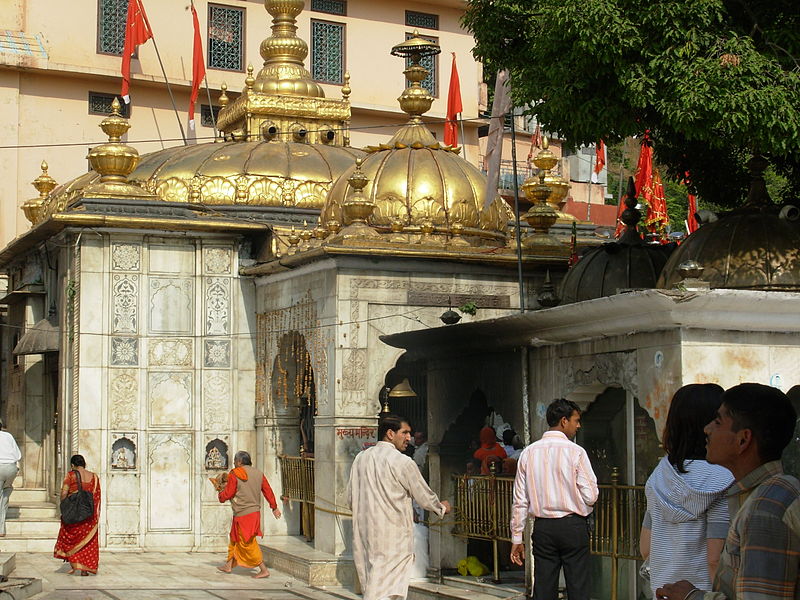
Jwalamukhi, the goddess of eternal flames, represents a unique and extraordinary manifestation of Shakti in the form of pure cosmic fire—no stone idol, no carved image, but living flames that burn continuously without any visible fuel source. This natural phenomenon of self-perpetuating fires on the mountainside is worshipped as the direct embodiment of the goddess, making Jwalamukhi perhaps the most literal and ancient representation of Shakti's energy in all of Hindu sacred geography. The tongue of Sati fell at this location in the Kangra valley, and the goddess manifests here specifically through the eternal flames that emerge from the earth itself, representing the cosmic fire that consumes all ignorance and limitation. Jwalamukhi embodies the principle of purification through fire, the divine light that illuminates all shadows, and the transformative power that burns away all that no longer serves spiritual evolution. The goddess is depicted in classical iconography as radiant, golden-complexioned, with flames emanating from her form, adorned with jewels and garlands, often shown in a dancing pose that reflects her perpetually active, purifying nature. Unlike other Shakti Peethas where devotees offer prayers before carved idols, at Jwalamukhi the goddess is directly invoked through ancient rituals performed before the living flames themselves, making this temple an extraordinary center where the boundary between devotee and divinity becomes extraordinarily permeable. The worship of Jwalamukhi requires no priestly intermediation; the fires themselves are the direct expression of the goddess's will and consciousness. The naturally occurring methane and hydrogen gas that creates these flames is understood by devotees not as a geological phenomenon but as the breath and manifestation of the cosmic mother herself, burning eternally for the liberation and purification of her children. The flames at Jwalamukhi are believed to have never diminished in intensity or frequency over recorded history, despite being exposed to all weather conditions, treating them as a living testimony to the goddess's eternal presence and power.
Mythology & Legend
The Jwalamukhi mythology is rooted in the heartbreaking cosmic drama of Sati's sacrifice and the terrible consequence that followed. When Sati immolated herself in her father's sacrificial fire, her devoted husband Shiva was overcome with a grief so profound and a rage so consuming that he threatened to destroy all three worlds through his cosmic dance of destruction. To preserve universal existence, the devas and Vishnu themselves intervened, physically removing Sati's lifeless body from the yagna fire and attempting to transport it to safety. As they carried her across the sacred landscape of India, her divine essence could not be contained by mortal hands. At the Kangra valley, specifically at the location now known as Jwalamukhi Hill, the goddess's tongue—the instrument of speech, blessing, and manifestation—fell to earth, and at that precise moment, flames burst forth from the ground itself. These were not ordinary fires but the crystallized power of Sati's cosmic essence, the tongue of the goddess continuing to speak eternal truths and bless her devotees forever. According to the Markandeya Purana and local Kangra legends, when the flames first burst forth, they blazed with such intensity that the surrounding area was purified of all negative forces and transformed into sacred ground. The local kings recognized the sacred significance of these flames and built temples to honor the goddess manifesting through them. Hindu tradition describes how the flames at Jwalamukhi speak to the hearts of pure devotees, how they can be directed toward specific needs through proper ritual, and how the goddess grants direct darshan through the visual manifestation of her power. The mythology emphasizes that at Jwalamukhi, unlike other temples where the goddess is represented through statues that must be invoked, the deity is eternally present in fully manifest form, requiring only that devotees approach with sincere heart and pure intention. Ancient tantric texts describe how yogis have sat before these flames in meditation and received direct transmission of Shakti's liberating power. The flames are believed to be the goddess's eternal blessings, continuously pouring forth her grace upon all humanity.
Kshetra Mahatmya — Significance
Jwalamukhi temple stands as an extraordinary pilgrimage site documented in the Markandeya Purana, the Devi Bhagavata, the Ashta Shakti Upanishads, and various tantric texts that identify it as a supremely powerful Shakti Peetha where natural cosmic forces manifest in direct form. The geographical location in the Kangra Valley of Himachal Pradesh, at an elevation where the veil between material and subtle realities becomes translucent, contributes significantly to the temple's spiritual power. The naturally occurring flames that emerge from multiple points around the hillside have been documented by countless visitors, pilgrims, and scholars across centuries, creating an unbroken historical record of the goddess's continuous manifestation. The geological phenomenon of these eternal flames, powered by natural gas deposits beneath the earth, is interpreted by Hindu tradition not as coincidental but as the expression of cosmic will manifesting through natural law. The temple's significance is emphasized in the Markandeya Purana, which specifically describes the Shakti Peetha at Jwalamukhi and the unique blessings available through direct encounter with the goddess in her element of fire. The temple has maintained continuous worship for over a thousand documented years, with historical records indicating major developments during the medieval period and significant renovations under various regional rulers. The architectural structure built around the flames is simple yet profound, designed to direct the devotee's attention entirely toward the goddess manifest in fire rather than toward carved images or architectural grandeur. This simplicity reflects the most ancient understanding of sacred space—that the divine presence itself requires no human embellishment. The temple attracts scholars of tantra, advanced yoga practitioners, and sincere spiritual seekers who recognize Jwalamukhi as a unique center where the goddess's power manifests in direct, unmediated form. The annual Jwalamukhi Mela, held during the summer months, brings thousands of devotees to witness and honor the eternal flames. The temple's presiding priests maintain specialized knowledge of fire rituals and the proper invocations specific to this Shakti Peetha, preserving ancient practices that channel the goddess's power toward specific purposes.
Blessings & Benefits
- Grants fulfillment of heartfelt desires — the eternal flame of Jwalamukhi never extinguishes hope.
- Frees devotees from generational curses, negative energies, and recurring misfortune.
- Blesses with vibrant health, renewed vitality, and freedom from chronic ailments.
- Protects devotees from all forms of harm, ill-will, and hostile circumstances.
- Blesses devoted pilgrims with the radiant grace of the flame goddess and spiritual liberation.
Temple Location
31.8742, 76.3181
Visitor Information
🕐 Timings
5:00 AM - 10:00 PM
👗 Dress Code
Traditional Indian attire
🪔 Prasad
Prasad available at temple
🎟 Entry
Free
🅿️ Parking
Available
♿ Access
Accessible
Best Time to Visit
📅 Best Day
Tuesday, Friday, Navratri
🗓 Months
Navratri (March-April and September-October)
🌤 Season
Spring and Autumn
How to Reach
🚂 Railway
Pathankot Station (83 km)
✈️ Airport
Gaggal Airport, Kangra (30 km)
📮 Address
Jwalamukhi, Kangra District, Himachal Pradesh 176031
Major Festivals
🎉 Navratri
🎉 Jwalamukhi Fair