🌸 Shakti Peethas
Tarapith Temple
তারাপীঠ মন্দির
About the Deity
Tara, the goddess enshrined at Tarapith in Birbhum, West Bengal, represents one of the most mysterious, powerful, and mystically potent forms of the Divine Mother, honoring the sacred location where the eye of Sati fell to earth. Tara is depicted in classical tantric iconography as dark-complexioned, standing in a dynamic pose with one foot raised and one lowered, adorned with minimal ornamentation yet radiating tremendous power and presence. She is shown with a skull cup in one hand and a curved sword or knife in the other, adorned with garlands of severed heads and a girdle of severed arms—imagery that initially appears terrifying but represents the destruction of ego, attachment, and all limiting conceptions of reality. Tara in the Tarapith tradition is fundamentally a goddess of liberation, representing the direct path to ultimate spiritual realization through the transcendence of all fear, all attachment, and all false identification. Her eye, the eye of perception and inner vision, represents the goddess's capacity to see clearly beyond all illusion, to perceive the true nature of reality, and to grant such clear vision to sincere practitioners. Tara is known as Ugra Tara (the fierce Tara) in tantric traditions, yet she is simultaneously understood as the most compassionate mother toward those who approach her with genuine sincerity and absolute surrender. Unlike other forms of the goddess that may grant worldly blessings or comfort, Tara cuts away everything that no longer serves the seeker's liberation, functioning as both destroyer and redeemer. She represents the intersection of terror and grace, the place where the soul encounters itself directly and is stripped of all protection except the goddess's infinite compassion.
Mythology & Legend
The Tara mythology of Tarapith is rooted in the cosmic event of Sati's sacrifice while enriched through the specific tantric traditions and practices unique to Birbhum, West Bengal. When Sati's divine form dispersed following her immolation, at the sacred location of Tarapith, her eye fell and transformed into the powerful goddess Tara, manifesting not primarily as a granter of worldly blessings but as a direct agent of liberation and spiritual realization. The Markandeya Purana, the Kalika Purana, and various tantric texts describe Tara as the eye of perception through which all beings can see the true nature of reality beyond all illusion. The local mythology of Birbhum describes how the goddess appeared to tantric yogis and realized masters, granting them direct transmission of her liberating power and establishing Tarapith as a paramount center of advanced spiritual practice. The legends emphasize that Tara is not a goddess who grants easy comfort or worldly success but rather one who removes all obstacles to genuine liberation—sometimes through apparent harshness, sometimes through unexpected grace. The Bengali saint traditions, particularly those associated with Ramprasad Sen and other great devotees of Kali and Tara, describe the goddess as the living guru who guides sincere seekers through all stages of spiritual awakening. Stories in the regional mythology describe advanced yogis sitting in meditation at Tarapith for years, drawing directly upon Tara's power for kundalini awakening and the realization of their true nature. The mythology emphasizes that at Tarapith, unlike temples primarily focused on granting blessings, the goddess functions as a direct agent of transformation and liberation—she does not give comfort to the ego but systematically destroys all ego-structures until only pure consciousness remains. The fierce iconography and the unique rituals associated with Tara worship at Tarapith represent not limitation or negativity but the recognition that genuine spiritual development requires confronting and transcending all fear.
Kshetra Mahatmya — Significance
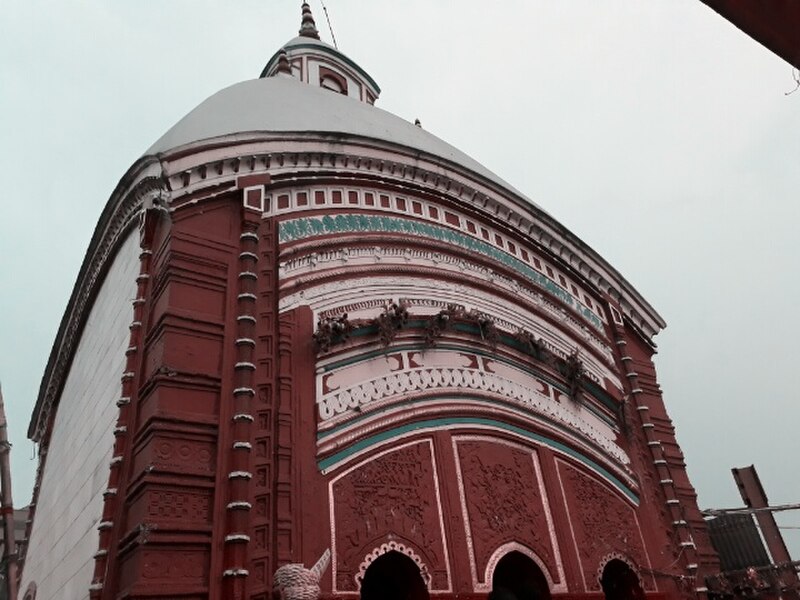
Tara temple at Tarapith holds an exalted and somewhat mysterious position in Hindu sacred geography as documented in the Kalika Purana, the Markandeya Purana, and various tantric texts that emphasize its supreme importance as a center of advanced Shakti worship and spiritual transformation. The Kalika Purana specifically describes Tarapith as a paramount Shakti Peetha where the goddess grants direct darshan to sincere practitioners and accelerates spiritual development through her transformative power. The geographical location of Tarapith in Birbhum, West Bengal, in the eastern part of India, places it at the heart of the Bengal region that has historically been the center of Tantric Buddhism and Hindu Tantric practices. Historical records document the temple's continuous existence for centuries, with particular development and recognition during the medieval period when various yogic schools and tantric practitioners established Tarapith as a major center of their practice. The temple is relatively small and architecturally simple compared to other major Shakti Peethas, reflecting the principle that at Tarapith, the goddess's direct presence is more important than architectural grandeur. The annual Tara Puja celebrations, held during specific lunar moments, attract tantric practitioners and spiritual seekers from across India and beyond. The temple maintains a living tradition of tantric practice and ritual, with the presiding priests and resident yogis maintaining specialized knowledge of the goddess's specific mantras and practices. The sacred soil of Tarapith, the waters that flow through it, and the energy field surrounding the temple are believed to be uniquely charged with the goddess's transformative power. Unlike pilgrimage sites primarily focused on fulfilling wishes or granting comfort, Tarapith functions as a center for serious spiritual practice where the goddess directly supports the seeker's journey toward liberation. The temple's influence extends throughout the tantric traditions of both Hindu and Buddhist schools, with numerous texts on advanced spiritual practice and tantric methodology referencing Tarapith as a paramount site of power.
Blessings & Benefits
- Fulfills all sincere desires — including those considered impossible — for devoted pilgrims.
- Granted as especially powerful for protection from evil, black magic, and negative forces.
- Blesses devotees with healing from deep emotional wounds, grief, and personal loss.
- Bestows the grace of Goddess Tara — the compassionate liberator — to all who approach with faith.
- Blesses sincere pilgrims with strength, resilience, and the supreme grace of spiritual liberation.
Temple Location
24.1771, 87.6671
Visitor Information
🕐 Timings
6:00 AM - 10:00 PM
👗 Dress Code
Traditional attire
🪔 Prasad
Khichdi prasadam, Bhog
🎟 Entry
Free
🅿️ Parking
Available
♿ Access
Accessible
Best Time to Visit
📅 Best Day
Tuesday, Friday, Kali Puja, Amavasya
🗓 Months
Kali Puja, Navratri, Basanti Puja
🌤 Season
All seasons
How to Reach
🚂 Railway
Rampurhat Station (5 km)
✈️ Airport
Netaji Subhas Chandra Bose International Airport, Kolkata (230 km)
📮 Address
Tarapith, Rampurhat, Birbhum District, West Bengal 731233
Major Festivals
🎉 Kali Puja
🎉 Basanti Puja
🎉 Navratri