🌸 Shakti Peethas
Mansa Devi Temple
मनसा देवी मंदिर
About the Deity
Mansa Devi, the goddess enshrined at Mansa Devi temple in Haridwar, Uttarakhand, represents the wish-fulfilling, desire-manifesting, dream-granting aspect of the Divine Mother, honoring the sacred location where the head and mind of Sati fell to earth. The goddess is depicted in classical iconography as beautiful, radiant, crowned with a jeweled diadem, adorned with precious ornaments, and surrounded by symbols of prosperity and wish-fulfillment. Mansa Devi embodies the cosmic principle through which all desires, intentions, and aspirations manifest into reality. She is worshipped as the supreme fulfiller of wishes, the goddess who grants blessings for all sincere requests made with pure heart and genuine faith. Her association with the head and mind represents the power of consciousness itself—how thoughts become reality, how intention becomes manifestation, and how the focused power of the mind can create anything within the cosmic order. Mansa Devi is unique in the tradition of Shakti worship in being explicitly invoked for the fulfillment of specific desires and wishes, making her particularly accessible to householders and those engaged in normal worldly life. Yet her deeper significance encompasses the understanding that the purest desire is union with the divine, and that the wish-fulfilling power she represents can be directed toward this ultimate aspiration. The goddess is worshipped at Haridwar, one of the holiest sites in Hindu pilgrimage, where pilgrims naturally gather to purify themselves and renew their spiritual intentions. Mansa Devi's presence at Haridwar makes this site uniquely powerful as a place where material desires and spiritual aspiration merge, where the goddess simultaneously satisfies ordinary human needs and elevates consciousness toward its highest potential.
Mythology & Legend
Mansa Devi mythology is rooted in the cosmic event of Sati's sacrifice while enriched through unique local legends and traditions specific to Haridwar and the Uttarakhand region. When Sati immolated herself in Daksha's sacrificial fire, her divine consciousness dispersed across the sacred landscape, and at the location of present-day Haridwar, specifically on the Bilwa Parvat mountain, her head and mind fell to earth, transforming into the wish-fulfilling goddess Mansa Devi. According to the Markandeya Purana and local Uttarakhand traditions, when the goddess's head manifested at this location, the entire region became transformed into a center of wish-fulfillment where sincere prayers were instantly answered. The local mythology describes how the goddess appeared to the ancient sages and kings of Uttarakhand, offering her blessings and establishing Mansa Devi temple as one of the most powerful wish-fulfilling centers in all of India. The legends emphasize that Mansa Devi is particularly responsive to sincere, heart-felt prayers and that the goddess has a special relationship with devotees who approach her with pure intentions and genuine humility. Stories abound in the regional mythology of how impossible wishes have been granted, how the goddess has appeared in dreams to her devotees, and how sincere faith combined with her grace has created miraculous transformations in countless lives. The mythology describes a unique tradition wherein pilgrims tie threads on the temple's pillar when making wishes, and upon the fulfillment of those wishes, they return to untie the threads in gratitude—a living testament to the goddess's consistent and compassionate responsiveness. The myth emphasizes that Mansa Devi's power to manifest desires comes from her understanding that sincere prayer represents the soul reaching toward its highest purpose, and the goddess responds by removing obstacles and creating circumstances that allow wishes to flourish.
Kshetra Mahatmya — Significance
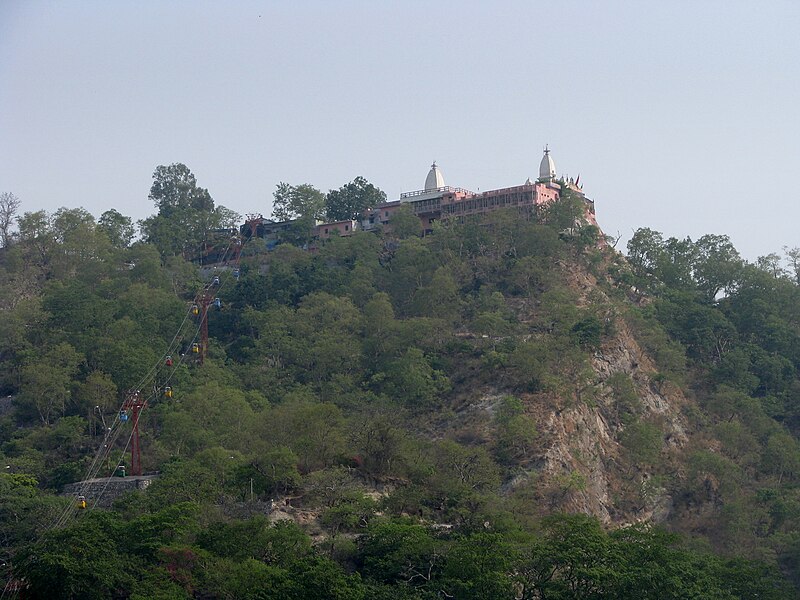
Mansa Devi temple holds supreme significance in Hindu sacred geography as located in Haridwar, Uttarakhand—one of the holiest pilgrimage cities in India and a location of immense spiritual power. The Markandeya Purana, the Shakti Peetha traditions, and the Uttarakhand spiritual texts all emphasize Mansa Devi as a paramount center of Shakti worship. The temple's location at Bilwa Parvat, overlooking the sacred Ganges River at one of its most spiritually significant points, creates a site of extraordinary convergence of divine energy. Historical records document the temple's continuous existence for over a thousand years, with documented development during various periods of history. The temple serves as one of the stations on the major Haridwar pilgrimage circuit, attracting millions of devotees annually. The Ganges River flowing at the base of Mansa Devi hill is considered to carry the goddess's blessings and to amplify the wish-fulfilling power of prayers offered at the temple. The annual Mansa Devi festival, held during specific occasions, attracts massive gatherings of devotees seeking the goddess's blessings. The temple's architecture features a distinctive design that has been developed and refined over centuries, reflecting ongoing devotional investment. The presiding priests maintain lineages of worship expertise specific to Mansa Devi, preserving the authentic practices and mantras. The temple remains an active center of pilgrimage and worship where countless miracles continue to be reported by devotees.
Blessings & Benefits
- Fulfills heartfelt wishes tied as strings to the sacred tree in the temple premises.
- Blesses devotees with prosperity, good health, and freedom from long-standing worries.
- Granted as especially auspicious as part of the Char Dham circuit of Uttarakhand.
- Removes obstacles, brings clarity, and guides devotees toward their highest life purpose.
- Blesses sincere pilgrims with the abundant grace of Mansa Devi — the wish-fulfilling mother.
Temple Location
29.9652, 78.1603
Visitor Information
🕐 Timings
6:00 AM - 8:00 PM
👗 Dress Code
Traditional Indian attire
🪔 Prasad
Prasad available
🎟 Entry
Free. Ropeway available.
🅿️ Parking
Available
♿ Access
Ropeway for mobility-impaired
Best Time to Visit
📅 Best Day
Tuesday, Friday, Purnima, Navratri
🗓 Months
Navratri, Kumbh Mela
🌤 Season
All seasons
How to Reach
🚂 Railway
Haridwar Station (3 km)
✈️ Airport
Jolly Grant Airport, Dehradun (35 km)
📮 Address
Bilwa Parvat, Haridwar, Uttarakhand 249401
Major Festivals
🎉 Navratri
🎉 Kumbh Mela (every 12 years at Haridwar)
🎉 Ganga Dussehra