🌸 Shakti Peethas
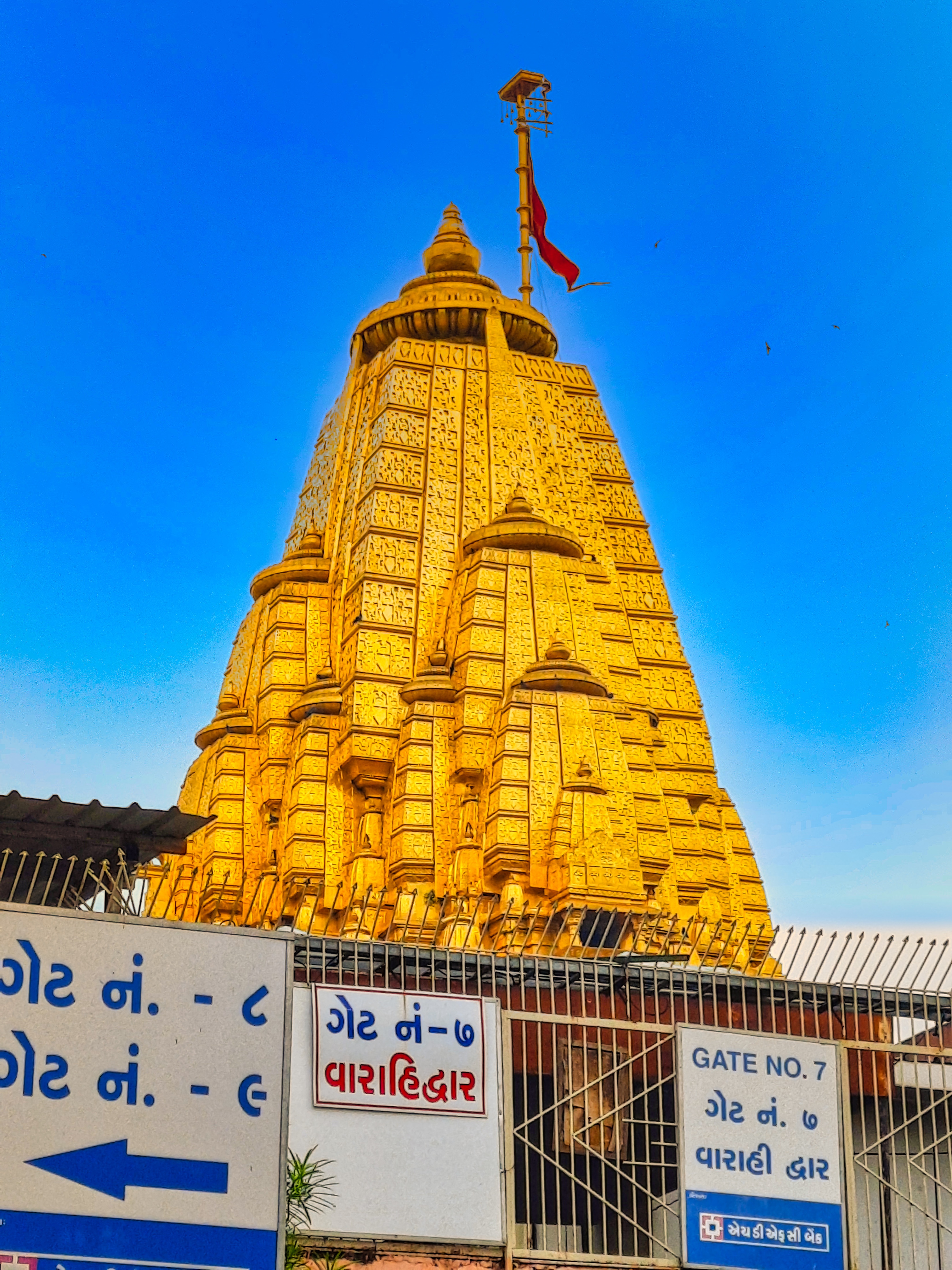
Ambaji Temple
અંબાજી મંદિર
About the Deity
Ambaji, the goddess enshrined at Ambaji temple in Banaskantha, Gujarat, represents the heart-energy, compassion, and love-bestowing aspect of the Divine Mother, honoring the sacred location where the heart of Sati fell to earth. She is also known as Amba, the mother of all beings, and is depicted in classical iconography as beautiful, compassionate, radiating infinite love, adorned with jewels and garlands that reflect her supreme status. Ambaji embodies the principle of unconditional maternal love—the cosmic compassion that embraces all beings and responds to all needs with infinite tenderness. The heart, as the seat of love, emotion, and the deepest center of consciousness, makes Ambaji uniquely significant as the goddess who dwells at the core of all existence. Her presence at this sacred site represents the understanding that at the center of cosmic reality is not cold mechanical principle but infinite love and compassion. Ambaji is worshipped as the supreme mother who protects her children, nurtures their spiritual development, and grants blessings of happiness, love, and emotional fulfillment. The goddess is understood as transcending all limitation and boundary, just as maternal love extends across all distances and circumstances. Her worship at Ambaji temple emphasizes the principle that spiritual development is inseparable from the cultivation of love, compassion, and the opening of the heart to all beings.
Mythology & Legend
Ambaji mythology is rooted in the cosmic event of Sati's sacrifice while enriched through local legends and the regional traditions unique to Gujarat and the Banaskantha region. When Sati immolated herself in Daksha's sacrificial fire, her divine form was scattered across the sacred landscape, and at the location of present-day Banaskantha, specifically at the site now known as Ambaji, her heart fell to earth, transforming into the compassionate goddess Ambaji. According to the Markandeya Purana, the Shakti Peetha traditions, and local Gujarat mythology, when the goddess's heart manifested at this location, the entire region became transformed into a center of divine love and compassion. The local mythology describes how the goddess immediately embraced the region and all its inhabitants as her children, offering her protection and blessings. The legends emphasize that Ambaji is not merely a distant deity but a living mother whose love extends continuously to all who invoke her. Stories abound in the regional mythology of how the goddess has appeared to her devotees in times of loneliness and distress, how she has granted blessings of love and relationship, and how her compassionate presence has healed countless broken hearts. The mythology describes Ambaji as the repository of cosmic love—the place where all devotees can experience the unlimited compassion and acceptance of the divine mother. The sacred geography surrounding Ambaji temple is understood as the extended body of the goddess, every stone and water source carrying her loving presence.
Kshetra Mahatmya — Significance
Ambaji temple holds supreme significance in the sacred geography of Gujarat and northwestern India as documented in the Markandeya Purana, the Shakti Peetha traditions, and various regional spiritual texts. The temple's location at Ambaji in Banaskantha district creates a site of extraordinary spiritual power and historical importance. The Markandeya Purana specifically identifies Ambaji as a paramount Shakti Peetha where the goddess grants direct darshan and comprehensive blessings. Historical records document the temple's continuous existence for over a thousand years, with significant development during various periods. The temple's location in a region of Gujarat known for ancient pilgrimage traditions amplifies its spiritual significance. The annual Ambaji Mela attracts hundreds of thousands of devotees seeking the goddess's blessings and protection. The temple serves as a major pilgrimage destination in Gujarat and northwestern India. The presiding priests maintain lineages of worship expertise specific to Ambaji, preserving authentic practices and rituals. The temple remains an active center of pilgrimage and worship with continuous reports of miraculous blessings.
Blessings & Benefits
- Fulfills all sincere prayers for prosperity, health, and family well-being.
- Blesses devotees with protection from harm and relief from long-standing worries.
- The Bhavnath Mela at Ambaji is one of Gujarat's most auspicious annual festivals.
- Granted as especially powerful for those seeking spiritual strength and a fresh start in life.
- Blesses sincere pilgrims with the warm grace of Ambaji — the mother of western India.
Temple Location
24.3338, 72.8535
Visitor Information
🕐 Timings
7:00 AM - 9:30 PM
👗 Dress Code
Traditional Indian attire. No leather items inside temple.
🪔 Prasad
Prasad available
🎟 Entry
Free
🅿️ Parking
Available
♿ Access
Accessible
Best Time to Visit
📅 Best Day
Tuesday, Friday, Navratri, Purnima
🗓 Months
Navratri (September-October), Bhadarvi Poonam
🌤 Season
All seasons
How to Reach
🚂 Railway
Abu Road Station (20 km)
✈️ Airport
Sardar Vallabhbhai Patel Airport, Ahmedabad (185 km)
📮 Address
Ambaji, Banaskantha District, Gujarat 385110
Major Festivals
🎉 Navratri
🎉 Bhadarvi Poonam (biggest fair)
🎉 Sharad Purnima