🪷 Divya Desams
Srirangam (Ranganathaswamy Temple)
ஸ்ரீரங்கம் (ரங்கநாதசுவாமி கோவில்)
About the Deity
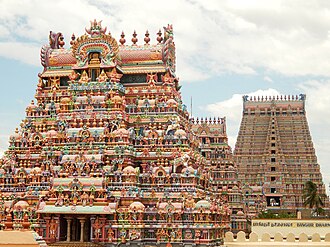
Srirangam Ranganathaswamy Temple enshrines the divine form of Ranganatha, the cosmic form of Vishnu in eternal yogic repose upon the serpent Adisesha. This is not merely a resting position but a profound spiritual state representing the transcendent consciousness pervading the universe. The moolavar, the primary deity, reclines in supreme majesty with his head facing south and feet facing north, a unique directional alignment found in few temples. His divine consort Sri Mahalakshmi sits gracefully upon his chest, eternally serving and adorning him with her incomparable beauty and grace. The utsavar form, taken out during festivals, depicts the same divine couple in processional splendor, allowing devotees a closer communion with their beloved deities. The temple's architecture represents the pinnacle of Dravidian temple design, encompassing seven concentric walls that symbolize the seven heavens of Hindu cosmology. The outermost walls were built during the Chola dynasty and subsequently expanded by the Pandya and Vijayanagara rulers, creating a magnificent tapestry of architectural styles spanning centuries. The main gopuram towers majestically above the sanctuary, its intricate carved details depicting celestial scenes and divine narratives. Inside the garbha griha, the sanctum sanctorum, the atmosphere is thick with spiritual energy as devotees approach the reclining deity. The temple complex spans over 156 acres, making it one of the largest temple complexes in India. It contains multiple shrines dedicated to various manifestations of Vishnu and Shiva, numerous tanks for ritual ablution, and elaborate mandapas (pavilions) for worship and congregation. The Aayira Kalam, a thousand-pillared hall, stands as a testament to the extraordinary architectural vision and craftsmanship of ancient artisans. Every pillar is intricately carved with images of devotees, dancers, musicians, and celestial beings, creating a visual symphony of stone. The temple's kitchen is legendary, capable of feeding thousands of pilgrims daily with sanctified prasad.
Mythology & Legend
The origin of Srirangam Ranganathaswamy Temple is interwoven with profound spiritual narratives that have sustained the devotion of pilgrims for millennia. According to the Sthala Purana, Lord Ranganatha appeared in this location on the banks of the sacred Cauvery River after being brought here by Bharata, the second Chakravarti emperor and devoted son of Rama. Bharata, deeply bereft after performing the final rites of his divine father and brother Lakshmana, wandered the earth seeking spiritual solace. He encountered the reclining form of Vishnu and, moved by divine grace, established this sacred temple to perpetuate devotion across generations. The temple has been intimately associated with the Alvar saints, particularly Nammazhvar, the foremost among the twelve Alvars. Nammazhvar's devotional hymns sung in the Divya Prabandham express the deepest longing of the human soul for divine union. His verses capture the transcendent beauty of Ranganatha and the overwhelming compassion of Sri Mahalakshmi, transforming abstract theology into tangible emotional experience. The mystical poetry of Nammazhvar became the liturgical foundation of Sri Vaishnava philosophy and practice. Local legends speak of miraculous interventions where Ranganatha protected his devotees during times of calamity. During the devastating floods of the Cauvery, the temple stood as a sanctuary for those seeking refuge. Devotees report experiencing divine visions within the sanctum, where the boundary between earthly consciousness and transcendent reality becomes gossamer-thin. The temple's spiritual atmosphere is so potent that seekers often describe experiences of timelessness and union with the divine during prolonged periods of worship and meditation.
Kshetra Mahatmya — Significance
Srirangam Ranganathaswamy Temple occupies a unique position in Hindu sacred geography as the first Divya Desam praised by Nammazhvar. The saint's spiritual experiences at this temple catalyzed the entire tradition of celebrating 108 divine sanctuaries through Divya Prabandham poetry. Nammazhvar's devotional hymns have been chanted in this temple for over a thousand years, forming the scriptural backbone of Sri Vaishnava Sampradaya philosophy and practice. The temple's historical significance extends through multiple dynasties. The Chola emperors, particularly Rajaraja Chola I and his successor Rajendra Chola, patronized the temple extensively, constructing the massive gopuram and additional shrines. Their royal inscriptions describe the temple as a spiritual epicenter worthy of imperial investment. Later Vijayanagara rulers expanded the temple complex, adding new mandapas and fortifying the outer walls. Each architectural addition represents not merely structural enhancement but spiritual evolution, enabling successive generations to deepen their communion with the divine. The temple is celebrated in the Rig Veda and various Puranas as a location of extraordinary spiritual power. The Sthala Purana identifies Srirangam as Bhooloka Vaikunta, literally the heavenly realm manifested upon earth. Scriptural texts declare that circumambulating the sacred grounds purifies karmic debts accumulated across multiple lifetimes. The Adi Acharya Ramanuja, the great saint-philosopher of the eleventh century, took shelter at this temple, establishing his monastic order here and consolidating the philosophical teachings that would influence Hindu thought for centuries. Unique rituals at Srirangam include the Masi Magam festival, when the deity is carried in procession to the Cauvery River for ritual bathing. The Chakra Snana, performed with precise astronomical timing, represents the perfect convergence of celestial mechanics and spiritual intention. These rituals maintain the temple's sanctity and perpetuate the devotional traditions established by ancient seers.
Blessings & Benefits
- Blesses pilgrims with moksha and liberation from the cycle of rebirth.
- Granted as especially auspicious for married couples seeking harmony and spiritual alignment.
- The Cauvery bath followed by Ranganatha darshan fulfills the merit of all river pilgrimages.
- Fulfills sincere prayers for prosperity, health, family well-being, and spiritual progress.
- Blesses devoted pilgrims with the infinite compassion of Ranganatha — the reclining Lord of Srirangam.
Temple Location
10.8612, 78.6892
Visitor Information
🕐 Timings
6:00 AM - 1:00 PM, 3:00 PM - 9:00 PM
👗 Dress Code
Traditional attire mandatory. Dhoti and upper cloth for men.
🪔 Prasad
Venn Pongal, Curd Rice, Chakra Pongal
🎟 Entry
Free. Devasthanam tickets for special darshan.
🅿️ Parking
Available
♿ Access
Accessible with assistance
Best Time to Visit
📅 Best Day
Ekadashi, Dwadashi, Vaikunta Ekadashi
🗓 Months
Margazhi (December-January), Panguni Uthiram (March-April)
🌤 Season
All seasons
How to Reach
🚂 Railway
Tiruchirappalli Junction (1.5 km)
✈️ Airport
Tiruchirappalli International Airport (4 km)
📮 Address
Srirangam Island, Tiruchirappalli, Tamil Nadu 620006
Major Festivals
🎉 Vaikunta Ekadashi (21-day festival)
🎉 Brahmotsavam
🎉 Panguni Uthiram
🎉 Aadi Brahmotsavam