🪷 Divya Desams
Varadaraja Perumal Temple
வரதராஜ பெருமாள் கோவில்
About the Deity
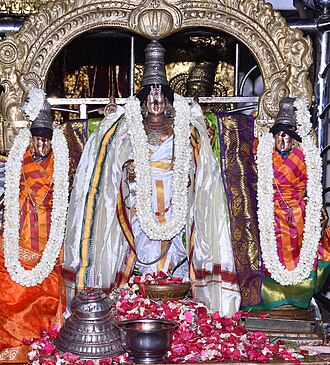
Varadaraja Perumal Temple in Kanchipuram enshrines the divine form of Varadaraja, Vishnu in his aspect as the supreme grantor of all auspicious boons and blessings. The moolavar deity stands in majestic form, holding the sacred conch and disc, his divine countenance radiating benevolence and grace toward all supplicants. His eyes, carved with extraordinary artistry, seem to gaze directly into the hearts of devotees, acknowledging their prayers and innermost desires. The deity's golden adornments, renewed through devotional offerings across centuries, enhance the divine splendor. The utsavar form, equally magnificent, is processed through sacred pathways during festivals, permitting closer communion for thousands of devotees. The temple's architecture represents a masterpiece of Dravidian construction, with intricate carved pillars, elaborate stone-carved corridors, and towering gopurams that dominate the Kanchipuram skyline. The outer walls display exquisite relief sculptures depicting scenes from Hindu mythology and devotional narratives. The main sanctum maintains the austere simplicity appropriate to a place of profound divine presence. The thousand-pillar hall, with its intricately carved columns, creates a visual symphony that elevates the consciousness of pilgrims as they approach the inner sanctum. Kanchipuram itself, known as the City of Thousand Temples, has been a pre-eminent center of Hindu philosophical and spiritual learning for over two millennia. Varadaraja Temple stands as the supreme shrine within this sacred geography, drawing pilgrims from throughout India and the diaspora. The deity's reputation as an extraordinary grantof of boons has made this temple a destination for seekers pursuing specific blessings and spiritual fulfillment.
Mythology & Legend
The sthala purana of Varadaraja Perumal recounts the miraculous appearance of the deity in response to the extraordinary tapas (austerities) performed by Brahma himself. According to sacred narratives, Brahma engaged in severe penance to obtain Vishnu's direct blessing and grace. His sincere devotion moved the heart of the infinite divine, and Vishnu manifested in his aspect as Varadaraja, the supreme giver of all desired blessings. This divine manifestation established Kanchipuram as a sacred center of unparalleled spiritual potency. The mythology emphasizes Varadaraja's unique characteristic of graciously granting boons to all sincere supplicants regardless of their spiritual status or background. Unlike other manifestations of Vishnu that require extreme penance or advanced philosophical understanding, Varadaraja responds to simple, heartfelt devotion and genuine prayer. This accessible compassion has made the deity beloved across all segments of Hindu society throughout history. The temple has been intimately associated with Vaishnava philosophers and saints, particularly Ramanuja, who spent extended periods in meditation and study within the temple precincts. The saint's profound spiritual insights, which transformed Hindu philosophy and devotional practice, are believed to have been catalyzed by his intimate communion with Varadaraja's divine form. Countless devotees report experiencing divine visions and receiving answers to their prayers within the sanctum. The accumulated spiritual energy from countless generations of sincere worship creates an environment where miraculous interventions become commonplace.
Kshetra Mahatmya — Significance
Varadaraja Temple occupies a position of unique significance within the landscape of 108 Divya Desams. The temple's spiritual authority derives from its identification as a location where Brahma himself performed intense spiritual practices. The resulting divine manifestation of Varadaraja established Kanchipuram as a center of extraordinary spiritual power and accessibility to divine grace. The temple's historical records extend back over two thousand years, with references in Sangam literature and ancient Tamil texts. The Chola emperors, particularly Rajaraja Chola I, extended extraordinary patronage that transformed the temple into an architectural marvel. Subsequent dynasties, including the Pandyas and Vijayanagara rulers, continued the tradition of royal sponsorship and expansion. The temple's expansion across multiple centuries reflects the continuous flow of devotional fervor and gratitude from pilgrims worldwide. The unique ritual of Chakra Snana, performed on auspicious astronomical dates, involves ritual bathing of the deity with sacred waters while hundreds of priests chant protective mantras. The Panguni Uthiram festival, during which the deity is carried in elaborate processions through Kanchipuram's streets, draws hundreds of thousands of pilgrims. The temple's brahmins have maintained unbroken traditions of worship spanning countless generations, ensuring the preservation of authentic ritual practices. Scriptural texts declare that merely beholding Varadaraja purifies the soul of accumulated karmic debts. The temple's sanctity is such that sincere prayer within its walls brings almost certain fulfillment of righteous desires. The accumulated merit of countless generations of devotees has created a spiritual field of extraordinary potency within the temple's sacred geography.
Blessings & Benefits
- Fulfills the sincere boons and wishes of all devoted pilgrims — Varadaraja means the king of boon-givers.
- Blesses devotees with successful marriage, harmonious family life, and progeny.
- Granted as one of the holiest shrines in Kanchipuram — the city of a thousand temples.
- Removes obstacles in career, education, and all righteous endeavours.
- Blesses sincere pilgrims with the supreme grace of Varadaraja — the generous Lord of Kanchipuram.
Temple Location
12.8382, 79.7075
Visitor Information
🕐 Timings
6:00 AM - 12:00 PM, 3:30 PM - 8:30 PM
👗 Dress Code
Traditional attire. Dhoti for men.
🪔 Prasad
Pongal, Ven Pongal, Panchamrit
🎟 Entry
Free
🅿️ Parking
Available
♿ Access
Accessible
Best Time to Visit
📅 Best Day
Ekadashi, Dwadashi, Thursday
🗓 Months
Vaikasi Brahmotsavam (May-June), Panguni (March-April)
🌤 Season
All seasons
How to Reach
🚂 Railway
Kanchipuram Station (2 km)
✈️ Airport
Chennai International Airport (72 km)
📮 Address
Vishnu Kanchi, Kanchipuram, Tamil Nadu 631501
Major Festivals
🎉 Brahmotsavam (10 days)
🎉 Panguni Uthiram
🎉 Garuda Seva