🪷 Divya Desams
Parthasarathy Temple (Triplicane)
பார்த்தசாரதி கோவில்
About the Deity
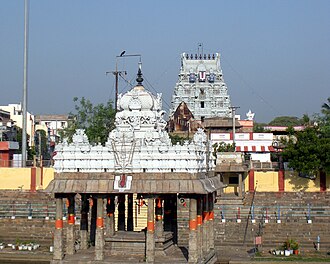
Parthasarathy Temple in Triplicane, Chennai, enshrines the unique form of Parthasarathy, Vishnu in his aspect as the divine charioteer of the Bhagavad Gita. The moolavar depicts Vishnu in the iconic posture of Krishna as the celestial charioteer, his divine form bearing the battle scars and weathered appearance of one who participates directly in the struggles of his devotees. The deity holds the reins of divine purpose, guiding all beings toward righteous action and spiritual fulfillment. The resplendent utsavar, carried in elaborate processional glory, brings the blessing of divine guidance directly to the hearts of countless pilgrims. The temple's location in Triplicane, one of Chennai's oldest and most sacred neighborhoods, provides a setting steeped in ancient spiritual significance. The temple's architecture represents a harmonious blend of traditional Dravidian styles with later additions reflecting different periods of Hindu history. The sanctum maintains an intimate atmosphere suitable for meditation upon the deity's role as the supreme guide of human consciousness. The temple's position within Chennai's spiritual geography establishes it as a beacon of divine wisdom and guidance. The iconic image of Parthasarathy as the charioteer has inspired philosophical and spiritual reflection for over two thousand years. The deity's unique presentation—bearing battle scars yet radiating supreme peace and wisdom—reconciles the apparent contradictions between spiritual detachment and engaged participation in life's struggles. This manifestation celebrates the possibility of maintaining inner spiritual mastery while fully participating in the world.
Mythology & Legend
The sthala purana of Parthasarathy connects this manifestation directly to the events of the Bhagavad Gita, where Krishna served as the divine charioteer and spiritual guide of Arjuna. The mythology emphasizes that this historical event represents the eternal pattern of divine guidance available to all sincere seekers confronting life's moral complexities and spiritual confusions. The narrative celebrates the paradox of supreme detachment combined with complete engagement. Parthasarathy's role as charioteer—standing between the divine and the worldly, guiding both toward ultimate truth—represents the eternal function through which Vishnu maintains equilibrium between transcendent principles and manifest reality. The charioteer's position requires complete presence and engagement while maintaining absolute detachment from personal outcome. The temple's association with the Bhagavad Gita's teachings has made it a pilgrimage destination for philosophers, spiritual seekers, and those grappling with life's fundamental questions. The accumulated spiritual power of generations of contemplative pilgrims has established Parthasarathy as a location where the deepest truths of Hindu philosophy become experientially accessible. Devotees report experiencing clarity about their life's purpose and divine guidance toward righteous action.
Kshetra Mahatmya — Significance
Parthasarathy Temple holds unique significance as the manifestation most directly associated with the teachings of the Bhagavad Gita. The temple's spiritual authority derives from its celebration of Vishnu's role as the eternal guide of human consciousness through life's moral complexities and spiritual evolution. The temple's position in Chennai establishes it as a supreme center of philosophical and spiritual wisdom. The temple's historical prominence is documented in ancient Tamil texts and inscriptions. The Pallava kings, who established Chennai as a major center of Tamil civilization, extended patronage to this ancient shrine. Subsequent dynasties continued the tradition of royal sponsorship and expansion. The accumulated wisdom of countless generations of philosophical contemplation has made this one of South India's supreme intellectual and spiritual centers. The unique rituals celebrating Parthasarathy's role as divine guide include philosophically-informed ceremonies and meditation practices emphasizing the Bhagavad Gita's core teachings. The temple's brahmins have preserved authentic traditional wisdom spanning countless generations. The annual Brahmotsavam festival features elaborate processions celebrating the deity's eternal role in guiding humanity toward truth and righteousness. Scriptural texts identify Parthasarathy as a location where sincere contemplation and meditation facilitate breakthrough understanding of life's fundamental questions and the nature of righteous action. The deity's grace flows particularly abundantly to those struggling with ethical dilemmas and seeking clarity about their life's sacred purpose.
Blessings & Benefits
- Grants courage, wisdom, and clarity in facing all of life's battles and challenges.
- Blesses devotees with guidance from the Bhagavad Gita's eternal teachings of duty and devotion.
- Fulfills sincere prayers for victory, justice, and righteous outcomes in difficult situations.
- Granted as especially powerful for those seeking intellectual clarity and life direction.
- Blesses sincere pilgrims with the grace of Parthasarathy — the divine charioteer who guides every soul.
Temple Location
13.0569, 80.2748
Visitor Information
🕐 Timings
6:00 AM - 12:00 PM, 4:00 PM - 9:00 PM
👗 Dress Code
Traditional attire
🪔 Prasad
Prasadam offered
🎟 Entry
Free
🅿️ Parking
Available
♿ Access
Accessible
Best Time to Visit
📅 Best Day
Ekadashi, Thursday, Vaikunta Ekadashi
🗓 Months
Brahmotsavam, Margazhi
🌤 Season
All seasons
How to Reach
🚂 Railway
Chennai Central Station (5 km)
✈️ Airport
Chennai International Airport (18 km)
📮 Address
Triplicane, Chennai, Tamil Nadu 600005
Major Festivals
🎉 Brahmotsavam
🎉 Vaikunta Ekadashi
🎉 Janmashtami