🪷 Divya Desams
Oppiliappan Temple
ஒப்பிலியப்பன் கோவில்
About the Deity
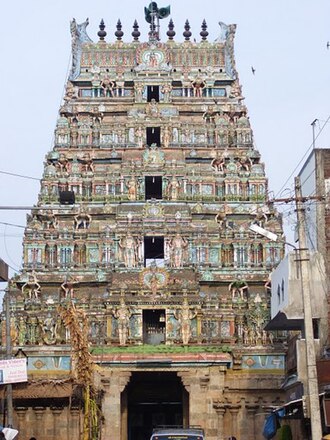
Oppiliappan Temple in Thanjavur enshrines the unique and auspicious form of Oppiliappan, Vishnu as the deity who married Bhumi Devi (the earth goddess herself). The moolavar depicts Vishnu in his manifestation specifically as the bridegroom of the earth, emphasizing the absolute sanctity of matter and material existence. This manifestation celebrates the principle that creation itself is sacred and worthy of divine love and commitment. The deity's unique presentation honors all material existence through the sacred union with the earth goddess, elevating physical reality to the status of divine beloved. The temple's architecture incorporates distinctive features honoring the sacred union and its cosmic significance. The sanctum maintains an atmosphere celebrating this unique cosmic marriage. Surrounding structures include shrines to Bhumi Devi and spaces for worship acknowledging the divinity present in material creation. The temple's location in Thanjavur, one of South India's most historically important cultural centers, positions it within a geography of extraordinary artistic and spiritual achievement. The unique characteristic of this temple is that its prasad contains no salt, a remarkable feature symbolizing the purity of the union and the sanctity of Oppiliappan's offering. The saltless prasad itself becomes a teaching, emphasizing that true sacred relationship requires absolute purity and the transcendence of all ego-based desires. The deity's love for Bhumi Devi becomes a model for sacred relationship expressing itself through commitment and blessing rather than possession or domination.
Mythology & Legend
The sthala purana of Oppiliappan celebrates the cosmic marriage between Vishnu and Bhumi Devi, the earth goddess herself. According to sacred narratives, Vishnu chose to manifest this particular form to emphasize the absolute sacredness of matter and the material realm. The marriage symbolizes not the pollution of the divine by material contact but rather the elevation of material reality through divine love and commitment. The mythology celebrates the principle that the highest spiritual realization includes, rather than excludes, the blessing and sanctification of material existence. Oppiliappan's marriage to Bhumi Devi demonstrates that true love encompasses and honors the beloved in their complete reality, not just abstract spiritual essence. The cosmic union becomes a teaching about the sanctity of all material creation and the divine's absolute commitment to blessing all dimensions of existence. The unique feature of saltless prasad has profound symbolic significance. Salt, representing desire and taste preferences, is excluded from the offering, emphasizing that this divine relationship transcends personal ego and desire. The tastelessness of the prasad becomes a taste of divine love—the supreme satisfaction arising from communion with sacred truth that transcends all sensory pleasure. Local legends speak of the temple's power to sanctify all aspects of human life and material existence. Pilgrims report experiencing profound spiritual elevation of their ordinary life circumstances through meditation at this temple. The accumulated power of countless generations recognizing the sacredness of material existence has established Oppiliappan as a location where the boundary between sacred and profane dissolves completely.
Kshetra Mahatmya — Significance
Oppiliappan Temple holds unique significance as the Divya Desam celebrating the cosmic marriage between Vishnu and the earth goddess. The temple's spiritual authority derives from its celebration of the absolute sacredness of material existence and the divine commitment to blessing all material reality. The temple's position in Thanjavur, a center of artistic and cultural achievement, establishes it as a supreme sanctuary celebrating the elevation of material culture to spiritual significance. The temple's historical prominence is documented in Chola records and inscriptions. The Chola emperors, particularly Rajaraja Chola I, recognized the temple's unique significance and extended extraordinary patronage. The accumulated devotion of those celebrating the sanctity of material and cultural life has made this one of South India's unique spiritual centers. The unique rituals celebrating Oppiliappan's cosmic marriage include ceremonies honoring both the divine and the earth goddess. The temple's distinctive practice of offering saltless prasad has been preserved across centuries. The annual festival celebrations emphasize the cosmic union and its significance for all material existence. The temple's brahmins have preserved authentic traditions spanning countless generations, maintaining the unique practice of saltless offerings. Scriptural texts identify Oppiliappan as a location where sincere devotion receives divine blessing related to the sanctification of material existence and the elevation of human life to spiritual consciousness. The deity's blessing flows particularly to those seeking to integrate spiritual principles with wholehearted engagement in material and cultural life.
Blessings & Benefits
- Blesses couples with marital happiness, harmony, and a deeply loving partnership.
- The unique salt-free prasad tradition symbolises purity and the sweetness of divine grace.
- Fulfills sincere prayers for progeny, family well-being, and prosperous new beginnings.
- Granted as especially powerful for those seeking a righteous, devoted life partner.
- Blesses sincere pilgrims with the gentle, pure grace of Oppiliappan — the Lord who chose love over convention.
Temple Location
10.9827, 79.4034
Visitor Information
🕐 Timings
7:00 AM - 12:00 PM, 4:00 PM - 8:00 PM
👗 Dress Code
Traditional attire
🪔 Prasad
Salt-free prasadam (unique)
🎟 Entry
Free
🅿️ Parking
Available
♿ Access
Accessible
Best Time to Visit
📅 Best Day
Ekadashi, Thursday
🗓 Months
Brahmotsavam, Vaikunta Ekadashi
🌤 Season
All seasons
How to Reach
🚂 Railway
Kumbakonam Station (7 km)
✈️ Airport
Tiruchirappalli Airport (100 km)
📮 Address
Thirunageswaram, Kumbakonam, Thanjavur District, Tamil Nadu 609115
Major Festivals
🎉 Brahmotsavam
🎉 Vaikunta Ekadashi