🔱 Jyotirlingas
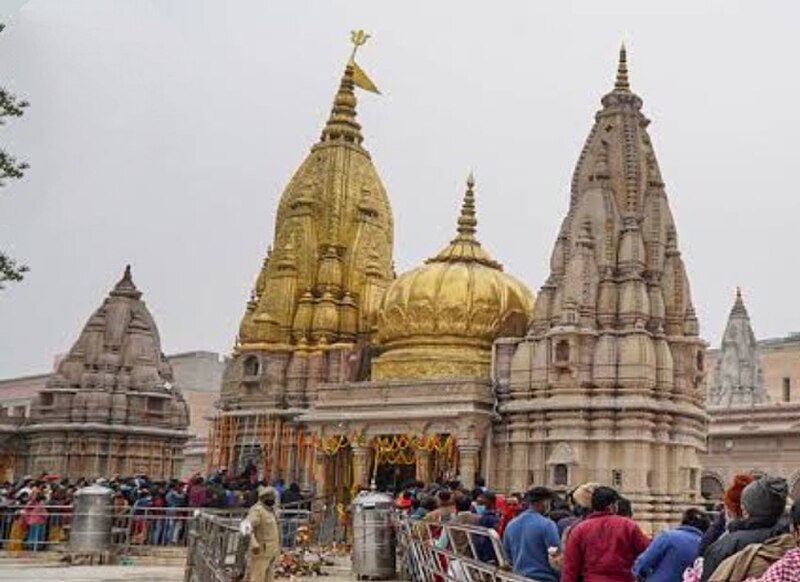
Kashi Vishwanath Temple
काशी विश्वनाथ मंदिर
About the Deity
The Kashi Vishwanath Linga at Varanasi represents Shiva's manifestation as the eternal consciousness present within the city itself—the divine principle that governs liberation, the ultimate dissolution of all individuality into cosmic unity, and the transformation of death itself into a gateway to eternal freedom. The presiding deity is uniquely invoked as Vishwanath or Vishweshwar, literally "the Lord of the Universe," reflecting Shiva's complete sovereignty over all manifestation and his particular grace toward the eternal city of Varanasi, which is consecrated as the supreme center for liberation and enlightenment in Hindu theology. The linga itself is exceptionally sacred, believed to be naturally formed and to contain within its manifestation the concentrated spiritual essence of countless lifetimes of devotion spanning many millennia. The unique distinction of the Kashi Vishwanath shrine is that it is understood to be the gateway through which consciousness naturally liberates itself from the cycle of birth and death, and being present in Varanasi at the moment of death is considered one of the most auspicious transitions possible in human existence. The sanctum sanctorum maintains an extraordinarily refined and elevated spiritual atmosphere that facilitates the spontaneous arising of states of consciousness beyond ordinary personality and ego-based identity. The linga is worshipped with extraordinary devotion and ritual precision, with the daily ceremonies and offerings creating layers of accumulated spiritual blessing that have accumulated across centuries of uninterrupted worship.
Mythology & Legend
The Kashi Vishwanath Linga originates from one of the most sublime narratives in Hindu sacred literature, concerning Shiva's relationship with the eternal city of Kashi and his commitment to liberate all beings who find themselves within this sacred geography. According to the Kashi Khanda section of the Skanda Purana, the Matsya Purana, and various Upanishads, in ancient times Varanasi was established as a cosmic city by Shiva himself specifically to function as a place where the ordinary laws of karma are suspended and where death itself becomes a direct gateway to liberation and union with Brahman. Shiva declared at the origin of Kashi that any being—regardless of their life circumstances, past transgressions, spiritual development, or karmic status—who dies within the sacred geography of Varanasi would automatically receive moksha (liberation from the cycle of birth and death) through the power of the Taraka Mantra, the transcendent sound principle that removes all obstacles to liberation. To establish this principle and to make the Taraka Mantra eternally available to all beings in Kashi, Shiva manifested himself at the location that would become Kashi Vishwanath in the form of an extraordinarily powerful Jyotirlinga. The manifestation of this linga created a permanent resonance field within Varanasi that facilitates the liberation of all souls who die within the city's boundaries. Shiva declared that he himself would remain eternally present in the form of the Kashi Vishwanath Linga, personally attending to and facilitating the liberation of every soul departing from Varanasi. According to the sacred narratives, Shiva appointed himself as the eternal ferryman who guides all departing souls toward liberation, ensuring that no being is forgotten or left behind in cycles of suffering. The linga thus represents Shiva's absolute and irrevocable commitment to liberate all beings, regardless of their spiritual accomplishments or karmic debts, if they can but find themselves in the eternal city of Kashi at the moment of their final transition.
Kshetra Mahatmya — Significance
Kashi (also known as Varanasi or Benares) occupies the most exalted position in Hindu sacred geography, being described in the Kashi Khanda and other Puranic texts as the supreme liberation center, the eternal city that exists simultaneously in both ordinary geography and in transcendent realms beyond normal perception. The city is glorified as Shiva's primary residence on earth, the city that Shiva himself established specifically for the liberation of all beings, and the location where the principles of karma and samsara (the cycle of birth and death) are entirely suspended and superseded by Shiva's grace and compassion. The Kashi Vishwanath temple, though destroyed and rebuilt multiple times throughout history, has maintained continuous worship traditions spanning over two thousand years, making it one of the oldest continuously worshipped Shiva sanctuaries in all of India. The temple is positioned on the western bank of the Ganges River, the most sacred of all Hindu pilgrimage rivers, and the immediate vicinity of the temple is considered the holiest ground in Varanasi, where the concentration of accumulated devotional energy is beyond measure. The sacred geography of Varanasi includes over 3,000 temples and numerous sacred bathing ghats where pilgrims immerse themselves in the Ganges and receive the blessings of the river's purificatory power. The Ganges itself is understood to be the physical manifestation of divine grace, and bathing in the Ganges at Varanasi is considered equivalent to ritual purification through all other rivers and sacred waters combined. The presence of the Kashi Vishwanath Linga transforms the entire city into a unified field of Shiva's consciousness and grace, making Varanasi itself a functional center for liberation and enlightenment where the ordinary laws of karma are mitigated and replaced by the supreme grace of Shiva's compassion. Saint poets, ascetics, and spiritual masters throughout the ages have gravitated toward Kashi to spend their final years or lifetimes in meditation and devotion within the city. The Maha Shivaratri celebration at Kashi Vishwanath is considered one of the most spiritually significant festivals in all of Hinduism, with the night of Shiva becoming a direct gateway to higher realms of consciousness.
Blessings & Benefits
- Grants moksha and supreme spiritual liberation to all sincere pilgrims.
- Blesses devotees with removal of the gravest sins and karmic burdens.
- A single Abhishek of the Vishwanath Linga on Shravan Monday equals worship of all 12 Jyotirlingas.
- Bestows divine knowledge, clarity of purpose, and success in all righteous endeavours.
- Fills the heart with lasting peace, divine bliss, and unwavering spiritual faith.
Temple Location
25.3109, 83.0107
Visitor Information
🕐 Timings
2:30 AM - 11:00 PM (Mangala Aarti at 3 AM, Shringar Aarti at 7 PM)
👗 Dress Code
Traditional Indian attire mandatory. Non-Hindus not permitted.
🪔 Prasad
Panchamrit, Bel leaves, sacred water from Ganga
🎟 Entry
Free. Online booking for special darshan available.
🅿️ Parking
Limited near old city lanes
♿ Access
Very limited due to narrow lanes
Best Time to Visit
📅 Best Day
Monday, Ekadashi, Maha Shivaratri, Pradosham
🗓 Months
Kartik (October-November), Maha Shivaratri, Shravan
🌤 Season
All seasons (Winter is most comfortable)
How to Reach
🚂 Railway
Varanasi Junction (2 km)
✈️ Airport
Lal Bahadur Shastri International Airport, Varanasi (26 km)
📮 Address
Vishwanath Gali, Varanasi, Uttar Pradesh 221001
Major Festivals
🎉 Maha Shivaratri
🎉 Dev Deepawali (Kartik Purnima)
🎉 Shravan Somvar
🎉 Nag Panchami