🪷 Divya Desams
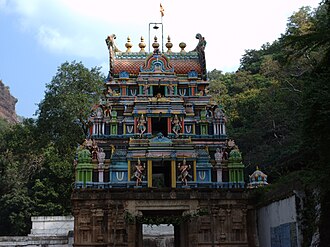
Ahobilam Lakshmi Narasimha Temple
అహోబిలం లక్ష్మీ నరసింహ స్వామి
About the Deity
Ahobilam enshrines Lord Narasimha — the most ferocious and compassionate of all Vishnu's avatars — in nine distinct sacred forms spread across the forested hills of Nandyal district. The Lower Ahobilam temple, which is the primary Divya Desam, houses the form of Lakshmi Narasimha: the man-lion deity with his divine consort Goddess Chenchu Lakshmi seated upon his lap. This combined form represents the perfect balance of the divine masculine (fierce, protecting) and divine feminine (gracious, loving). The Narasimha form is unique in the divine pantheon — neither fully human nor fully animal, transcending all categorical boundaries. This boundary-transcending nature makes Narasimha the chosen deity for devotees who face situations that seem to have no logical solution. The Lord who defied all conditions to protect Prahlada similarly defies all limitations to protect his devotees. The hills of Ahobilam are considered extraordinarily sacred — the actual location where Hiranyakashipu was slain. The rocks, streams, and forests of these hills are permeated with the divine energy of that cosmic event. Each of the nine Narasimha forms worshipped across the hill range represents a specific episode from the Prahlada narrative or a unique manifestation of the Lord's protecting power.
Mythology & Legend
The mythology of Ahobilam centers on one of the most dramatic episodes in all of Hindu literature — the story of Prahlada and Narasimha from the Bhagavata Purana. The demon king Hiranyakashipu, having obtained a boon of near-invincibility through intense austerities, began terrorizing the three worlds. His own son Prahlada, however, was a devoted worshipper of Vishnu from birth. Infuriated by his son's devotion to his enemy, Hiranyakashipu subjected young Prahlada to increasingly severe tortures — poison, fire, wild elephants, and more. In each instance, Vishnu's grace protected Prahlada miraculously. Finally, in a confrontation that shook the cosmos, Hiranyakashipu challenged Prahlada: "If your Vishnu is everywhere, is he in this pillar?"
At that moment, Vishnu burst forth from the pillar in the form of Narasimha — transcending the demon's boon by being neither man nor animal, neither indoors nor outdoors, attacking at dusk (neither day nor night), and placing Hiranyakashipu across his thighs (neither on earth nor in sky). The specificity of Vishnu's response to every technicality of the boon is celebrated as a cosmic demonstration of divine ingenuity in service of devotion. The nine hills where Lord Narasimha manifested after the battle — representing his nine moods ranging from fierce fury to tender love — are all within the Ahobilam complex, making this one of the most experientially complete sacred sites in India.
Kshetra Mahatmya — Significance
Ahobilam holds the distinction of being the actual physical location where the Narasimha avatar took place — making it uniquely sacred among all Vaishnava pilgrimage sites. While most temples celebrate the memory of divine events, Ahobilam enshrines the very soil where Narasimha's divine feet touched the earth. This direct connection to the avatara event fills the entire region with an extraordinary spiritual potency. The Ahobila Math, one of the premier monasteries of Sri Vaishnavism, is headquartered here. The Ahobila Mutt's acharyas have maintained an unbroken lineage of worship and teaching from this sacred location for over six hundred years. Their tradition of personally visiting and performing abhishekam for all nine Narasimha forms continues to this day, preserving the ancient ritual connection. The pilgrimage to Upper Ahobilam through the forested hills is physically demanding — a trek of several kilometers through difficult terrain — but is considered among the most spiritually rewarding journeys in India. The effort mirrors Prahlada's own perseverance through trials, and devotees who complete the journey report profound experiences of the Lord's protecting presence throughout. The nine forms of Narasimha at Ahobilam — Jwala Narasimha, Ahobila Narasimha, Malola Narasimha, Varaha Narasimha, Kreedha Narasimha, Karanja Narasimha, Bhargava Narasimha, Yogananda Narasimha, and Chatravata Narasimha — together represent the complete spectrum of divine grace, from its most ferocious protective aspect to its most tender, loving nature.
Blessings & Benefits
- Protection from all forms of danger, persecution, and injustice flows abundantly from Lord Narasimha at Ahobilam. Just as Prahlada was protected through impossible circumstances, devotees who sincerely surrender to Narasimha find themselves protected even in situations that appear hopeless. The Lord who burst from stone to protect his devotee responds with equal speed to sincere calls for help.
- Ahobilam is particularly beneficial for those facing legal troubles, official persecution, or false accusations. The Lord who served as the cosmic judge against the unjust Hiranyakashipu brings swift justice when invoked with sincere prayer. Many devotees report remarkable reversals of seemingly impossible legal and official situations after pilgrimage here.
- The nine forms of Narasimha at Ahobilam collectively grant relief from all nine types of fear — fear of death, disease, enemies, loss, failure, poverty, loneliness, cosmic forces, and spiritual decline. Completing the pilgrimage of all nine shrines is considered among the most purifying spiritual practices available in Vaishnavism.
- Children who face health challenges and young people navigating difficult life transitions are specifically brought to Ahobilam in the tradition of Prahlada — asking the divine father to protect his devoted child. The grace that protected Prahlada from his own earthly father flows to all who approach as his spiritual children.
Temple Location
15.1478, 78.6742
Visitor Information
🕐 Timings
6:00 AM - 1:00 PM, 3:00 PM - 8:00 PM
👗 Dress Code
Traditional attire
🪔 Prasad
Chakra Prasadam, Panchamrit
🎟 Entry
Free
🅿️ Parking
Available at lower shrine
♿ Access
Limited; Upper Ahobilam requires trekking
Best Time to Visit
📅 Best Day
Ekadashi|Pradosham
🗓 Months
Narasimha Jayanti (May)
🌤 Season
All seasons (avoid peak summer)
How to Reach
🚂 Railway
Nandyal Station (75 km)
✈️ Airport
Kurnool Airport (90 km)
📮 Address
Lower Ahobilam, Nandyal District, Andhra Pradesh 518543
Major Festivals
🎉 Narasimha Jayanti
Brahmotsavam
Vaikunta Ekadashi