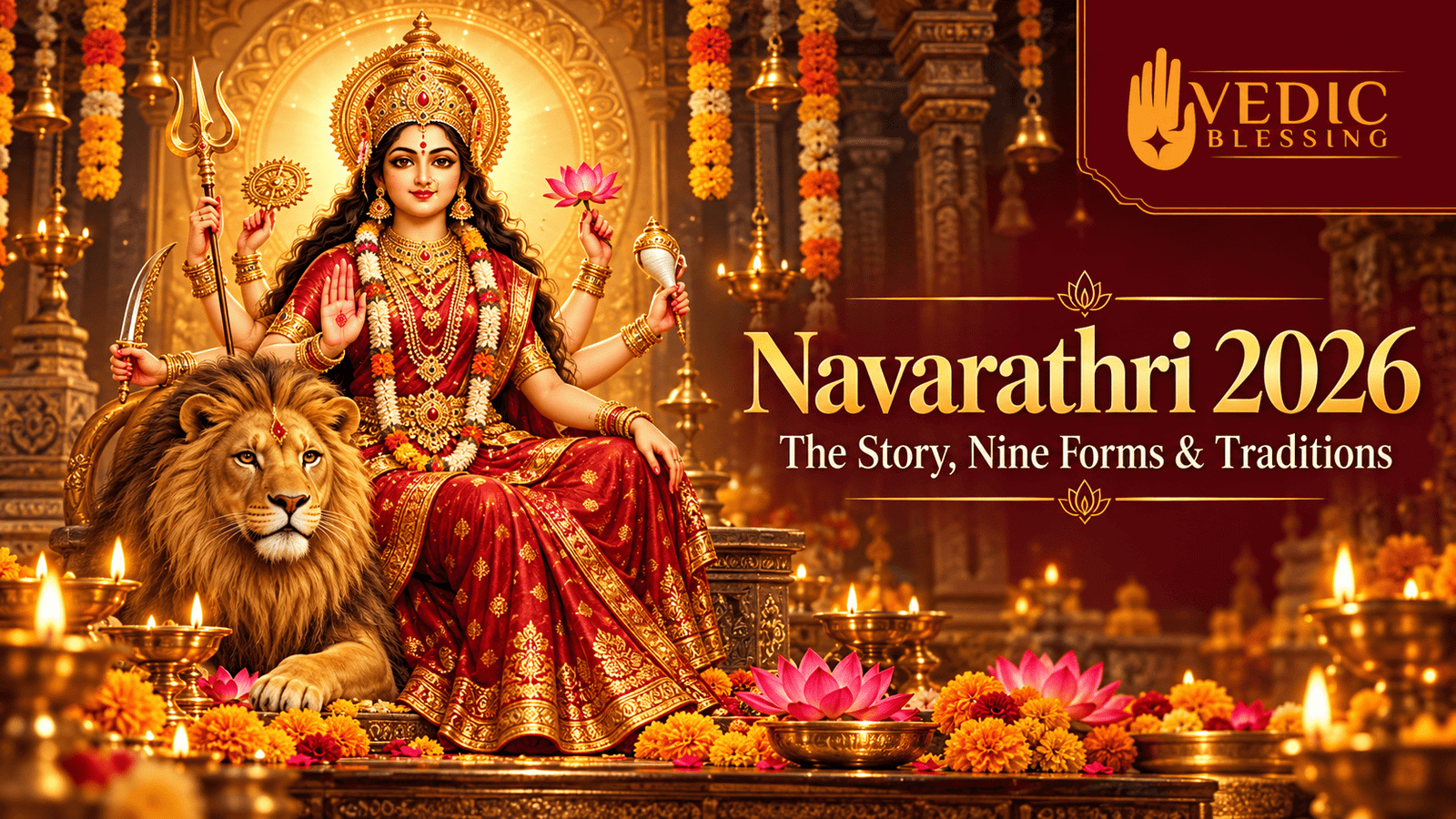
Navarathri 2026: The Story of Durga, the Meaning of Nine Nights, and the Traditions We Carry Forward
A child watches her grandmother light a lamp before Goddess Durga. There are flowers beside the lamp, the fragrance of prasadam in the kitchen, and a story waiting to be told.
“Why do we celebrate Navarathri for nine nights?”
The grandmother smiles. “Because courage sometimes takes time. The Goddess fought Mahishasura through nine nights, and her victory reminds us that goodness can overcome even a powerful darkness.”
That story is at the heart of Navarathri. Across India, families celebrate it in different ways: with Durga Puja, Golu, Garba, Bathukamma, temple visits, prayers at home, and the sharing of food and stories. Each tradition gives families a way to honour the Divine Mother and pass something meaningful to the next generation.
What is Navarathri?
Navarathri means “nine nights.” The festival honours the Divine Mother, or Shakti, whose forms express courage, wisdom, compassion, and the power to protect.
During Sharad Navarathri, devotees worship Goddess Durga over nine nights. The celebration culminates in Vijayadashami, a day associated with victory and an auspicious new beginning.
In 2026, Sharad Navarathri begins on 11 October, and Vijayadashami falls on 20 October in the referenced Indian panchang. The exact timing of individual rituals can vary by location and tradition.
Why is Navarathri celebrated? The story of Durga and Mahishasura
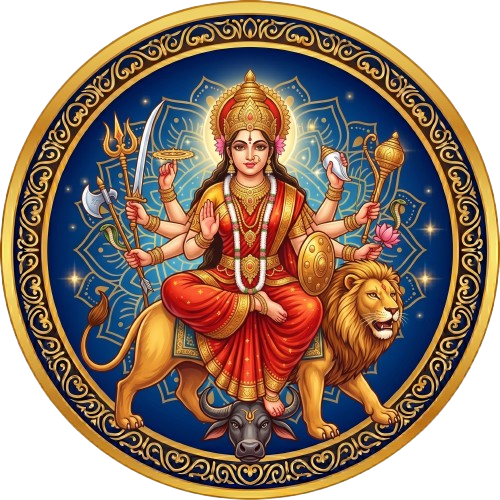
According to the traditional account, Mahishasura became so powerful that the devas could not defeat him. Goddess Durga arose as an expression of divine power and confronted him. After a fierce struggle, she defeated Mahishasura.
The story is remembered as the victory of good over evil. It also speaks to struggles we recognise in everyday life. Fear can make us hesitate. Anger can cloud our judgment. Pride can stop us from listening. Durga’s victory invites us to meet those struggles with courage, clarity, and faith.
When elders tell this story during Navarathri, children learn more than the name of a festival. They learn why the lamp is lit, why the Goddess is honoured, and why a family returns to prayer year after year. VedicBlessing’s Durga Puja page also presents the Mahishasura story as central to the festival.
How did Navarathri become a festival of so many traditions?
Devotion to the Goddess has been expressed through sacred stories, prayers, temple worship, music, and family customs for generations. The Devi Mahatmyam, also known as the Durga Saptashati, is among the texts associated with the worship of Durga.
As communities celebrated the Goddess, they developed their own cherished ways of observing the season. Some families arrange Golu dolls and invite neighbours to their homes. Others gather for Garba, observe Durga Puja, visit a local Ammavari temple, or celebrate Bathukamma with seasonal flowers.
These celebrations need not look identical to carry the same feeling of devotion. The customs a family follows often reflect its region, temple, and the practices handed down by its elders.
Who are the nine forms of the Goddess?
In the widely followed Navadurga tradition, each of the nine days is associated with a form of the Goddess:
| Day | Form | A quality to reflect on |
|---|---|---|
| 1 | Shailaputri | Steadiness and a strong beginning |
| 2 | Brahmacharini | Devotion and discipline |
| 3 | Chandraghanta | Courage in the face of fear |
| 4 | Kushmanda | Creative energy and hope |
| 5 | Skandamata | Care and compassion |
| 6 | Katyayani | Strength and determination |
| 7 | Kalaratri | The courage to face darkness |
| 8 | Mahagauri | Peace and renewal |
| 9 | Siddhidatri | Wisdom and fulfilment |
This is a helpful way to introduce children to the nine forms: choose one quality each day and talk about what it means in daily life. A prayer for courage may lead to a conversation about doing the right thing when it feels difficult. A prayer for compassion may inspire a small act of kindness.
The Navadurga sequence is a recognised tradition, but a temple’s daily alankaram schedule may follow a different order or feature different forms.
What colours and prasadam are offered during the nine days?
Colours and food offerings make Navarathri especially memorable. A child may remember the colour of a flower, helping to prepare payasam, or waiting to share prasadam after the evening puja.
There is no single nine-day colour and prasadam list followed by every family or temple. Some communities follow a calendar of colours. Naivedyam depends on the region, family custom, deity, and the alankaram observed at a particular temple.
For a blog read by families around the world, it is more accurate to share examples than to prescribe one offering for each Navadurga form:
| A Navarathri offering at home may include | Examples |
|---|---|
| Flowers and colours | Flowers or clothing chosen according to family custom or a local temple tradition |
| Sweet naivedyam | Payasam, kheer, or halwa |
| Savoury naivedyam | Pulihora or a simple cooked offering |
| Simple daily offering | Fruit, coconut, or another offering customary to the family |
VedicBlessing’s puja guidance lists several of these foods as possible offerings. Families following Sri Kanaka Durga Temple in Vijayawada should use that temple’s specific daily alankaram and naivedyam guidance for the year. Those offerings should not be replaced with a general Navadurga chart.
What is Bathukamma, and how is it connected to Navarathri?
In Telangana, the season brings another beautiful image: women gathering around a Bathukamma made with layers of seasonal flowers. They sing, move together in a circle, and celebrate Gowramma with their families and community.
Bathukamma is a floral festival closely associated with the Dasara season and with Telangana’s cultural identity. Its flowers, songs, and gatherings give the celebration a character of its own. For families living away from home, even a small arrangement of flowers can bring back memories of mothers, grandmothers, neighbours, and evenings spent singing together.
Bathukamma also shows children that tradition lives through participation. They can help choose flowers, listen to a song, ask what Gowramma means to their family, or hear how the festival was celebrated in an earlier generation.
How can families celebrate Navarathri at home?
A meaningful observance can begin with a few simple actions:
- Clean a space for prayer and place a picture or idol of the Goddess there.
- Light a lamp and offer flowers according to your family custom.
- Chant a familiar prayer or spend a few quiet minutes in devotion.
- Prepare naivedyam that suits your tradition and circumstances.
- Tell children one story or share one memory connected to the festival.
- Join a temple celebration or puja when possible.
Some families observe all nine nights. Others choose a day that is especially significant to them. A family living abroad may have limited space, a different work schedule, or difficulty finding familiar puja items. What matters is that the practice remains thoughtful and connected to the tradition they wish to follow.
Why does Navarathri still matter when we live far from home?
A festival is often how a child first comes to know a family’s heritage. They may begin by asking about the lamp or the flowers. Later, they remember the story, the prayer, and the people who shared them.
For those living away from India, Navarathri can be a chance to create those memories in a new place. Tell the story of Durga. Call family while they prepare for the festival. Make a familiar prasadam. Let children hear the names of the Goddess in the language spoken at home.
Traditions continue when we make room for them in our lives and invite the next generation to take part.
Celebrate Navarathri with VedicBlessing
If you would like a priest to guide your family’s Durga Puja, VedicBlessing offers a live online puja with an experienced Vedic priest. Your family can join through Zoom, take part in the prayers, and include a personalised sankalpa. The service page provides the puja details and booking option.
Bring your family together in prayer this Navarathri. Book your Navarathri Durga Puja with VedicBlessing, and share your preferred date, time zone, and family details for the sankalpa.
May these nine nights bring courage to your heart, peace to your home, and a tradition your family will carry forward.
Frequently Asked Questions About Navarathri 2026
1. When is Navarathri in 2026?
Sharad Navarathri begins on 11 October 2026, and Vijayadashami falls on 20 October 2026. The timing of specific pujas may vary by location and family tradition.
2. Why is Navarathri celebrated for nine nights?
The nine nights honour the Divine Mother, or Shakti. The festival remembers Goddess Durga’s victory over Mahishasura and invites devotees to reflect on courage, wisdom, and the triumph of good over evil.
3. Who are the nine forms of Goddess Durga?
The nine Navadurga forms are Shailaputri, Brahmacharini, Chandraghanta, Kushmanda, Skandamata, Katyayani, Kalaratri, Mahagauri, and Siddhidatri.
4. Must we follow a particular colour each day?
No. Wearing daily colours is a cherished custom in some communities, but it is not followed by every family or temple. You can follow your family’s tradition or simply wear what is available.
5. What prasadam should we offer during Navarathri?
Offerings differ by region and temple tradition. Families may prepare payasam, pulihora, halwa, or offer fruit and coconut. If you follow Sri Kanaka Durga Temple in Vijayawada or another temple, refer to its daily alankaram and naivedyam guidance.
6. What is the connection between Bathukamma and Navarathri?
Bathukamma is Telangana’s floral festival celebrated during the Dasara season. Families arrange seasonal flowers, sing together, and honour Gowramma. It is a distinct regional tradition within the wider festive season.
7. Why are there Navarathri Brahmotsavams at Tirumala in 2026?
Due to Adhika Masam, Tirumala has two Brahmotsavams in 2026. The annual Salakatla Brahmotsavams were held in September, while the Srivari Navarathri Brahmotsavams take place from 12 to 20 October. The Tirumala celebrations honour Lord Venkateswara and are distinct from Durga Puja.
8. Can we celebrate Navarathri if we live outside India?
Yes. You can light a lamp, offer flowers, say a prayer, share the story of Durga with your family, and prepare a familiar prasadam. Your observance can be simple and still feel deeply connected to home.
9. Can children take part in the puja?
Yes. Children can place flowers, listen to the story of the Goddess, help prepare the prayer space, or join the family for aarti. Taking part helps them understand the tradition as they grow.
10. How can I book a Navarathri Durga Puja with VedicBlessing?
You can book a live online Durga Puja with an experienced Vedic priest through VedicBlessing. Your family can join via Zoom and include a personalised sankalpa. Visit https://www.vedicblessing.com/service/navarathri-durga-puja to book your preferred date and time.