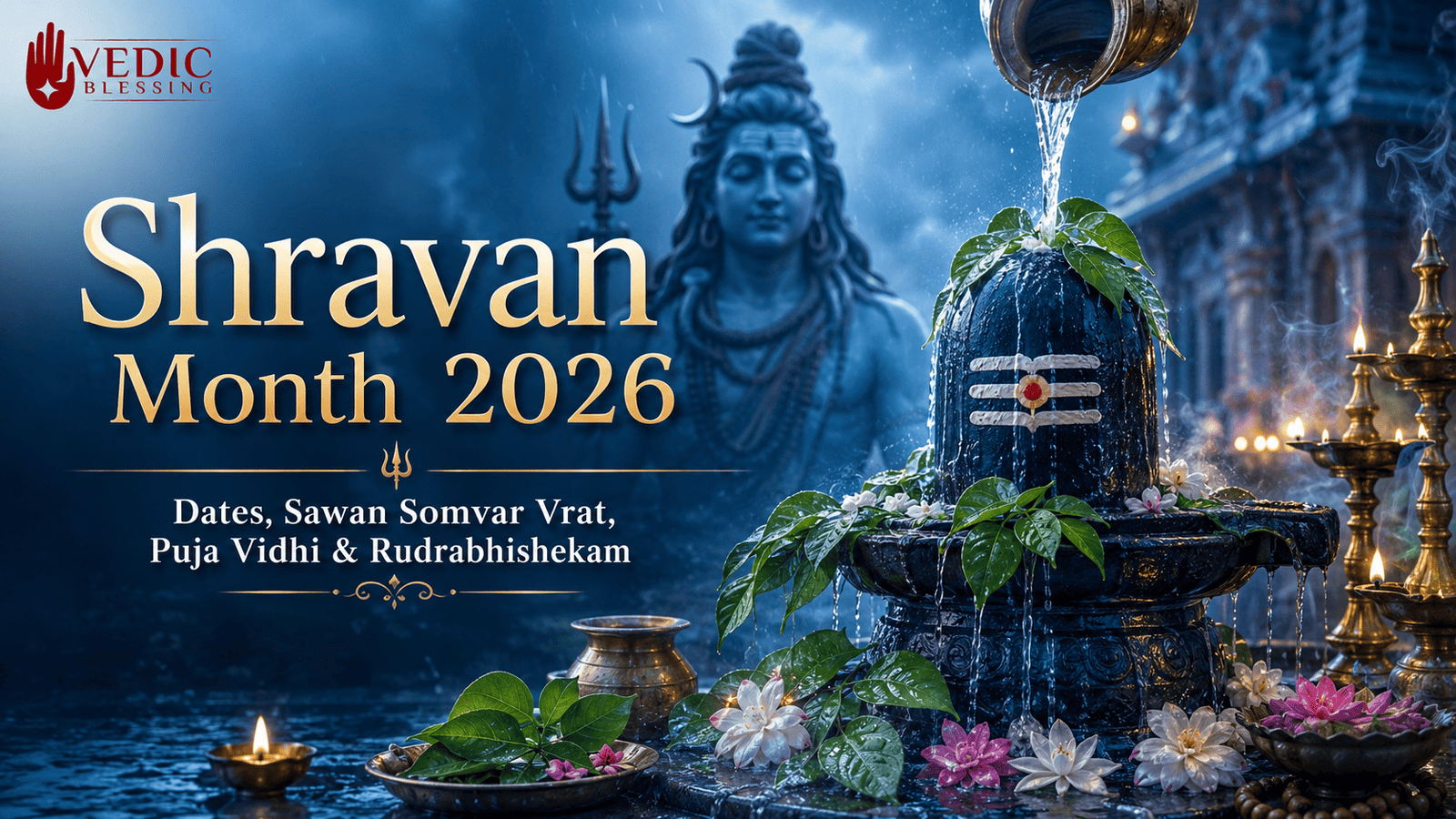
Shravan Month 2026: Dates, Sawan Somvar Vrat, Puja Vidhi, Rudrabhishekam and Online Priest Guidance
What Is Shravan Month?
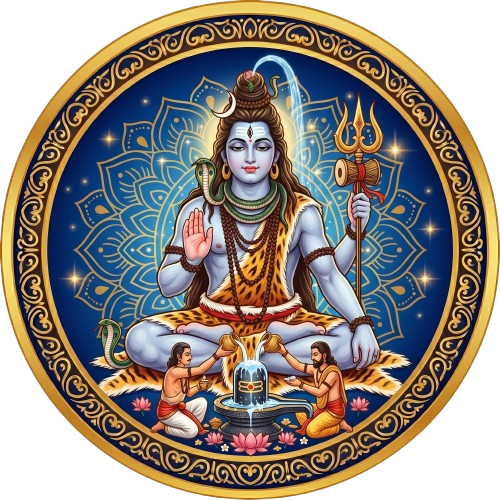
Shravan, also known as Sawan or Shravana Masam, is one of the most spiritually significant months in the Hindu calendar. It is primarily dedicated to the worship of Lord Shiva.
- The month is known by different names across India:
- Shravan in many parts of India
- Sawan in Hindi-speaking regions
- Shravana Masam in Telugu and Kannada traditions
- Shravan Maas in Maharashtra and Gujarat
- Shravan generally falls during July, August or September, depending on the regional Hindu calendar followed.
- The sacred month occurs during the monsoon season in India. The rain, greenery and renewal of nature are often viewed as symbols of purification, nourishment and spiritual transformation.
Devotees observe Shravan through:
- Lord Shiva Puja
- Shravan Somvar Vrat
- Shiva Abhishekam
- Rudrabhishekam
- Bilva Archana
- Mantra chanting
- Temple visits
- Meditation
- Charity and seva
- Sattvic food and spiritual discipline
Although Lord Shiva is the principal deity worshipped during Shravan, devotees also worship Goddess Parvati, Lord Vishnu, Goddess Lakshmi, Nag Devatas and other deities on specific auspicious days.
Why Is Shravan Dedicated to Lord Shiva?
According to Hindu tradition, the Devas and Asuras churned the cosmic ocean during the Samudra Manthan in search of Amrita, the divine nectar of immortality. During the churning, a powerful poison known as Halahala emerged. The poison was believed to be capable of destroying the entire universe. To protect creation, Lord Shiva consumed the poison and held it in his throat. His throat turned blue, giving him the name Neelkanth, meaning the blue-throated one. Devotees traditionally offer water, milk and other sacred substances to the Shiva Lingam as an expression of gratitude, surrender and devotion.
Shravan is therefore considered an auspicious period for:
- Worshipping Lord Shiva
- Performing Rudrabhishekam
- Chanting Shiva mantras
- Observing Somvar Vrat
- Seeking peace and protection
- Praying for family well-being
- Strengthening marital harmony
- Seeking blessings for marriage
- Developing spiritual discipline
- Giving up harmful habits
- Performing charity and seva
- Practising simplicity and self-control
The spiritual benefits associated with Shravan are based on Hindu faith and tradition. Puja should be performed with devotion and sincerity rather than fear.
When Is Shravan Month in 2026?
Shravan dates differ across India because Hindu communities follow different regional lunar calendar systems.
North Indian communities commonly follow the Purnimanta calendar, while Telugu and several other South and Western Indian communities follow the Amanta calendar.
North Indian Shravan Dates 2026
According to the North Indian Purnimanta calendar:
- Shravan begins: Thursday, July 30, 2026
- Shravan ends: Friday, August 28, 2026
These dates are generally followed in regions such as:
- Uttar Pradesh
- Bihar
- Rajasthan
- Madhya Pradesh
- Punjab
- Haryana
- Himachal Pradesh
- Uttarakhand
- Jharkhand
- Chhattisgarh
North Indian Sawan Somvar Dates 2026
There are four main Sawan Somvars during the North Indian Shravan period:
- First Sawan Somvar: Monday, August 3, 2026
- Second Sawan Somvar: Monday, August 10, 2026
- Third Sawan Somvar: Monday, August 17, 2026
- Fourth Sawan Somvar: Monday, August 24, 2026
Telugu Shravana Masam Dates 2026
According to the Telugu Amanta calendar followed in Andhra Pradesh and Telangana:
- Shravana Masam begins: Thursday, August 13, 2026
- Shravana Masam ends: Friday, September 11, 2026
Several other communities following the Amanta lunar calendar observe Shravan during a similar period. However, individual customs and festival dates may vary according to state, sampradaya and family tradition.
Telugu Shravana Somvar Dates 2026
The four Shravana Somvars are:
- First Shravana Somvar: Monday, August 17, 2026
- Second Shravana Somvar: Monday, August 24, 2026
- Third Shravana Somvar: Monday, August 31, 2026
- Fourth Shravana Somvar: Monday, September 7, 2026
Which Shravan Dates Should Overseas Devotees Follow?
Devotees living in the USA, Canada, UK, Australia, Europe, the Middle East or other countries should consider:
- Their family’s regional tradition
- The Purnimanta or Amanta calendar followed by their family
- Their current city and country
- Local sunrise timings
- Local tithi beginning and ending times
- Guidance from a qualified priest
- Hindu observances are calculated using astronomical factors such as tithi and local sunrise. Therefore, a festival or vrat may occasionally be observed on a different Gregorian date outside India.
Vedic Blessing can help devotees identify a suitable Shravan date according to their family tradition, location and local time zone.
Why Are Mondays Important During Shravan?
Monday is known as Somvar and is traditionally associated with Lord Shiva.
The word Soma is also connected with the Moon. Lord Shiva carries the crescent moon upon his head and is worshipped by names such as Somnath and Chandrashekhara. Mondays during Shravan are therefore considered especially auspicious for Shiva worship.
Devotees observe Shravan Somvar while praying for:
- Lord Shiva’s blessings
- Peace of mind
- Emotional stability
- Good health
- Family protection
- Marital harmony
- A suitable life partner
- Relief from obstacles
- Spiritual development
- Strength during challenging periods
- Fulfilment of sincere prayers
Monday worship during Shravan may include fasting, Shiva Abhishekam, temple visits, mantra chanting, Bilva Archana and Rudrabhishekam.
Who Can Observe Shravan Somvar Vrat?
Anyone with faith and devotion may observe Shravan Somvar Vrat.
It may be observed by:
- Married men and women
- Unmarried devotees
- Couples
- Young adults
- Senior citizens
- Families
- Devotees seeking spiritual discipline
- A strict fast is not compulsory for everyone.
- Pregnant women, children, elderly devotees, people taking medication and those with medical conditions should avoid strict fasting unless advised by a qualified healthcare professional.
Devotees who cannot fast may instead:
- Eat simple sattvic food
- Avoid non-vegetarian food and intoxicants
- Chant Om Namah Shivaya
- Offer water to Lord Shiva
- Read or listen to Shiva Katha
- Perform charity
- Participate in Shiva Puja
- Practise patience, compassion and self-control
Sincerity and devotion are considered more important than physical hardship.
Where Can Shravan Puja Be Performed?
Shravan Puja may be performed:
- At home
- At a Shiva temple
- In a family prayer room
- At a priest’s location
- At a temple in India on behalf of the devotee
- Through a live online puja session
- Under the guidance of an experienced Vedic priest
Families living outside India may perform the puja at home while an experienced priest guides them through a live online session.
Online guidance allows devotees to participate actively in the Sankalpa, Abhishekam, Archana, mantra chanting, Naivedyam and Aarti.
How Is Shravan Somvar Vrat Observed?
The exact procedure may differ according to family tradition. The following is a simple and respectful method.
1. Begin the Day with Cleanliness
Wake up early, bathe and wear clean clothes.
Clean the prayer area and arrange a Shiva Lingam or an image of Lord Shiva and Goddess Parvati.
2. Prepare the Puja Materials
Common puja materials include:
- Shiva Lingam or Lord Shiva image
- Lord Ganesha image
- Clean water
- Panchapatra and spoon
- Bilva leaves
- Flowers
- Fruits
- Sandalwood paste
- Akshata
- Vibhuti
- Incense
- Camphor
- Cotton wicks
- Oil or ghee lamp
- Panchamrit ingredients
- Naivedyam
- Clean bowls and puja plates
The exact list may vary according to the type of puja being performed.
3. Take a Sankalpa
Sit calmly before the deity and state your intention to observe the vrat and perform the puja.
The Sankalpa may include:
- Devotee’s name
- Gotra, when known
- Family members’ names
- Current location
- Date
- Purpose of the puja
The prayer may be offered for health, peace, protection, marriage, family well-being or spiritual progress.
4. Begin with Ganapati Puja
Offer a short prayer to Lord Ganesha before beginning the main Shiva worship.
This is traditionally performed to seek the removal of obstacles.
5. Perform Shiva Abhishekam
Offer clean water over the Shiva Lingam with devotion.
Depending on family tradition and priest guidance, the Abhishekam may also include:
- Milk
- Curd
- Honey
- Ghee
- Sugar
- Panchamrit
- Coconut water
- Sacred water
After offering milk or Panchamrit, complete the Abhishekam with clean water.
Large quantities are not required. A small and respectful offering is sufficient.
6. Offer Bilva Leaves and Flowers
Offer clean Bilva leaves, flowers, sandalwood paste, fruits and Naivedyam.
Bilva leaves are considered especially sacred in the worship of Lord Shiva.
7. Chant Shiva Mantras
Devotees may chant the following mantras.
Panchakshari Mantra - Om Namah Shivaya
It may be chanted 11, 21, 51 or 108 times.
Maha Mrityunjaya Mantra
Om Tryambakam Yajamahe
Sugandhim Pushtivardhanam
Urvarukamiva Bandhanan
Mrityor Mukshiya Maamritat
The Maha Mrityunjaya Mantra is traditionally recited while praying for health, strength, protection and freedom from fear.
Shiva Gayatri Mantra
Om Tatpurushaya Vidmahe
Mahadevaya Dhimahi
Tanno Rudrah Prachodayat
Devotees who are not confident about Sanskrit pronunciation may listen respectfully or chant under the guidance of a qualified priest.
8. Read or Listen to Shiva Katha
Devotees may read stories from the Shiva Purana, listen to Shiva bhajans or meditate upon Lord Shiva.
9. Perform Aarti
Conclude the worship with Shiva Aarti, prayers for universal well-being and distribution of prasadam.
How Should Shravan Fasting Be Followed?
Different families follow different fasting practices.
Complete Fast
Some healthy adults observe a complete fast while consuming only water. This should only be undertaken by people who are physically able and accustomed to fasting.
Fruit and Milk Fast
Devotees may consume:
- Fruits
- Milk
- Water
- Nuts
One-Meal Fast
Some devotees eat one simple sattvic vegetarian meal after completing the evening puja.
Simple Sattvic Discipline
People who cannot fast may follow a simple vegetarian diet and avoid:
- Non-vegetarian food
- Alcohol
- Tobacco
- Intoxicants
- Excessively processed food
- Some families also avoid onion and garlic according to their tradition.
Fasting should never place a devotee’s health at risk. Prayer, charity and compassionate conduct are meaningful alternatives.
What Is Rudrabhishekam?
Rudrabhishekam is a sacred form of Lord Shiva worship in which the Shiva Lingam is ceremonially bathed while Vedic mantras are chanted.
The word Rudra refers to a powerful form of Lord Shiva. Abhishekam means ceremonial sacred bathing.
A traditional Rudrabhishekam may include:
- Achamanam
- Sankalpa
- Ganapati Puja
- Kalasha Puja
- Shiva Avahanam
- Abhishekam with sacred substances
- Sri Rudram chanting
- Chamakam chanting
- Shiva Ashtottara Shatanamavali
- Bilva Archana
- Naivedyam
- Mangala Aarti
- Priest blessings
The exact procedure may differ according to the type of Rudrabhishekam, regional tradition, available time and the devotee’s requirements.
Why Is Rudrabhishekam Performed During Shravan?
Shravan is traditionally regarded as one of the most auspicious periods for Lord Shiva worship.
Devotees perform Rudrabhishekam during Shravan while praying for:
- Peace of mind
- Family harmony
- Good health
- Emotional strength
- Protection
- Removal of obstacles
- Spiritual progress
- Success in sincere efforts
- Marital harmony
- Blessings for important occasions
- Strength during challenging periods
These benefits reflect traditional Hindu spiritual beliefs. Rudrabhishekam should support responsible personal, medical, financial and professional action, not replace it.
What Is the Difference Between Shiva Abhishekam and Rudrabhishekam?
A simple Shiva Abhishekam may be performed at home by offering water, milk or Panchamrit to the Shiva Lingam while chanting Om Namah Shivaya.
Rudrabhishekam is generally a more detailed Vedic ritual. It involves prescribed procedures and the chanting of Sri Rudram and other sacred mantras by a trained Vedic priest.
Both forms of worship can be spiritually meaningful when performed with sincerity and devotion.
What Can Be Offered to Lord Shiva During Shravan?
Common offerings include:
- Clean water
- Milk
- Panchamrit
- Bilva leaves
- White flowers
- Fruits
- Sandalwood paste
- Vibhuti
- Incense
- Lamp
- Simple sattvic Naivedyam
Offerings should be clean, fresh and made without unnecessary waste.
A small offering made with devotion is more meaningful than using large quantities without care.
What Should Be Avoided During Shravan Puja?
Practices differ according to tradition, but devotees generally avoid:
- Offering spoiled or unclean items
- Using damaged puja materials
- Wasting milk, food or water
- Performing the puja with anger or disrespect
- Consuming intoxicants while observing the vrat
- Eating non-vegetarian food during the vrat
- Treating fasting as a competition
- Continuing a strict fast despite weakness
- Judging other devotees based on their fasting method
The purpose of Shravan is purification, devotion, self-control and compassion.
How Can Families Living Abroad Observe Shravan?
Devotees living outside India can observe Shravan meaningfully by following these steps:
- Identify the Shravan calendar followed by the family.
- Confirm the date according to the local city and time zone.
- Prepare a clean prayer space at home.
- Arrange the basic puja materials.
- Book an experienced Vedic priest.
- Join the live online session at the scheduled time.
- Perform Sankalpa and Abhishekam under priest guidance.
- Invite relatives from other locations to join online.
- Complete the puja with Naivedyam, Aarti and blessings.
Living abroad should not prevent families from maintaining their spiritual traditions.
With live online guidance, devotees can actively perform the rituals rather than simply watching a recorded puja.
How Does Online Rudrabhishekam Work?
Vedic Blessing helps devotees worldwide participate in personalized online Rudrabhishekam and Shiva Puja.
Step 1: Select the Puja
Choose Rudrabhishekam, Shiva Abhishekam or another suitable Lord Shiva Puja.
Step 2: Select the Date and Time Zone
Choose your preferred date, convenient time and local time zone.
The suitable Shravan date may depend on your family tradition and present location.
Step 3: Provide the Sankalpa Details
Share the devotee’s name, Gotra when known, family details and prayer intention.
Step 4: Receive the Puja Materials List
A puja materials list is provided in advance so that the family can prepare comfortably.
Step 5: Join the Live Online Session
The priest connects at the scheduled time and guides the family through each stage of the puja.
Step 6: Participate in the Ritual
The family can actively participate in:
- Sankalpa
- Shiva Abhishekam
- Bilva Archana
- Mantra chanting
- Naivedyam
- Aarti
Step 7: Receive Priest Blessings
The puja concludes with prayers, Aarti and blessings for the devotee and family.
Why Choose Vedic Blessing for Shravan Puja?
Vedic Blessing provides:
- Experienced Vedic priests
- Live and personalized priest guidance
- Authentic Vedic mantra chanting
- Personalized Sankalpa
- Flexible scheduling
- Support for global time zones
- Puja materials guidance
- Participation from the comfort of home
- Opportunity for relatives in different countries to join
- Language preferences based on priest availability
- Guidance throughout the puja
- Assistance with selecting a suitable date
Whether you wish to perform a simple Shravan Somvar Puja or a detailed Rudrabhishekam, Vedic Blessing helps your family participate with clarity, devotion and spiritual comfort.
Make This Shravan Spiritually Meaningful for Your Family
Do you wish to perform Rudrabhishekam but cannot find an experienced priest near your home? Are you uncertain about the appropriate Shravan date, local time, puja procedure or required materials?
Vedic Blessing can help you arrange a personalized online Rudrabhishekam with live guidance from an experienced Vedic priest. Your family can participate actively in the Sankalpa, Abhishekam, mantra chanting, offerings and Aarti without travelling or searching for a local priest.
You can choose:
- Your preferred Shravan date
- Your local time zone
- A convenient session time
- Personalized Sankalpa details
- Your preferred language, subject to priest availability
- Participation by relatives joining from different locations
Do not allow distance or the unavailability of a local priest to prevent your family from observing this sacred month.
Reserve Your Shravan Rudrabhishekam
Book your personalized online Shravan Puja with Vedic Blessing and welcome the divine grace of Lord Shiva into your home.
Visit: www.vedicblessing.com
Shravan Somvar and convenient weekend sessions are highly preferred. Advance booking helps our team coordinate an experienced priest and secure a suitable time for your family.
Frequently Asked Questions About Shravan Month 2026
1. When does Shravan Month begin in 2026?
In the North Indian Purnimanta calendar, Shravan begins on Thursday, July 30, 2026, and ends on Friday, August 28, 2026.
In the Telugu Amanta calendar, Shravana Masam begins on Thursday, August 13, 2026, and ends on Friday, September 11, 2026.
2. What are the Sawan Somvar dates in North India in 2026?
The four North Indian Sawan Somvars are:
August 3, 2026
August 10, 2026
August 17, 2026
August 24, 2026
3. What are the Telugu Shravana Somvar dates in 2026?
The Telugu Shravana Somvars are:
August 17, 2026
August 24, 2026
August 31, 2026
September 7, 2026
4. Why are Shravan dates different across India?
The dates differ because North Indian communities commonly follow the Purnimanta calendar, while Telugu and several other South and Western Indian communities follow the Amanta calendar.
Regional traditions and local panchang calculations can also affect observance dates.
5. Which Shravan dates should devotees living abroad follow?
Overseas devotees should consider their family tradition, local city, time zone, sunrise and tithi timings.
A qualified priest can help identify the appropriate date for the devotee’s location.
6. Is fasting compulsory during Shravan?
No. Fasting is voluntary.
Devotees who cannot fast may worship Lord Shiva, chant mantras, eat sattvic food, perform charity or participate in Rudrabhishekam.
7. Can unmarried devotees observe Shravan Somvar Vrat?
Yes. Married and unmarried devotees may observe the vrat.
Some unmarried devotees traditionally pray for a suitable life partner, while others observe it for spiritual development and general well-being.
8. Can couples perform Rudrabhishekam together?
Yes. Couples and family members may perform Rudrabhishekam together.
Their names and prayer intentions can be included in the Sankalpa.
9. Can Rudrabhishekam be performed online?
Yes. An experienced Vedic priest can connect through a live online meeting, chant the required mantras and guide the family through each stage of the puja.
10. Is online Rudrabhishekam only watched by the devotee?
No. During a guided online Rudrabhishekam, devotees can actively participate.
The priest guides them through Sankalpa, Abhishekam, offerings, mantra chanting, Naivedyam and Aarti.
11. Can relatives join the puja from different countries?
Yes. Family members living in different cities or countries may join the same online meeting, depending on the meeting arrangements.
12. What is the best day for Rudrabhishekam during Shravan?
Mondays and Pradosham days are traditionally preferred for Shiva worship.
However, Rudrabhishekam may be performed on any suitable day during Shravan according to the local panchang and the devotee’s availability.
13. Can Rudrabhishekam be performed without fasting?
Yes. Fasting is not compulsory for participating in Rudrabhishekam.
Devotees may bathe, wear clean clothes, maintain a sattvic routine and participate with sincerity.
14. What should we do if some puja items are unavailable abroad?
Inform the priest or Vedic Blessing team before the session.
Suitable alternatives can often be recommended. Devotion and sincere participation are more important than obtaining every traditional item.
15. Can children participate in Shravan Puja?
Yes. Children may offer flowers, Bilva leaves or water and participate in simple mantra chanting under adult supervision.
16. Which mantra is best during Shravan?
Om Namah Shivaya is one of the simplest and most widely chanted Shiva mantras.
Devotees may also chant the Maha Mrityunjaya Mantra under appropriate guidance.
17. Is milk compulsory for Shiva Abhishekam?
No. Clean water may be offered with devotion.
When milk or Panchamrit is used, only a small quantity is necessary. Unnecessary waste should be avoided.
18. Can we perform Shravan Puja without a Shiva Lingam?
Yes. Devotees may worship an image of Lord Shiva or seek guidance from a priest regarding a suitable arrangement.
19. How early should Shravan Rudrabhishekam be booked?
It is advisable to book in advance, especially for Shravan Mondays, Pradosham days and convenient weekend timings.
Early booking allows sufficient time for priest coordination and puja material preparation.
20. How can we book Shravan Puja with Vedic Blessing?
Visit www.vedicblessing.com, select the required puja service and choose your preferred date, time and time zone.
The Vedic Blessing team will coordinate the priest, Sankalpa details, preparation instructions and online session information.
Book Your Online Shravan Rudrabhishekam Today
Shravan is a sacred opportunity to pause, pray and reconnect with Lord Shiva.
Whether you are praying for peace, family well-being, strength, protection, marital harmony or spiritual progress, sincere worship during Shravan can make this auspicious month deeply meaningful.
Vedic Blessing enables devotees worldwide to participate in authentic and personalized Lord Shiva worship under the live guidance of experienced Vedic priests.
Your Online Shravan Puja Can Include
- Live guidance from an experienced Vedic priest
- Personalized Sankalpa with devotee and family details
- Step-by-step Rudrabhishekam guidance
- Sacred Vedic mantra chanting
- Puja materials list provided in advance
- Flexible scheduling across global time zones
- Participation from the comfort of your home
- Opportunity for relatives in different countries to join
- Guidance through the completion of Aarti and blessings
How to Book
- Visit www.vedicblessing.com
- Select Rudrabhishekam or your preferred Lord Shiva Puja.
- Choose your preferred date, time and local time zone.
- Submit the devotee and Sankalpa details.
- Receive confirmation, preparation instructions and session information.
- Join the live puja and participate with your family.
Shravan Somvar appointments are limited and require advance priest coordination. Reserve your preferred date and time early.
Har Har Mahadev!