Solar Eclipse August 12, 2026: Visibility, Sutak Rules, Rahu-Ketu Story and Vedic Guidance
A total solar eclipse will occur on Wednesday, August 12, 2026. It will be visible as a total eclipse in parts of Greenland, Iceland, northern Spain and a small region of Portugal. A partial eclipse will be visible across many parts of Canada, the United States, the United Kingdom and Europe.
The eclipse will not be visible in India.
Known as Surya Grahan in the Vedic tradition, a solar eclipse is considered a spiritually sensitive period. Devotees often use this time for prayer, mantra japa, meditation and self-reflection.
However, eclipse timings and Sutak rules depend on where a person lives. Devotees abroad should follow timings calculated for their own city, not timings published for India.
Solar Eclipse 2026: Important Details
| Detail | Information |
|---|---|
| Date | Wednesday, August 12, 2026 |
| Eclipse type | Total solar eclipse |
| Totality visible in | Greenland, Iceland, northern Spain and a small part of Portugal |
| Partial eclipse visible in | Parts of the USA, Canada, UK, Europe, Russia and northwestern Africa |
| Visible in India | No |
| Sutak in India | Generally not applicable |
| Local timings | Vary by city and country |
NASA confirms that totality will cross Greenland, Iceland, northern Russia, the Atlantic Ocean, northern Spain and a small corner of Portugal. A partial eclipse will be visible across a wider area.
What Is a Solar Eclipse?
Astronomically, a solar eclipse occurs when the Moon passes between the Earth and the Sun. The Moon temporarily covers part or all of the Sun when viewed from certain locations on Earth.
A total solar eclipse occurs when the Moon completely covers the visible Sun. People outside the narrow path of totality may see only a partial eclipse.
The August 12, 2026 event is a total solar eclipse, although its appearance will differ according to location.
Where Will the August 12 Eclipse Be Visible?
United States and Canada
A partial solar eclipse will be visible from parts of the United States and Canada. The extent and timing of the eclipse will vary by city.
United Kingdom and Europe
The United Kingdom and many European countries will experience a partial solar eclipse. Iceland and northern Spain are among the principal locations that will experience totality.
India
The August 12 solar eclipse will not be visible in India. Therefore, Sutak is generally not observed in India for this eclipse. People living outside India should check timings for their exact city before deciding which traditional observances apply.
The Story of Rahu and Ketu: Why Do Eclipses Occur?
A well-known Puranic account connects eclipses with Samudra Manthan, the churning of the cosmic ocean.
The Devas and Asuras joined together to churn the ocean in search of Amrita, the nectar of immortality. When the nectar appeared, Lord Vishnu assumed the enchanting form of Mohini to distribute it.
An Asura named Svarbhanu disguised himself and sat between Surya, the Sun, and Chandra, the Moon. He received a small amount of Amrita before Surya and Chandra recognized him and informed Lord Vishnu.
Lord Vishnu immediately used the Sudarshana Chakra to separate Svarbhanu’s head from his body. Because he had already tasted the nectar, he did not perish.
His head became Rahu, while the remaining body became Ketu.
According to the traditional story, Rahu periodically attempts to swallow Surya or Chandra because they revealed his identity. This causes a solar or lunar eclipse. Since Rahu has no complete body, the Sun or Moon eventually becomes visible again.
What Does the Rahu-Ketu Story Symbolize?
The story carries a deeper spiritual message.
Surya represents light, truth, vitality and consciousness. Chandra represents the mind and emotions. Rahu is associated with illusion, desire, confusion and attachment, while Ketu is associated with detachment, spiritual insight and liberation.
An eclipse may therefore symbolize a temporary period in which clarity becomes covered by illusion. However, the light is never permanently destroyed.
The return of the Sun reminds us that confusion and difficult circumstances are temporary. Through prayer, discipline and awareness, clarity can return.
What Is Sutak Kaal?
Sutak Kaal is a traditional period of ritual restraint observed before an eclipse.
For a solar eclipse, Sutak traditionally begins approximately 12 hours before the visible eclipse. During this period, many families reduce regular household and ceremonial activities and focus on prayer.
Sutak is generally observed only where the eclipse is visible. Its exact observance may differ according to family tradition, sampradaya, age and health. Therefore, Sutak is generally not applicable in India for this eclipse. Devotees in the USA, Canada, UK and Europe should check visibility for their exact city. Children, elderly people, pregnant women and people with medical conditions may follow suitable exemptions.
What Should Be Done Before the Eclipse?
Those observing Sutak may:
- Complete meals before the prescribed period.
- Clean the home and prayer area.
- Keep a japa mala or prayer book ready.
- Place Tulasi leaves or Darbha grass with stored food, where traditionally followed.
- Avoid beginning an auspicious ceremony.
- Confirm the eclipse timings for their city.
- Prepare a quiet place for prayer and meditation.
- Health, medication and nutritional requirements should always be respected.
What Can We Do During the Solar Eclipse?
Although elaborate external pujas may be paused, inward spiritual practices are encouraged.
Devotees may:
- Perform mantra japa
- Meditate silently
- Remember their Ishta Devata
- Read or listen to sacred teachings
- Chant “Om Namah Shivaya”
- Chant “Om Namo Narayanaya”
- Chant the Gayatri Mantra
- Chant the Maha Mrityunjaya Mantra
- Pray for spiritual clarity and peace
- The eclipse should be approached with devotion and awareness, not fear.
Mantras to Chant During Surya Grahan
Surya Mantra
Om Suryaya Namah
Meaning: Salutations to Lord Surya, the divine source of light, life and consciousness.
Surya Gayatri Mantra
Om Bhaskaraya Vidmahe
Mahadyutikaraya Dhimahi
Tanno Adityah Prachodayat
Meaning: We meditate upon the radiant Lord Surya. May that divine light illuminate and guide our intellect.
Maha Mrityunjaya Mantra
Om Tryambakam Yajamahe
Sugandhim Pushtivardhanam
Urvarukamiva Bandhanan
Mrityor Mukshiya Maamritat
Meaning: We worship the three-eyed Lord Shiva, who nourishes all beings. May He free us from fear and bondage and guide us toward spiritual well-being.
Devotees may also chant the mantra of their family deity according to their personal tradition.
What Should Be Done After the Eclipse?
After the eclipse concludes, devotees traditionally:
- Take a bath or shower.
- Wear clean clothes.
- Clean the prayer area.
- Light a fresh lamp.
- Offer a simple prayer.
- Prepare fresh food.
- Chant a Shanti mantra.
- Offer charity or food where possible.
- Resume regular puja after purification.
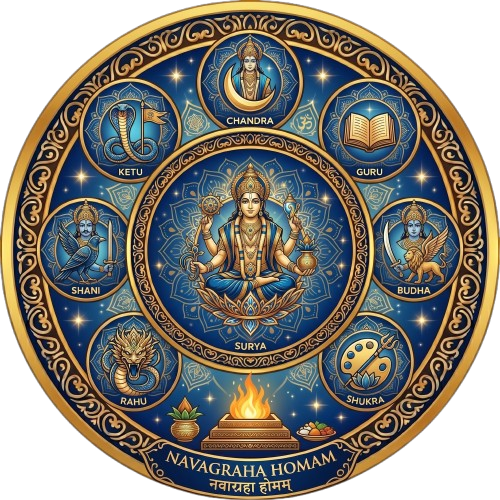
- Some families may also perform a simple Surya prayer, Navagraha Puja or Grahana Shanti according to their tradition.
Precautions for Pregnant Women
Some families follow additional customs for pregnant women during eclipses. These practices vary by region and family tradition.
Pregnant women may maintain a peaceful atmosphere, pray and avoid unnecessary stress. However, traditional observances should never interfere with medical requirements.
Pregnant women should:
- Continue prescribed medicines
- Eat and drink when required
- Avoid unsafe fasting
- Follow their doctor’s advice
- Remain calm and comfortable
- Traditional customs are matters of faith and should not be treated as replacements for medical care.
Can We Watch the Solar Eclipse?
A solar eclipse should never be viewed with unprotected eyes.
Regular sunglasses, dark glass, cameras, binoculars and homemade filters are not safe for viewing the Sun.
Use only:
- Certified eclipse glasses
- Approved handheld solar viewers
- Proper solar filters
- Safe indirect viewing methods
- Looking directly at the Sun without appropriate protection can cause permanent eye damage.
Vedic Astrological Significance of a Solar Eclipse
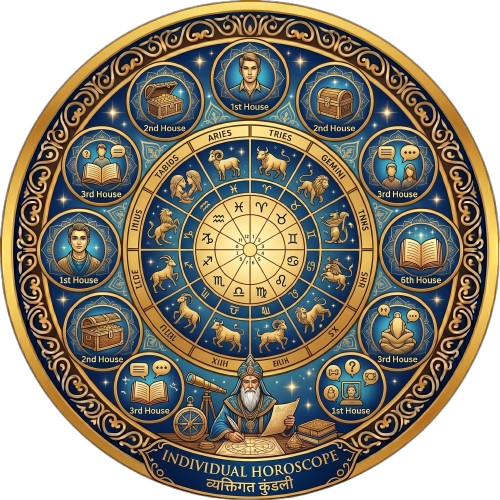
In Vedic astrology, Surya represents confidence, vitality, leadership, authority, dharma and inner consciousness. Rahu and Ketu represent the lunar nodes and are traditionally connected with eclipses. However, the effect of an eclipse cannot be determined from a person’s Rashi alone.
A responsible personal interpretation may consider:
- Janma Rashi
- Janma Nakshatra
- Lagna
- Position of Surya and Chandra
- Placement of Rahu and Ketu
- Current Dasha and Antardasha
- Relevant planetary transits
- Houses activated in the horoscope
- Whether the eclipse is visible in the person’s location
An eclipse does not automatically indicate misfortune. Its possible relevance should be studied within the complete horoscope rather than through generalized predictions.
Frequently Asked Questions
When is the solar eclipse in August 2026?
The solar eclipse will occur on Wednesday, August 12, 2026.
Is the August 12, 2026 eclipse visible in India?
No. The solar eclipse will not be visible in India.
Is Sutak applicable in India?
Sutak is generally observed only where the eclipse is visible. Therefore, Sutak is generally not applicable in India for this eclipse.
Is the solar eclipse visible in the USA?
A partial solar eclipse will be visible from parts of the United States. Exact visibility will depend on the city.
Is the solar eclipse visible in Canada and the UK?
Yes. Many locations in Canada and the United Kingdom will experience a partial solar eclipse.
Why are Rahu and Ketu associated with eclipses?
According to the Puranic story of Samudra Manthan, Rahu attempts to swallow Surya or Chandra because they revealed his identity while Amrita was being distributed. This temporary swallowing represents an eclipse.
Can we perform puja during the eclipse?
Those observing Sutak generally pause elaborate external pujas. Mantra japa, meditation and mental prayer are encouraged.
Which mantra can be chanted during Surya Grahan?
Devotees may chant “Om Suryaya Namah,” the Gayatri Mantra, Maha Mrityunjaya Mantra or the mantra of their Ishta Devata.
Is a special remedy necessary for everyone?
No. The same remedy is not necessary for everyone. Personalized guidance should consider the complete horoscope, Nakshatra, current planetary periods and individual circumstances.
Receive Personalized Eclipse Guidance
Online predictions based only on a Rashi cannot explain how an eclipse may relate to your individual horoscope.
At VedicBlessing, our experienced Vedic astrologers and priests provide personalized guidance based on your:
- Date, time and place of birth
- Janma Rashi and Nakshatra
- Current Dasha and planetary transits
- Present concerns
- City and country of residence
- Family tradition and preferred language
You may receive guidance regarding suitable mantras, traditional remedies, Grahana Shanti, Surya worship or Navagraha Puja according to your individual situation.
Do not allow generalized eclipse predictions to create unnecessary fear. Receive clear, personalized guidance based on your complete horoscope and present circumstances.
Book your consultation at VedicBlessing.com or contact us on WhatsApp at +91 90630 82668.
Let this solar eclipse become a sacred opportunity for prayer, inner purification and renewed clarity.