Varalakshmi Vratham Naivedyam: Traditional Prasadam and Food Preparation Guide
Varalakshmi Vratham is observed with devotion, gratitude, and traditional offerings to Goddess Mahalakshmi. One of the most meaningful parts of the puja is preparing naivedyam, the sacred food offered to the Goddess before it is shared as prasadam.
The dishes prepared for Varalakshmi Vratham may differ according to region, family tradition, and ingredient availability. However, the purpose remains the same: to prepare clean, sattvic food with devotion and offer it to Goddess Lakshmi with gratitude.
This guide explains what naivedyam means, why it is offered, which traditional dishes can be prepared, and how families can plan a simple and meaningful Varalakshmi Vratham menu.
What Is Naivedyam in Varalakshmi Vratham?
Naivedyam is food offered to a deity during puja before anyone consumes it.
During Varalakshmi Vratham, devotees prepare sweets, rice dishes, fruits, snacks, and other traditional foods. These offerings are placed before Goddess Varalakshmi during the puja and are later distributed among family members and guests as blessed prasadam.
The value of naivedyam does not depend on the number of dishes prepared. Even a simple offering made with sincerity and devotion is considered meaningful.
Why Is Naivedyam Offered to Goddess Varalakshmi?
Offering food represents gratitude for nourishment, prosperity, health, and all the resources received in life.
Goddess Lakshmi represents many forms of abundance, including food, knowledge, courage, prosperity, family well-being, and spiritual strength.
By offering naivedyam, devotees express gratitude and acknowledge that every blessing ultimately comes from the Divine.
The practice also teaches us to prepare food respectfully, offer it with gratitude, and share it with others.
When Should Varalakshmi Vratham Naivedyam Be Prepared?
Most dishes are traditionally prepared on the morning of the Vratham after bathing and cleaning the kitchen and puja area.
Some preparation may be completed the previous evening, such as:
- Soaking chana or dal
- Cleaning and arranging cooking vessels
- Grating coconut
- Roasting dry ingredients
- Organising fruits and puja materials
- Preparing batter or dough, depending on family tradition
Freshly prepared food is generally preferred for the main naivedyam.
Which Dishes Are Traditionally Prepared for Varalakshmi Vratham?
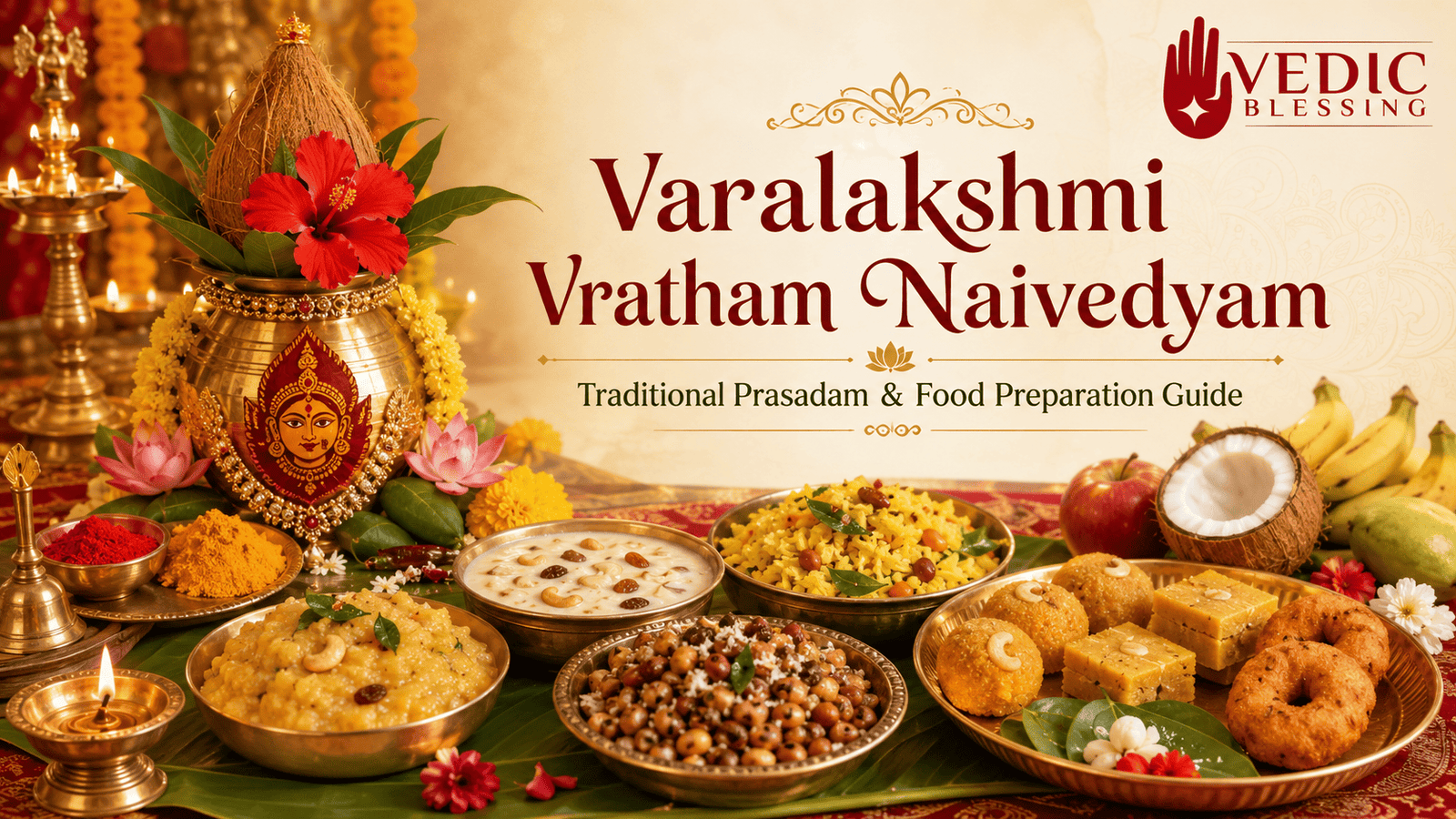
There is no single compulsory menu. Families generally prepare a combination of sweets, rice dishes, lentil preparations, snacks, fruits, and coconut.
1. Payasam or Kheer
Payasam is one of the most widely prepared offerings for Goddess Lakshmi.
It may be made using:
- Rice
- Semiya or vermicelli
- Sabudana
- Moong dal
- Milk
- Jaggery or sugar
- Cardamom
- Cashews and raisins
Payasam represents sweetness, nourishment, and abundance.
2. Sweet Pongal
Sweet Pongal is prepared with rice, moong dal, jaggery, ghee, cardamom, cashews, and raisins. It is a popular naivedyam in many South Indian households and represents gratitude for food, harvest, and prosperity.
3. Pulihora
Pulihora, also known as tamarind rice, is commonly prepared during festivals and pujas. Cooked rice is mixed with tamarind, turmeric, mustard seeds, curry leaves, peanuts, and traditional seasoning. It is convenient to prepare and suitable for sharing as prasadam.
4. Lemon Rice
Lemon rice is a simple sattvic dish prepared with cooked rice, lemon juice, turmeric, mustard seeds, curry leaves, and peanuts. It can be included when a smaller or simpler menu is preferred.
5. Garelu or Vada
Garelu are made from soaked urad dal batter and are traditionally offered during many auspicious occasions. They are generally prepared without onion or garlic when offered as naivedyam.
6. Sundal
Sundal is prepared using boiled chickpeas, black chana, green gram, or other lentils. The cooked legumes are lightly seasoned with mustard seeds, curry leaves, coconut, and mild spices. Sundal is simple, nutritious, and suitable for puja offerings.
7. Boorelu, Bobbatlu, Obbattu, or Holige
Families may prepare regional sweets such as:
- Poornam boorelu
- Bobbatlu
- Obbattu
- Holige
- Kozhukattai
- Modakam
The choice depends on regional customs and family tradition.
8. Besan-Based Sweets
Besan-based sweets such as besan ladoo, boondi ladoo, and Mysore Pak are offered to Goddess Lakshmi in many regional and family traditions. These sweets are commonly prepared with gram flour, ghee, sugar or jaggery, and cardamom.
Some devotees believe that besan sweets are especially auspicious for Lakshmi worship. However, this should be understood as a traditional or regional belief rather than a universal requirement.
Besan sweets may be offered along with fruits, coconut, payasam, or another homemade dish.
9. Fruits and Coconut
Fresh fruits and coconut are among the simplest and most widely accepted offerings.
Common choices include:
- Bananas
- Apples
- Grapes
- Pomegranates
- Mangoes, when available
- Dates
- Coconut
A fruit offering is suitable when elaborate cooking is not possible.
How Can You Plan the Varalakshmi Vratham Menu?
The menu should be planned according to available time, family size, health, and tradition.
A balanced menu may include:
- One sweet dish
- One rice preparation
- One lentil or sundal dish
- One fried or steamed item
- Fruits and coconut
Simple Menu
- Semiya payasam
- Pulihora
- Chana sundal
- Bananas
- Coconut
Traditional Menu
- Sweet Pongal
- Pulihora
- Garelu
- Sundal
- Payasam
- Besan ladoo or Mysore Pak
- Fruits
- Coconut
Preparing a few dishes peacefully is better than attempting an elaborate menu that creates stress.
How Should Naivedyam Food Be Prepared?
Traditional practices may vary, but the following guidelines are commonly followed:
- Clean the kitchen and cooking vessels.
- Bathe before beginning the preparation.
- Cook with a calm and devotional mindset.
- Avoid tasting the food before offering it.
- Prepare sattvic food.
- Avoid onion, garlic, meat, eggs, and alcohol.
- Use fresh ingredients whenever possible.
- Keep the prepared naivedyam separate.
- Place small portions in clean puja vessels.
- Offer the food before serving it to anyone.
Family customs should always be respected, especially where specific ingredients or cooking practices are followed.
How Is Naivedyam Offered During the Puja?
After the main puja is completed, place the prepared food before Goddess Varalakshmi.
The offering may include:
- Cooked dishes
- Sweets
- Fruits
- Coconut
- Betel leaves and betel nuts
- Milk
- Water
The priest or family member performing the puja offers the food through the appropriate naivedyam mantra or prayer. After the offering, the food is considered prasadam and may be shared with family members, guests, neighbours, and devotees.
What Should Be Avoided While Preparing Naivedyam?
Devotees generally avoid:
- Tasting food before offering
- Using stale or spoiled ingredients
- Onion and garlic, depending on family tradition
- Non-vegetarian food
- Cooking with anger or stress
- Wasting food
- Preparing more than the family can reasonably use
Cleanliness, gratitude, devotion, and sincerity are more important than extravagance.
How Can Families Living Abroad Prepare Varalakshmi Naivedyam?
Families living abroad may not always find every traditional ingredient. Suitable alternatives can be used while maintaining the devotional purpose of the offering.
Helpful options include:
- Use locally available fruits.
- Use regular jaggery when traditional varieties are unavailable.
- Use frozen coconut when fresh coconut is difficult to find.
- Use canned chickpeas after rinsing them thoroughly.
- Prepare one sweet and one savoury dish instead of an extensive menu.
- Schedule the cooking according to the local puja time.
- Choose simple recipes that suit the family’s available time.
An experienced priest can also provide a customized puja and naivedyam checklist based on the family’s location, tradition, and available ingredients.
Is an Elaborate Naivedyam Menu Necessary?
No. Goddess Lakshmi worship is based on devotion, gratitude, purity, and sincerity. A simple offering of fruit, milk, coconut, jaggery, besan ladoo, or homemade payasam can be equally meaningful. Devotees should not feel pressured to prepare many dishes, especially when managing work, health needs, children, or limited ingredient availability.
Varalakshmi Vratham Naivedyam with Online Priest Guidance
Families performing Varalakshmi Vratham for the first time may have questions about naivedyam, puja materials, Sankalpam, and the order of rituals.
Vedic Blessing can arrange online guidance from an experienced Hindu priest according to your:
- Location and time zone
- Preferred language
- Family tradition
- Available puja materials
- Suitable date and time
- Personal spiritual requirement
A detailed puja and naivedyam checklist can be shared in advance so that the family can prepare without confusion.
Visit VedicBlessing.com to book Varalakshmi Vratham puja guidance and celebrate the festival with devotion from wherever you live.
Frequently Asked Questions
1. How many naivedyam dishes should be prepared for Varalakshmi Vratham?
There is no compulsory number. One sweet dish, one savoury dish, fruits, and coconut are sufficient when prepared with devotion.
2. Which sweet is best for Varalakshmi Vratham?
Payasam, sweet Pongal, boorelu, bobbatlu, besan ladoo, Mysore Pak, and other traditional sweets may be offered according to family custom.
3. Does Goddess Lakshmi like besan sweets?
Besan-based sweets are offered to Goddess Lakshmi in many regional and family traditions. However, they are not compulsory. The offering should be chosen according to family custom and prepared with sincerity.
4. Can store-bought sweets be offered?
Homemade food is generally preferred. However, fresh and clean store-bought sweets may be offered when cooking is not possible, depending on family tradition.
5. Can onion and garlic be used in naivedyam?
Most families avoid onion and garlic in food prepared for naivedyam.
6. Can food be tasted before offering?
Traditionally, naivedyam is not tasted before being offered to the Goddess.
7. What can be offered if there is no time to cook?
Fruits, coconut, milk, jaggery, dry fruits, besan ladoo, or a simple homemade sweet may be offered.
8. Can Varalakshmi Vratham naivedyam be prepared the previous day?
Fresh food is generally preferred. Some preparation work may be completed the previous day, but the main dishes are ideally prepared on the day of the puja.
9. What should be done with the naivedyam after puja?
The offered food becomes prasadam and should be respectfully shared with family members, guests, neighbours, or devotees.
10. Can families living abroad use alternative ingredients?
Yes. Locally available fruits, jaggery, coconut, lentils, and other suitable ingredients may be used. Devotion and cleanliness are more important than using an exact ingredient.
Conclusion
Varalakshmi Vratham naivedyam is an expression of devotion, gratitude, and joyful sharing.
Whether you prepare payasam, Pulihora, sweet Pongal, sundal, garelu, besan ladoo, Mysore Pak, fruits, or a simple homemade dish, the most important ingredients are sincerity, cleanliness, and faith.
Plan a manageable menu, follow your family tradition, avoid unnecessary pressure, and offer the food to Goddess Varalakshmi with a peaceful and grateful heart.