Diwali Stories & Lakshmi Ganapathi Puja Significance
Every Diwali, countless families prepare a beautiful altar with Goddess Lakshmi and Lord Ganesha. Lamps glow, flowers surround the deities, and the family gathers to pray for an auspicious year ahead.
Yet behind this familiar tradition lies an interesting question:
Goddess Lakshmi is Lord Vishnu’s consort. Why, then, is she worshipped alongside Lord Ganesha during Diwali?
A popular devotional story explains their bond through affection, a mother’s promise and the blessing of prosperity. Alongside that story is a lasting spiritual lesson: abundance becomes more meaningful when accompanied by wisdom.
Let us explore the story, understand the symbolism and discover how to celebrate with greater awareness and devotion.
What Is Lakshmi Ganapathi Puja?
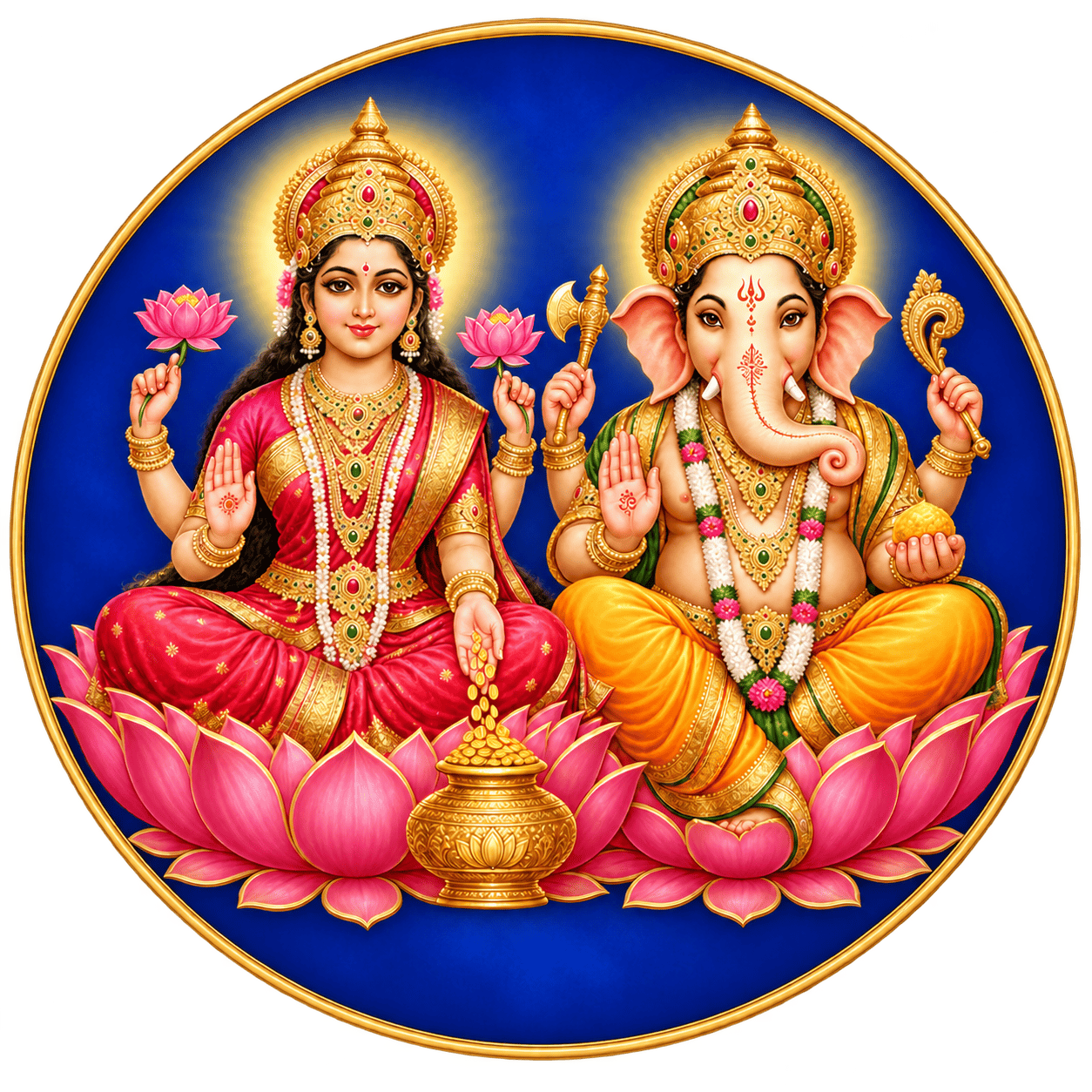
Lakshmi Ganapathi Puja is the worship of Goddess Lakshmi and Lord Ganesha, also called Ganapathi, seeking blessings for prosperity, wisdom and auspicious beginnings. Goddess Lakshmi is revered for abundance and good fortune. Lord Ganesha is invoked for discernment and the removal of obstacles.Their worship brings together two heartfelt prayers:
May our home be blessed with the resources to flourish. May we have the wisdom to use those resources well.
This combined worship is especially familiar during Diwali, although practices differ across regions and families.
What Is the Story Behind Lakshmi and Ganesha’s Bond?
A Popular Devotional Story of Motherly Affection
One widely shared devotional tale describes Goddess Lakshmi wishing to experience the special affection of caring for a child.She approaches Goddess Parvati and expresses her desire to regard one of Parvati’s sons as her own.Parvati initially hesitates. Lakshmi travels widely, bestowing blessings upon devotees. Would she be able to give a child constant attention? Lakshmi reassures her that she will care for Ganesha with love. With Parvati’s agreement, she receives him as her adopted son.
Overjoyed, Lakshmi blesses Ganesha and declares, in this telling, that his worship should accompany hers. The story explains their joint worship through a tender bond of motherhood and affection.
This is a popular devotional tale with different retellings. It is best introduced as a traditional story, rather than attributed to a particular Purana without a verified reference.
Why Does Goddess Lakshmi Love Lord Ganesha?
Within this story, Lakshmi’s affection for Ganesha is maternal. She welcomes him into her heart as a beloved son. The bond gives devotees a warm way to understand the images they see on their Diwali altar: Lakshmi’s abundance is accompanied by Ganesha’s auspicious presence.
There is also a symbolic interpretation.
Ganesha represents wisdom, thoughtful beginnings and the ability to approach difficulties with understanding. These qualities help people care for the opportunities and resources they receive. Consider a family beginning a new business. Financial resources are valuable, but so are sound judgment, patience, honest dealings and careful decisions.
Lakshmi and Ganesha’s worship can therefore inspire a prayer for both opportunity and the understanding to make good use of it.
Is Ganesha Goddess Lakshmi’s Son?
In the widely followed tradition, Lord Ganesha is the son of Lord Shiva and Goddess Parvati. The adoption story describes an additional affectionate relationship with Lakshmi. It does not replace his identity as Shiva and Parvati’s son.
Hindu devotional storytelling often expresses divine relationships through familiar human bonds, helping devotees connect with spiritual ideas through love, care and responsibility.
Why Do We Worship Ganesha Before Lakshmi?
Lord Ganesha is traditionally invoked at the beginning of many auspicious ceremonies. Devotees pray to him before proceeding with the main worship, seeking an unobstructed and auspicious beginning. On Diwali, beginning with Ganapathi Puja also offers a useful moment of reflection.
Before asking for progress, we can pause and consider:
Are our intentions clear? Are we approaching our responsibilities sincerely? Are we ready to act with patience and good judgment? Prayer brings our attention to these questions and helps us enter the worship with a settled mind.
Why Are Lakshmi and Ganesha Worshipped Together?
Their combined worship carries several meaningful themes.
Prosperity with Wisdom
Lakshmi’s blessings are associated with prosperity. Ganesha’s blessings are associated with intelligence and discernment. Together, they remind us to value wise decisions alongside material progress.
Opportunity with Thoughtful Effort
A promising opportunity still requires preparation and persistence. Their worship can encourage devotees to combine hope with responsible action.
Abundance with Generosity
Resources can support education, family care, charitable work and the well-being of others. Diwali offers a chance to reflect on how our prosperity can benefit more than ourselves.
Gratitude with New Beginnings
The puja allows families to give thanks for the year gone by and begin the next stage of life with renewed intention.
Why Is Lakshmi Worshipped During Diwali?
For many families, Diwali is an occasion to honour Goddess Lakshmi and express gratitude for the blessings that sustain their homes. Cleaning, decorating, preparing festive food and arranging the altar become acts of welcome and devotion.
A meaningful way to approach these customs is to prepare both our surroundings and our conduct. Alongside a clean home, we can cultivate respectful speech, fairness in our dealings and care for those around us.
These actions help carry the spirit of worship into everyday life.
What Is the Story of Lakshmi Emerging from the Ocean?
Another important sacred narrative associated with Goddess Lakshmi is Samudra Manthana, the churning of the Ocean of Milk.The Vishnu Purana describes the devas and asuras churning the ocean in their search for amrita, the nectar of immortality. During this great undertaking, Goddess Lakshmi emerges in splendour and becomes united with Lord Vishnu.
For devotees, the image of Lakshmi emerging from the ocean is deeply evocative. As a spiritual reflection, it can remind us that worthwhile growth often unfolds through patience and sustained effort. Challenges may arise along the way, yet we continue with faith and purpose.
This story concerns Lakshmi’s appearance and her relationship with Vishnu. The tale of her adopting Ganesha is a separate devotional narrative.
Why Is Lakshmi Worshipped with Ganesha Rather Than Vishnu on Some Diwali Altars?
Goddess Lakshmi remains Lord Vishnu’s consort. Worshipping her alongside Ganesha does not change that relationship. Deities may be worshipped together because of the purpose of a ceremony and the blessings being sought.
In Lakshmi Ganapathi Puja, devotees seek prosperity alongside wisdom and an auspicious beginning. This explains the devotional focus of the pairing. Diwali customs are diverse. Families may include Vishnu, Kubera, Saraswati, their family deity or other forms of worship according to their tradition.
What Do the Lotus, Lamp and Offerings Teach Us?
Understanding the symbolism can make familiar rituals more engaging.
The Lotus: A Reflection on Inner Purity
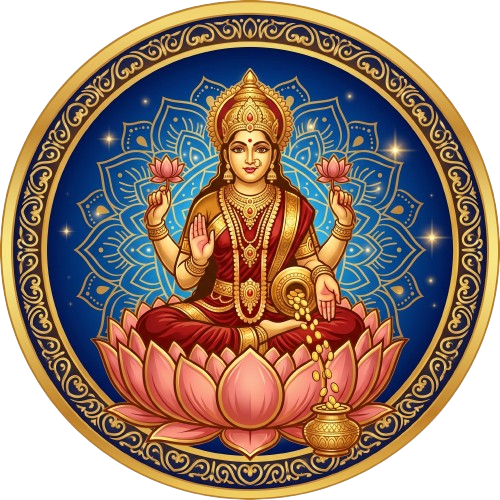
Lakshmi is frequently depicted with a lotus. As a devotional reflection, the flower can encourage us to remain graceful and principled while carrying out worldly responsibilities.
The Lamp: A Prayer for Clarity
A diya illuminates the space around it. In worship, its light can become a reminder to seek knowledge and bring kindness into our actions.
Naivedyam: Gratitude Before Enjoyment
Offering food before receiving it as prasadam encourages us to pause and acknowledge what sustains us.
Flowers: Attention and Care
Selecting and offering flowers turns a simple action into an expression of devotion. The care we bring to the offering matters as much as its appearance.
When Should Lakshmi Ganapathi Puja Be Performed?
Many households observe Diwali Lakshmi Puja around Amavasya during the evening. The appropriate date and ritual window should be checked against the local Panchang and the tradition being followed. For families abroad, share your city, country and time zone when requesting guidance.
A muhurtham calculated for an Indian city should not simply be converted and assumed to be the appropriate local puja time.
How Can You Prepare for Lakshmi Ganapathi Puja at Home?
Begin by arranging a clean, peaceful space where everyone can participate comfortably. A general preparation list includes:
- Lakshmi and Ganesha idols or framed pictures.
- A stable puja platform and clean cloth.
- Diyas, cotton wicks, and oil or ghee.
- Turmeric, kumkum and sandalwood paste.
- Flowers and akshata.
- Fruits and freshly prepared vegetarian naivedyam.
- Clean water, a vessel and a spoon.
- Incense, an aarti plate and a puja bell.
- Coconut, betel leaves and betel nuts, if required.
- Kalash items, if included in the planned procedure.
Confirm the final requirements with your priest. If abhishekam is included, check whether the idol’s material is suitable for bathing. Before beginning, take a quiet moment to reflect on your sankalpa, the intention of your worship.
Which Important Mantras Can You Chant?
A prayer becomes more meaningful when we understand what we are saying.
1. Ganesha Prayer for an Auspicious Beginning
वक्रतुण्ड महाकाय सूर्यकोटिसमप्रभ ।
निर्विघ्नं कुरु मे देव सर्वकार्येषु सर्वदा ॥
Vakratunda Mahakaya
Suryakoti Samaprabha
Nirvighnam Kuru Me Deva
Sarva Karyeshu Sarvada
Meaning: O Lord with the curved trunk and mighty form, radiant like countless suns, please remove obstacles from my undertakings.
This familiar prayer invokes Ganesha’s blessings before beginning auspicious work.
2. A Simple Salutation to Lord Ganesha
ॐ श्री गणेशाय नमः ॥
Om Shri Ganeshaya Namah
Meaning: I bow to Lord Ganesha.
This short prayer is easy for family members to recite together with attention and devotion.
3. A Simple Salutation to Goddess Lakshmi
ॐ श्री महालक्ष्म्यै नमः ॥
Om Shri Mahalakshmyai Namah
Meaning: I bow to Goddess Mahalakshmi.
Offer this salutation with gratitude and a sincere prayer for an auspicious life.
4. A Verse from the Mahalakshmi Ashtakam
नमस्तेऽस्तु महामाये श्रीपीठे सुरपूजिते ।
शङ्खचक्रगदाहस्ते महालक्ष्मि नमोऽस्तु ते ॥
Namastestu Mahamaye
Shri Pithe Sura Pujite
Shankha Chakra Gada Haste
Mahalakshmi Namostute
Meaning: Salutations to Mahalakshmi, the great divine power, worshipped by the devas and holding the conch, discus and mace.
This is the opening verse of the hymn commonly known as the Mahalakshmi Ashtakam.
For simple family worship, recite slowly and attentively. Specific repetition counts and detailed ritual recitations can be followed under appropriate guidance.
How Can You Make Diwali More Meaningful for Your Family?
- Before beginning the puja, share the story of Lakshmi and Ganesha in simple words.
- Explain that the family is praying for the means to live well and the wisdom to act well.
- Invite each person to think of one blessing they are grateful for and one helpful action they would like to take.
- A family might decide to support someone’s education, help a relative, donate food or spend more time together.
- These small commitments give the celebration a life beyond the festival evening.
Frequently Asked Questions
What is the relationship between Lakshmi and Ganesha?
Ganesha is the son of Shiva and Parvati. A popular devotional tale describes Lakshmi accepting him as her adopted son and blessing him with maternal affection.
Is the adoption story found in a particular Purana?
The story is widely circulated in devotional retellings. Without a verified textual reference, it is more accurate to introduce it as a popular traditional tale rather than name a particular Purana.
Why does Lakshmi want Ganesha worshipped with her in the story?
In the tale, this expresses her affection for him. Devotees also interpret their combined worship as the union of prosperity and wisdom.
Are Lakshmi and Ganesha husband and wife?
In the familiar Diwali worship discussed here, they are not worshipped as a married couple. Lakshmi is Vishnu’s consort, and Ganesha is Shiva and Parvati’s son.
Must every family follow the same Diwali puja?
No. Customs vary across regions, communities and households. Follow your established practice or seek guidance for the ceremony you wish to perform.
Can we use framed pictures?
Yes, framed pictures can be used for simple home worship. A formal ritual may have additional requirements.
Can we participate if we do not know Sanskrit?
Yes. A priest can lead the chanting and explain when to offer flowers, water, naivedyam and aarti. You can participate with simple responses and sincere attention.
Does the puja guarantee wealth?
Puja is an expression of devotion and a prayer for blessings. Prosperity also involves effort, opportunities, sound decisions and responsible management of resources.
Can families living abroad perform the puja online?
Yes. With live online priest guidance, families can make the offerings in their own homes while following the chanting and instructions.
What details are needed to arrange the puja?
Share your preferred date and time, city, country, time zone and language. Keep the participants’ names, gotram and nakshatra ready, if known, for the personalized sankalpa.
Welcome Prosperity and Wisdom into Your Diwali Celebration
The story of Lakshmi and Ganesha brings warmth to a familiar tradition. Its affection touches the heart, while its symbolism invites us to live thoughtfully.As you light your lamps this Diwali, pray for a home blessed with opportunity, understanding, generosity and harmony.
Celebrate Lakshmi Ganapathi Puja with VedicBlessing through live, step-by-step guidance from experienced priests.
With authentic chanting, personalized sankalpa and clear instructions, your family can participate with devotion from the comfort of home, in India or abroad.
Contact VedicBlessing to arrange your Diwali puja. Share your location, preferred date and language, and our team will guide you through the arrangements and required puja items.
Visit www.vedicblessing.com.
May Goddess Lakshmi bless your home with auspiciousness, and may Lord Ganesha guide your path with wisdom.