Raksha Bandhan 2026: History, Sacred Stories, Significance and Traditions
A rakhi may look like a simple thread, but its meaning is profound.
It carries a sister’s prayer, a brother’s promise, and a family’s wish that love, protection, and goodwill remain strong through every stage of life. Raksha Bandhan is not merely an exchange of rakhis and gifts. It is a sacred reminder that genuine relationships are protected through care, responsibility, prayer, and presence.
In 2026, Raksha Bandhan will be celebrated on Friday, August 28, on Shravana Purnima. Since auspicious timings vary by location, families in India and abroad should follow the Panchang for their city.
What Does Raksha Bandhan Mean?
The Sanskrit words “Raksha” and “Bandhan” mean “protection” and “bond.”
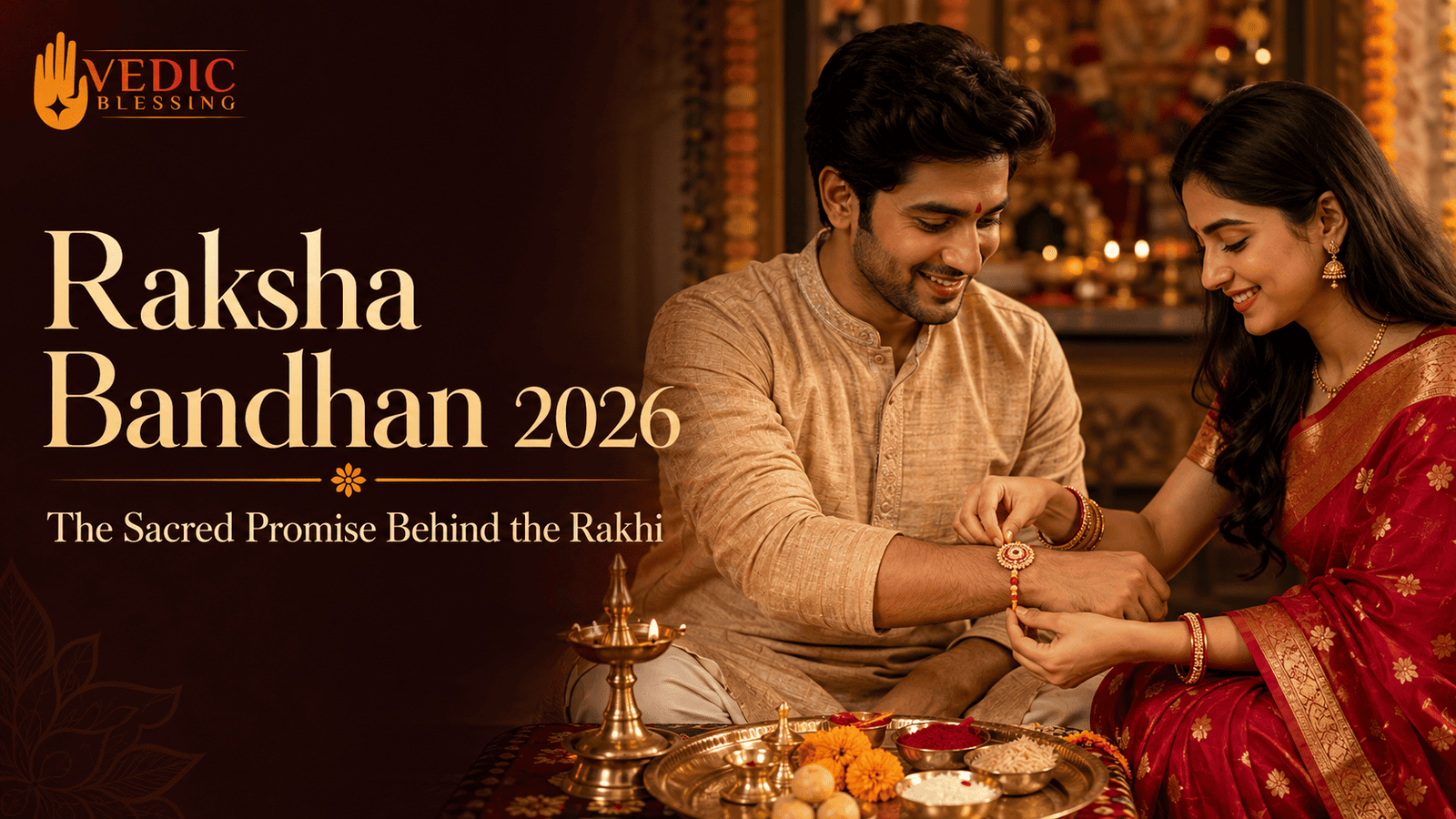
Traditionally, a sister ties a rakhi around her brother’s wrist, applies tilak, performs arati, and prays for his health, happiness, and long life. The brother offers her a gift and promises to support and protect her.
Yet the deeper meaning goes beyond physical protection. It is a mutual commitment:
- To stand beside one another during difficult times
- To respect and support each other’s choices
- To preserve family relationships despite distance
- To pray sincerely for one another’s well-being
- To remain connected through love, not obligation
The rakhi is therefore not simply tied around the wrist. Its true bond is tied around the heart.
The Ancient Spiritual Meaning of the Raksha Thread
The tradition of tying a sacred protective thread is older and broader than the modern brother-sister celebration.
In ancient rituals, a sanctified thread called a raksha sutra was tied while Vedic mantras were recited. The thread represented divine protection, courage, righteous intention, and the blessings of the Devas.
This helps us understand the spiritual foundation of Raksha Bandhan. The power does not lie in the material of the thread. It lies in the sankalpa, or sacred intention, with which it is tied.
A rakhi offered with sincere prayer becomes a visible symbol of an invisible blessing.
The Story of Indra and Shachi Devi
One traditional legend associated with the sacred protection thread concerns Indra, the king of the Devas.
During a fierce battle, Indra faced a powerful enemy and began to lose confidence. His wife, Shachi Devi, prepared a sacred thread, sanctified it through prayer, and tied it around his wrist for protection and victory.
Strengthened by divine blessings and renewed courage, Indra returned to battle.
This story reveals an important truth. The original idea of the raksha sutra was not limited to a brother and sister. It was a prayer offered by one person for the protection, strength, and success of another.
Over time, this sacred custom became closely associated with the loving bond between siblings.
Krishna and Draupadi: Protection Born from Compassion
One of the most cherished legends connected with Raksha Bandhan is the story of Lord Krishna and Draupadi.
According to popular tradition, when Krishna injured his finger, Draupadi immediately tore a piece from her garment and wrapped it around the wound. She acted spontaneously, without expecting anything in return. Moved by her affection and concern, Krishna promised to protect her whenever she needed him. The beauty of this story lies not in the cloth itself, but in Draupadi’s selfless response. Her small act of compassion created a lifelong bond of trust.
Raksha Bandhan teaches the same lesson: protection is not merely a promise spoken once a year. It is love expressed through action when it matters most.
Goddess Lakshmi and King Bali
Another beloved tradition tells of King Bali, a generous and devoted ruler.
When Lord Vishnu remained in Bali’s kingdom, Goddess Lakshmi wished for his return. She approached King Bali, tied a sacred thread around his wrist, and accepted him as her brother. Touched by the gesture, Bali asked what she desired. Lakshmi requested that Lord Vishnu return with her. Honouring the new bond, Bali granted her wish.
This story shows that sacred relationships are not created only through birth. They may also arise through affection, trust, respect, and dharma.
Is Raksha Bandhan Only for Brothers and Sisters?
The brother-sister bond remains at the heart of the festival, but its values are universal.
Today, rakhis may also be exchanged between cousins, close family friends, and people who share a relationship of deep respect. In some families, sisters tie rakhis to one another. Parents may help young children participate so they learn the importance of caring for their siblings.
The festival should not be reduced to the idea that only a brother protects a sister. Both siblings can support, guide, encourage, and pray for one another. True protection is mutual.
How Is Raksha Bandhan Traditionally Celebrated?
Families may follow slightly different customs, but a simple Raksha Bandhan observance can include:
- Clean the puja area and arrange the rakhi, kumkum, akshata, diya, flowers, sweets, and fruits on a plate.
- Begin by remembering Lord Ganesha and praying for the removal of obstacles.
- Apply tilak and akshata to the brother’s forehead.
- Tie the rakhi around his right wrist with a prayer for health, protection, wisdom, and prosperity.
- Perform arati and offer sweets.
- The brother may offer a gift and express his commitment to support his sister.
- Both siblings should seek the blessings of parents and elders.
The ceremony may be brief, but it becomes deeply meaningful when performed calmly, prayerfully, and with gratitude.
Raksha Bandhan When Siblings Live Far Apart
For many families today, one sibling may be in India while another lives in the USA, Canada, the UK, Australia, Singapore, or elsewhere. Distance may change the way Raksha Bandhan is celebrated, but it does not weaken its meaning.
A rakhi can be sent in advance, and the family can connect through a video call. A sister may perform arati before the call and recite a prayer. The brother can offer a gift online, but more importantly, both can take a few moments to speak sincerely and remember the experiences they have shared.
You can also arrange a personalized Vedic blessing in your sibling’s name. Unlike a material gift that may eventually be forgotten, a blessing offered with sankalpa carries a deeply personal spiritual meaning.
A More Meaningful Raksha Bandhan Gift
Gifts are a joyful part of Raksha Bandhan, but the most valuable gift is the sincere wish that your sibling should remain healthy, protected, peaceful, and successful.
This year, consider combining your gift with something sacred:
- A personalized Vedic blessing - Well Wishes Service with the sibling’s name and sankalpa
- Mantra chanting for health, protection, or prosperity
- A prayer for success in education, career, business, or family life
- Blessings for a sibling facing an important transition or difficulty
- A spiritual session that distant family members can join online
- Such a blessing is especially meaningful for siblings who live far away or cannot celebrate together in person.
The Message Raksha Bandhan Gives Us Today
Modern life keeps families busy. Siblings may live in different countries, follow different schedules, or speak less frequently than they once did. Raksha Bandhan gives us a reason to pause.
It reminds us to set aside old misunderstandings, express gratitude, and strengthen the relationships we sometimes take for granted. A message, a prayer, an apology, or a few sincere words may become more precious than an expensive gift.
The festival asks us a simple question:
“Am I protecting this relationship with the same love symbolized by the rakhi?” When the answer is expressed through kindness, respect, and responsibility, Raksha Bandhan becomes more than a yearly ritual. It becomes a way of living.
Gift Your Sibling a Personalized Vedic Blessing
This Raksha Bandhan, let your love be expressed through sacred prayers.
Through VedicBlessing, you can arrange a personalized online blessing with sankalpa for your brother, sister, or loved one. An experienced Vedic priest will chant prayers for their health, protection, peace, prosperity, and success. You may share the recipient’s name, gotram, nakshatra, and your special prayer or purpose. Families living anywhere in the world can participate online, subject to availability.
Make this Raksha Bandhan memorable with a gift that comes from the heart and is offered with divine intention.
Book your personalized blessing at VedicBlessing.com.
Because the most meaningful rakhi is not only a thread of love. It is a prayer that stays with them wherever life takes them.
Frequently Asked Questions
When is Raksha Bandhan in 2026?
Raksha Bandhan will be celebrated on Friday, August 28, 2026. The appropriate ritual time may vary by location, so families should consult the Panchang for their city.
Why is Raksha Bandhan celebrated on Shravana Purnima?
Shravana Purnima is traditionally associated with sacred observances, prayers, purification, and the tying of protective threads. Raksha Bandhan is celebrated on this full-moon day as a prayer for protection and well-being.
Can sisters tie rakhi to one another?
Yes. The deeper purpose of Raksha Bandhan is love, prayer, care, and mutual protection. Families may observe it according to their traditions and relationships.
What can I do if my sibling lives abroad?
You can send the rakhi in advance, join through a video call, exchange blessings, or arrange a personalized online Vedic blessing in your sibling’s name.
What details are needed for a personalized blessing?
You may provide the recipient’s name, gotram, nakshatra, rashi, and the purpose of the prayer. If some details are unavailable, the VedicBlessing team can guide you.
Can a Raksha Bandhan blessing be gifted as a surprise?
Yes. A personalized blessing can be arranged as a thoughtful spiritual gift for your sibling. Contact VedicBlessing in advance to discuss the preferred date, language, and participation option.