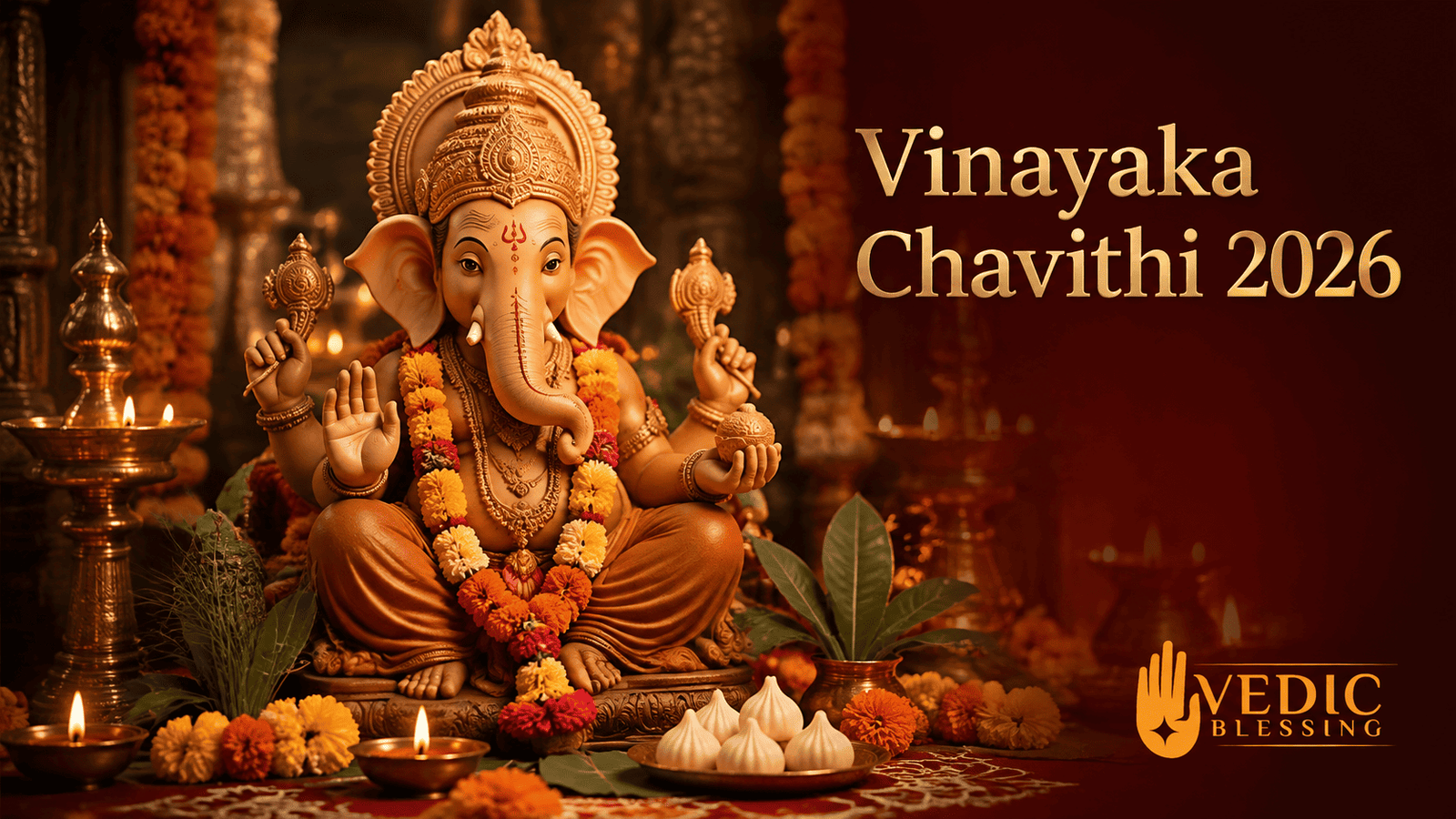
Vinayaka Chavithi 2026: Date, Story, Significance, Puja Vidhi and FAQs
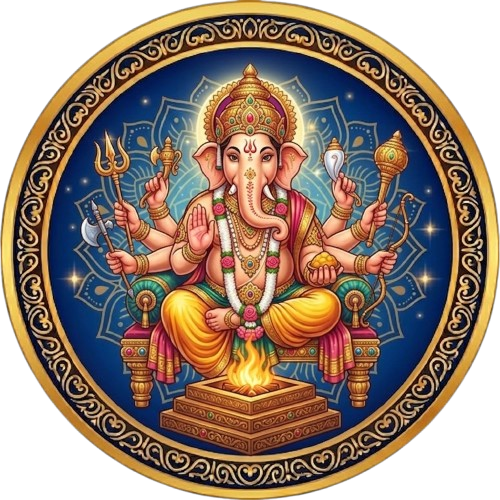
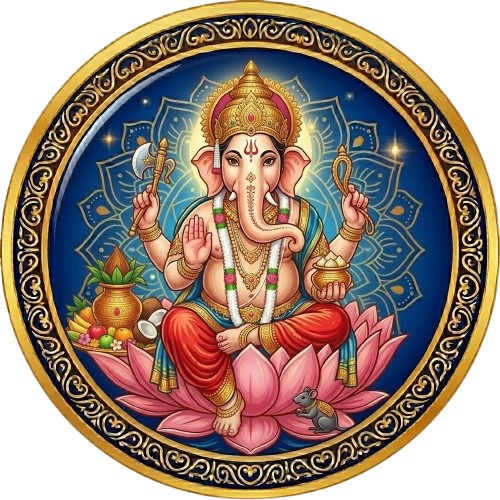
Vinayaka Chavithi, also known as Ganesh Chaturthi, celebrates Lord Ganesha, the remover of obstacles and the divine source of wisdom, prosperity, and auspicious beginnings.
In 2026, Vinayaka Chavithi will be celebrated on Monday, September 14. The exact Madhyahna puja muhurtham may vary according to the devotee’s location and local Panchang.
What Is Vinayaka Chavithi?
Vinayaka Chavithi marks the divine appearance of Lord Ganesha. It is observed on Shukla Paksha Chaturthi in the Hindu month of Bhadrapada.
Devotees install a clay Ganesha idol, perform traditional puja, chant Ganapathi mantras, listen to the Vinayaka Vratham story, and offer modakam, undrallu, fruits, flowers, and durva grass.
The festival is also called Vinayaka Chaturthi, Ganesh Chaturthi, or Ganeshotsav in different regions.
The Story of Lord Ganesha’s Birth
According to tradition, Goddess Parvati created a young boy from turmeric paste and gave him life. She named him Ganesha and asked him to guard the entrance while she bathed.
When Lord Shiva returned, Ganesha respectfully stopped him from entering, as he was following his mother’s instructions. Lord Shiva did not know that Ganesha was Parvati’s son. A fierce conflict followed, during which Ganesha lost his head.
Goddess Parvati was overcome with grief and demanded that her son be restored to life. Lord Shiva instructed his attendants to bring the head of the first living being they found facing north. They returned with an elephant’s head, which Lord Shiva placed upon Ganesha and brought him back to life.
Lord Shiva then blessed Ganesha as Prathama Pujya, the deity to be worshipped first before every puja, journey, ceremony, and new beginning. He also became known as Vighnaharta, the remover of obstacles.
This sacred story teaches us the importance of duty, devotion, obedience, forgiveness, wisdom, and the power of new beginnings.
Why Is Vinayaka Chavithi Celebrated?
Devotees worship Lord Ganesha to seek:
- Removal of obstacles
- Wisdom and clarity
- Success in education and career
- Peace and prosperity at home
- Protection from difficulties
- Auspicious beginnings
- Spiritual discipline and inner strength
- Worshipping Lord Ganesha reminds us that challenges can be overcome through wisdom, patience, humility, and sincere effort.
When Is Vinayaka Chavithi Celebrated?
Vinayaka Chavithi is observed during Bhadrapada Shukla Chaturthi, generally falling in August or September.
In 2026, it falls on September 14. Since Chaturthi Tithi and Madhyahna puja timings differ by location, devotees should follow their local Panchang or seek guidance from a knowledgeable priest.
Where Can the Puja Be Performed?
Vinayaka Chavithi Puja can be performed at home, in a temple, or as part of a community celebration.
Families living outside India can also perform the puja at home through live online priest guidance. The priest can guide the family through Sankalpam, Ganapathi Avahanam, Shodashopachara Puja, mantra chanting, naivedyam, Vratham Katha, and Mangala Harathi.
Who Can Perform Vinayaka Chavithi Puja?
Individuals, couples, children, students, families, and business owners can participate in the puja.
People beginning a new venture, education, career, marriage preparation, house construction, or an important life journey may especially seek Lord Ganesha’s blessings.
More than elaborate arrangements, sincere devotion, cleanliness, and proper Sankalpam are important.
How to Perform Vinayaka Chavithi Puja at Home
Puja Items Required
Keep the following items ready:
- Natural clay Ganesha idol
- Turmeric, kumkum, sandalwood, and akshata
- Flowers and durva grass
- Betel leaves and betel nuts
- Coconut and seasonal fruits
- Kalasham, lamp, incense, and camphor
- Sacred thread and clean cloth
- Modakam, undrallu, kudumulu, or other naivedyam
- Patri or sacred leaves, according to availability
Simple Puja Procedure
- Clean and decorate the puja area.
- Place the clay Ganesha idol on a clean, raised platform.
- Light the lamp and begin with a prayer.
- Perform Sankalpam using the devotee’s name, gotram, and purpose of the puja.
- Perform Kalasha Puja and invoke Lord Ganesha.
- Offer turmeric, kumkum, sandalwood, flowers, akshata, durva grass, and Patri.
- Chant Ganapathi mantras and the 108 names of Lord Ganesha.
- Offer fruits, modakam, undrallu, and other sattvic naivedyam.
- Read or listen to the Vinayaka Chavithi Vratham Katha.
- Perform Mangala Harathi and seek forgiveness for any unintentional mistakes.
- The exact puja procedure may vary according to family tradition and region.
Importance of Ekavimshati Patri Puja
Offering 21 sacred leaves, known as Ekavimshati Patri, is an important Vinayaka Chavithi tradition in many families.
Each leaf is offered while chanting one of Lord Ganesha’s sacred names. The number 21 is also commonly reflected in offerings such as durva grass and modakams. The leaves used may differ based on regional traditions and availability.
Devotees should use only correctly identified, clean, and safe leaves. If all 21 varieties are unavailable, the puja may still be performed with durva grass, flowers, and sincere devotion.
Traditional Vinayaka Chavithi Offerings
Lord Ganesha is traditionally offered modakam, which symbolizes the sweetness of spiritual wisdom.
In Andhra Pradesh and Telangana, common offerings include:
- Undrallu
- Kudumulu
- Modakam
- Panakam
- Vadapappu
- Chalividi
- Fruits and coconut
- Food prepared for naivedyam should be fresh, clean, and sattvic.
Ganapathi Mantra
Om Gam Ganapataye Namaha
This simple and powerful mantra may be chanted 21, 54, or 108 times with devotion.
Another traditional prayer is:
Vakratunda Mahakaya
Suryakoti Samaprabha
Nirvighnam Kuru Me Deva
Sarva Karyeshu Sarvada
Meaning: O Lord with the curved trunk and magnificent form, whose brilliance equals millions of suns, kindly remove all obstacles from my endeavors, always and in every way.
Why Do Some People Avoid Seeing the Moon?
According to the Syamantaka Mani story, Lord Ganesha declared that anyone who sees the moon on Vinayaka Chavithi may face false accusations or misunderstandings.
For this reason, many families traditionally avoid looking directly at the moon on the festival day. Customs and prescribed timings may vary according to the local Panchang and family tradition.
If the moon is seen accidentally, devotees traditionally listen to the Syamantaka Mani story and chant prayers to Lord Ganesha.
Eco-Friendly Ganesha Visarjan
A natural clay Ganesha idol is ideal for worship and environmentally responsible visarjan.
Depending on family tradition, visarjan may be performed after one and a half, three, five, seven, or ten days. Families may immerse a small clay idol in a clean container at home and respectfully return the dissolved clay to the soil.
Devotion becomes even more meaningful when tradition is observed with care for nature.
Celebrate Vinayaka Chavithi with Live Priest Guidance
Would you like to perform Vinayaka Chavithi Puja properly but feel unsure about the Sankalpam, mantras, puja sequence, Patri Puja, or Vratham Katha?
VedicBlessing provides personalized live online priest guidance through Zoom, Google Meet, or WhatsApp video. Experienced Vedic priests guide you step by step while you perform the puja in your own home.
Guidance can be arranged according to your preferred language, family tradition, location, and time zone.
Welcome Lord Ganesha into your home with devotion, confidence, and proper Vedic guidance.
Book your Vinayaka Chavithi Puja guidance at VedicBlessing.com.
Frequently Asked Questions
1. When is Vinayaka Chavithi in 2026?
Vinayaka Chavithi will be celebrated on Monday, September 14, 2026. Exact puja timings should be confirmed according to your location.
2. Are Vinayaka Chavithi and Ganesh Chaturthi the same?
Yes. Vinayaka Chavithi, Vinayaka Chaturthi, Ganesh Chaturthi, and Ganeshotsav are regional names for the same festival.
3. Which Ganesha idol is best for home puja?
A natural, unpainted clay Ganesha idol is traditionally preferred. It is sacred, simple, and suitable for eco-friendly visarjan.
4. What is Lord Ganesha’s favorite offering?
Modakam is widely considered Lord Ganesha’s favorite offering. Undrallu and kudumulu are also traditionally offered in Andhra Pradesh and Telangana.
5. Is offering 21 types of leaves compulsory?
Ekavimshati Patri Puja is an important tradition, but availability may differ by location. If all 21 leaves are unavailable, devotees may offer correctly identified available leaves, durva grass, or flowers with sincere devotion.
6. Can we perform Vinayaka Chavithi Puja without a priest?
Yes. A simple puja may be performed with devotion. Those who wish to follow the complete Sankalpam, mantras, Vratham Katha, and puja sequence can receive live guidance from a priest.
7. Can families outside India receive priest guidance?
Yes. VedicBlessing provides live online priest guidance worldwide, with scheduling based on your local time zone.
8. Can children participate in the puja?
Yes. Children may help make decorations, arrange flowers, chant simple prayers, prepare clay idols, and listen to Lord Ganesha’s story.
9. Should the moon be avoided on Vinayaka Chavithi?
Many traditions advise avoiding direct sight of the moon during the prescribed period. The exact observance may differ according to the local Panchang and family tradition.
10. When should Ganesha visarjan be performed?
Visarjan may be performed after one and a half, three, five, seven, or ten days, depending on family tradition and Sankalpam.
May Lord Vighneshwara remove every obstacle and bless your family with wisdom, health, peace, prosperity, and auspicious beginnings.
Book Online Priest Guidance: VedicBlessing.com